


Energy Saving Products for Industry: A Practical Guide to Cutting Costs and Carbon
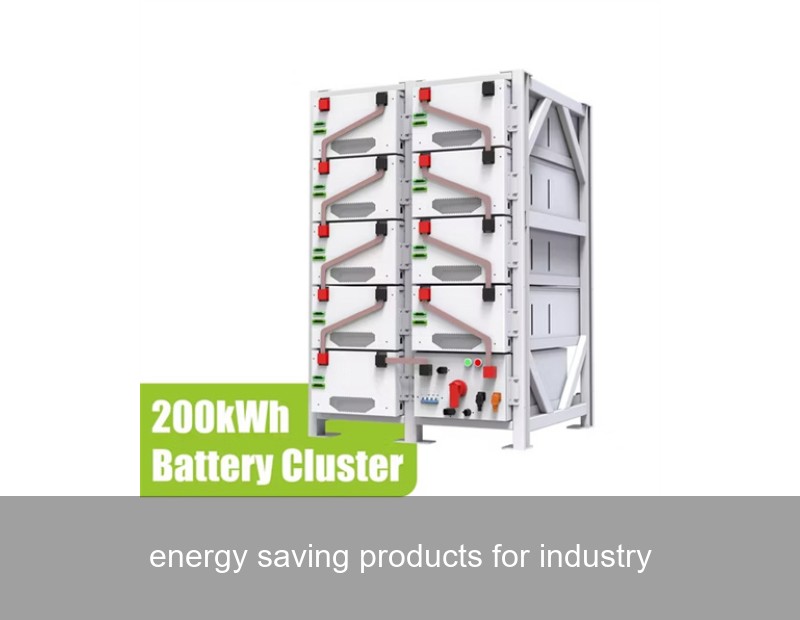
Let's talk about a pressing reality for industrial managers and facility operators across Europe and the U.S.: the relentless pressure of energy costs. It's not just a line item on the budget anymore; it's a critical factor in competitiveness, sustainability goals, and operational resilience. The good news? The landscape of energy saving products for industry has evolved far beyond simple LED swaps. Today, intelligent industrial energy storage systems (ESS) are emerging as the cornerstone of a modern, efficient, and future-proof energy strategy. This article cuts through the complexity to show you how these systems work, the tangible savings they deliver, and how a partner like Highjoule can turn your energy challenges into a strategic advantage.
Table of Contents
- The Phenomenon: Industry's Dual Energy Squeeze
- The Data: Where Does Your Money Go? Understanding Demand Charges & TOU
- The Solution: Industrial Energy Storage as the Ultimate Energy Saving Product
- The Highjoule Approach: Intelligence Meets Durability
- Case Study: A German Automotive Supplier's Success Story
- Making the Move: Key Considerations for Implementation
The Phenomenon: Industry's Dual Energy Squeeze
If you run a manufacturing plant, a cold storage facility, or any energy-intensive operation, you feel the squeeze from two sides. First, volatile and often rising electricity prices, especially in European markets. Second, increasingly stringent corporate and regulatory demands to reduce carbon footprints. Relying solely on the grid is becoming a risky and expensive business model. This is where a new class of energy saving products for industry comes in—not just to reduce consumption, but to actively manage and optimize how and when you use expensive grid power.
The Data: Where Does Your Money Go? Understanding Demand Charges & TOU
To appreciate the value of an industrial ESS, you need to understand your utility bill. For commercial and industrial (C&I) customers, a significant portion of the cost isn't just for the total energy used (kWh), but for the peak power demanded (kW) at any single point—your "demand charge."
| Billing Component | What It Measures | How Storage Helps |
|---|---|---|
| Energy Charge (kWh) | Total electricity consumed over the month. | Store energy when rates are low, use it when rates are high (Arbitrage). |
| Demand Charge (kW) | Your highest 15-30 minute average power draw in the billing period. | Discharge battery to "shave" peaks, preventing short, high-power events from spiking your bill. |
| Time-of-Use (TOU) Rates | Higher per-kWh rates during peak evening hours. | Avoid drawing from the grid during expensive peak periods. |
According to the National Renewable Energy Laboratory (NREL), demand charges can account for 30-70% of a C&I customer's total electricity bill. One brief period of simultaneous machinery startup can cost you thousands. An intelligent battery system is designed specifically to mitigate this.

Image: A modern industrial battery storage installation. Source: Unsplash (Representative image)
The Solution: Industrial Energy Storage as the Ultimate Energy Saving Product
Think of an industrial-grade battery storage system not just as a bank of batteries, but as a dynamic power asset. It's the most impactful energy saving product for industry because it addresses cost at the source. Here’s how it functions as a multi-tool for your facility:
- Peak Shaving: The system continuously monitors your power draw. When it detects a surge that would create a new demand peak, it instantly discharges to supplement grid power, keeping your draw below the costly threshold.
- Load Shifting & Arbitrage: It automatically charges during off-peak, low-cost hours (often at night) and discharges during expensive peak hours, effectively locking in lower energy rates.
- Backup Power: Provides critical ride-through during short grid outages, preventing costly production stoppages and data loss.
- Renewable Integration: If you have solar PV, the storage system captures excess daytime generation for use in the evening, maximizing your self-consumption and ROI on solar.
The Highjoule Approach: Intelligence Meets Durability
At Highjoule, we've spent nearly two decades refining what makes an industrial ESS truly reliable and profitable. Our products are engineered for the harsh, demanding environments of industry, not just a clean warehouse. The Highjoule H-Series Industrial ESS is built around a core philosophy: adaptive intelligence.
Our proprietary energy management system (EMS) doesn't just follow a pre-set schedule. It uses predictive algorithms, factoring in your historical load patterns, real-time electricity prices (where available), and even weather forecasts to optimize charge/discharge cycles for maximum financial return. We pair this intelligence with ultra-durable, lithium iron phosphate (LFP) battery chemistry, known for its long cycle life, thermal stability, and safety—a non-negotiable in industrial settings.
Moreover, Highjoule provides a full spectrum of services—from initial feasibility analysis and financial modeling to system design, grid interconnection support, and remote monitoring. We don't just sell a product; we deliver a guaranteed performance outcome: reduced energy costs and enhanced power control.

Image: Advanced monitoring and control are key to industrial ESS savings. Source: Unsplash (Representative image)
Case Study: A German Automotive Supplier's Success Story
Let's look at real data. A mid-tier automotive parts supplier in Bavaria, Germany, faced steep “Leistungspreis” (demand charges) and wanted to integrate a new rooftop solar array more effectively. Their production involves high-power stamping presses that create sharp, unpredictable load spikes.
- Challenge: Reduce peak demand charges and stabilize grid load to avoid grid upgrade fees.
- Solution: Highjoule installed a 500 kWh / 250 kW H-Series ESS, integrated with their existing solar PV and new production line.
- Results (12-month period):
- Demand Charge Reduction: 22% average reduction in monthly peak demand.
- Energy Cost Savings: Increased solar self-consumption from 35% to over 70%, combined with load shifting, led to a 31% reduction in net electricity costs.
- ROI: Projected payback period of under 5 years, based on energy savings and avoided demand costs.
"The Highjoule system acts like a shock absorber for our electrical load," noted the plant's energy manager. "We're not just saving money; we've made our energy budget predictable and are using our own solar power around the clock." This case mirrors findings from the U.S. Department of Energy, which highlights the multi-value stream potential of storage for industrial users.
Making the Move: Key Considerations for Implementation
Ready to explore this? Here’s a logical step-by-step approach:
- Audit & Analysis: Start with a detailed analysis of at least 12 months of utility bills. Identify your demand charge structure, TOU rates, and load profile patterns.
- Feasibility Study: Work with a provider like Highjoule to model different system sizes. The goal is to right-size the battery—too small misses savings, too large hurts ROI.
- Technology & Partner Selection: Prioritize safety (LFP chemistry), software intelligence, and proven industrial durability. Your provider should offer comprehensive warranties and performance guarantees.
- Financing & Incentives: Explore options. In the U.S., the IRA's Investment Tax Credit (ITC) now stands at 30-70% for standalone storage. Many European countries also offer grants and subsidies for efficiency and storage projects.
- Integration & Operation: Ensure seamless integration with your existing infrastructure (solar, building management system). The system should run autonomously but provide you with transparent, actionable data.
Beyond Savings: The Strategic Value
Implementing a robust industrial ESS does more than cut costs. It future-proofs your operation. It makes you less vulnerable to grid volatility, supports your sustainability reporting with verifiable carbon reduction, and provides a layer of energy security that is increasingly valuable. In essence, you transition from being a passive consumer to an active manager of your energy ecosystem.
What would a 25% reduction in your facility's peak demand charge do for your operational budget this coming fiscal year?
 Inquiry
 Online Chat