


Battery Setup for Solar Power: Your Complete Guide to Energy Independence
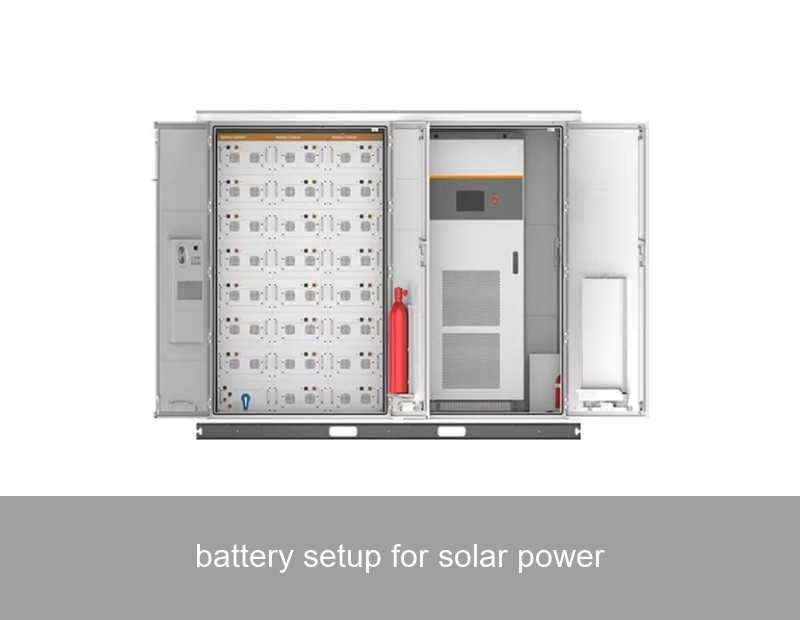
Have you ever watched your solar panels generate a surplus of clean energy on a sunny afternoon, only to see it flow back to the grid, knowing you'll have to buy it back at night? This common phenomenon is the single biggest reason homeowners and businesses are turning to a battery setup for solar power. It's the missing piece that transforms a solar array from a partial solution into a true energy independence system. By storing your self-produced energy, you can maximize self-consumption, shield yourself from blackouts, and take control of your energy costs. As a global leader in advanced energy storage since 2005, Highjoule is at the forefront of designing intelligent battery systems that make this independence simple, efficient, and sustainable.
Table of Contents
- The Challenge: Solar Power's Timing Problem
- The Solution: How a Solar Battery Setup Works
- Real-World Impact: A Case Study from California
- Choosing the Right System for Your Needs
- Is Your Home Ready for the Future of Energy?
The Challenge: Solar Power's Timing Problem
Let's face it: the sun doesn't operate on a 9-to-5 schedule that matches our peak energy consumption. Most homes see energy demand spikes in the early morning and evening—times when solar production is low or nonexistent. Without a battery setup for solar power, this mismatch creates a reliance on the traditional grid, undermining the financial and resilience benefits of your solar investment.
The data paints a clear picture. According to the U.S. Department of Energy, solar generation typically peaks around midday. Meanwhile, the famous "duck curve" used by grid operators in places like California shows that net electricity demand plummets during the day and soars rapidly as the sun sets. This imbalance isn't just a grid management issue; it's a personal economic one. With time-of-use rates becoming standard in many regions, the cost of electricity you buy in the evening can be two to three times higher than the credit you receive for exporting your midday surplus.
The Solution: How a Solar Battery Setup Works
Think of a solar battery system as a sophisticated energy savings account. Instead of sending your excess solar dollars (kilowatt-hours) to the utility company, you deposit them into your personal, high-tech energy bank. A well-designed battery setup for solar power seamlessly manages this flow.
Here's the typical cycle:
- Generation: Your solar panels convert sunlight into DC electricity.
- Conversion & Primary Use: An inverter converts it to AC power for your home's immediate use.
- Storage: Any surplus energy, rather than being exported, is directed to charge your battery system.
- Discharge: When solar production drops (at night, or during cloudy weather), the system automatically draws power from the batteries to run your appliances.
- Grid Interaction: The grid only serves as a backup when your combined solar and storage capacity is depleted, ensuring you always have power.

Image: A modern home energy system combining solar panels and a wall-mounted battery unit. Credit: Unsplash.
This is where Highjoule's expertise shines. Our HPS Series (Home Power Solution) integrates an advanced hybrid inverter with high-density lithium iron phosphate (LiFePO4) batteries into a single, sleek unit. The system's brain—our proprietary Energy Management System (EMS)—constantly learns your consumption patterns and weather forecasts to optimize when to charge, hold, or discharge, maximizing your savings and system lifespan.
Key Components of a Modern Solar Battery System
Understanding the key parts demystifies the technology. A robust battery setup for solar power consists of:
- Battery Cells & Chemistry: The heart of the system. Most modern systems, including Highjoule's, use LiFePO4 chemistry. It offers a superior balance of safety, longevity (typically 6,000+ cycles), and performance across a wide temperature range compared to older lead-acid or other lithium variants.
- Battery Management System (BMS): This is the critical guardian. It monitors cell voltage, temperature, and state of charge to ensure safe operation and prevent damage from overcharging or deep discharge.
- Hybrid or AC-Coupled Inverter: This is the translator and traffic controller. It manages the conversion between DC (from solar and batteries) and AC (for your home), and directs the flow of energy. Highjoule's systems feature built-in, UL-certified hybrid inverters for streamlined installation.
- Energy Management System (EMS): The strategic brain. It uses algorithms and connectivity to make intelligent decisions based on tariff rates, weather, and user preferences, often controllable via a simple smartphone app.
| Component | Primary Function | Highjoule's Approach |
|---|---|---|
| Battery (LiFePO4) | Stores electrical energy chemically | Modular, scalable design from 5kWh to 30kWh+, with a 10-year warranty. |
| Hybrid Inverter | Converts DC to AC, manages energy flow | Integrated, high-efficiency (>97%) inverter with multiple MPPT inputs for solar. |
| Energy Management System | Optimizes for cost, comfort, and resilience | AI-driven logic that can be set for self-consumption, time-of-use arbitrage, or backup priority modes. |
Real-World Impact: A Case Study from California
Data and theory are compelling, but nothing beats a real-world example. Consider the Johnson family in San Diego, California—a region with high electricity rates and a strong incentive for solar-plus-storage.
Phenomenon: Despite having a 7kW solar array installed in 2018, their monthly bills were still significant due to high evening consumption and unfavorable net metering changes.
Data & Action: In early 2023, they installed a Highjoule HPS-13 system (13.5kWh storage capacity). The goal was twofold: increase self-consumption of solar power from ~40% to over 80%, and ensure whole-home backup during the area's frequent Public Safety Power Shutoff (PSPS) events.
- Bill Savings: Their average monthly electricity bill dropped from $180 to a consistent $22 (the basic service charge).
- Self-Consumption: Increased to an average of 88%, drastically reducing grid dependence.
- Resilience: The system seamlessly provided backup power during three grid outages, the longest lasting 14 hours, keeping lights, refrigeration, and essential circuits running without interruption.
- ROI Timeline: Combined with the federal Investment Tax Credit (ITC), which applies to solar battery installations, their projected payback period is under 7 years.

Image: Monitoring a home energy system's performance via an app. Credit: Unsplash.
This case mirrors findings from the National Renewable Energy Laboratory (NREL), whose studies confirm that pairing storage with solar significantly increases the value of the solar asset and provides critical grid services.
Choosing the Right System for Your Needs
Not every battery setup for solar power is identical. Your ideal configuration depends on your primary objectives. Highjoule works with certified installers across Europe and the U.S. to tailor systems to these common goals:
1. Maximizing Self-Consumption & Bill Savings
If your main driver is economic, sizing is key. The system should be large enough to capture your typical daily solar surplus but not oversized. Highjoule's modular batteries allow for cost-effective expansion later if your needs change (e.g., buying an EV).
2. Ensuring Backup Power & Resilience
For areas prone to outages, you must define your "critical loads." What do you need to power during a blackout? A refrigerator, some lights, a modem, and a medical device might require 2-3 kW. Adding HVAC or an electric stove significantly increases requirements. Highjoule's systems offer both partial and whole-home backup solutions, with seamless transition switches that activate in milliseconds.
3. Participating in Grid Services (VPPs)
In some markets, you can earn revenue by allowing your battery to support the grid during times of peak demand (Virtual Power Plants). This requires a grid-interactive, utility-approved system like Highjoule's commercial-grade CES (Commercial Energy Storage) series, which is also ideal for businesses looking to manage demand charges.
Key Questions to Ask Your Installer:
- What is the usable energy capacity (not just total capacity) of the battery?
- What is the round-trip efficiency (the percentage of energy put in that you can get out)?
- Is the system AC- or DC-coupled, and which is better for my existing/planned solar?
- What is the warranty in terms of years and guaranteed end-of-warranty capacity?
Is Your Home Ready for the Future of Energy?
The journey toward energy independence is more accessible and financially sound than ever. A properly designed battery setup for solar power is no longer just an exotic add-on; it's becoming a central feature of the modern, resilient, and cost-conscious home or business. It turns your solar investment into a 24/7 asset, protects your family or operations from grid instability, and contributes to a more sustainable energy network.
At Highjoule, we believe in empowering you to take control. Our products are engineered for intelligence, durability, and simplicity. But the first step is a conversation. What would energy security and true control over your power costs mean for you and your family this year?
 Inquiry
 Online Chat