


Finding the Best Off-Grid Solar Generator for True Energy Independence
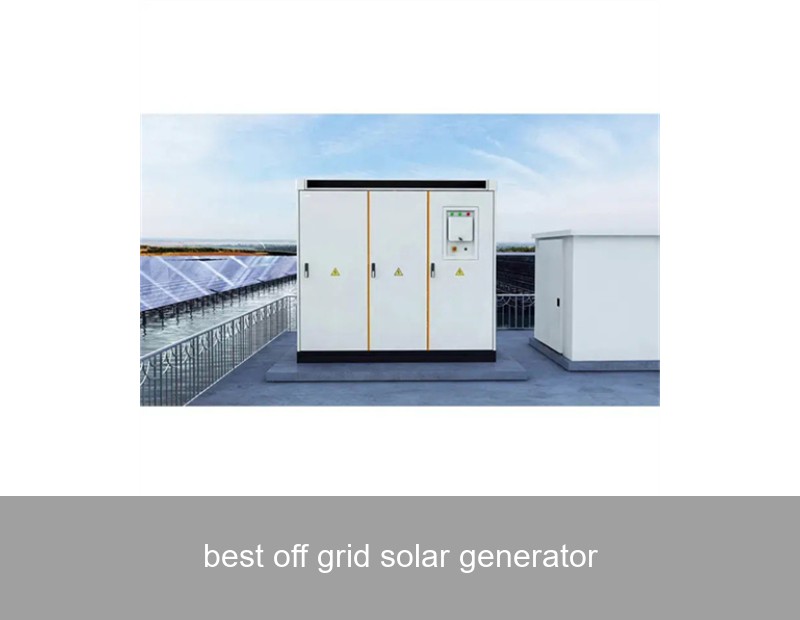
Dreaming of a cabin in the woods, a resilient homestead, or an adventure vehicle untethered from the grid? The search for the best off-grid solar generator is more than just shopping for gear—it's about crafting your own personal energy ecosystem. But with so many "solar generators" (typically all-in-one power stations) on the market, how do you choose a system that's truly built for 24/7 off-grid living, not just weekend camping? Let's demystify the journey from relying on the utility to achieving robust, renewable energy independence.
Table of Contents
The Phenomenon: From Portable Power to Permanent Independence
You've likely seen the rise of compact "solar generators"—integrated boxes with a battery, inverter, and solar input. They're fantastic for tailgates or powering tools. However, for a permanent off-grid home, farm, or business, these devices are often the starting point, not the complete solution. The true best off-grid solar generator is a system: a scalable, durable, and intelligently managed combination of solar panels, high-capacity battery storage, a powerful inverter, and a brain that ties it all together.
The real challenge isn't just generating power on a sunny day; it's having reliable electricity for a critical water pump at 3 AM, during a week of winter storms, or when running multiple appliances simultaneously. This requires a shift in thinking from a product to a platform.
The Data: What Real Off-Grid Living Demands
Let's talk numbers. According to the U.S. Energy Information Administration, the average American home uses about 886 kWh per month. A fully off-grid home, through efficiency and conscious use, might reduce that to 400-600 kWh. Now, consider a typical off-grid scenario in Colorado: December might offer only 4-5 "full sun" hours per day. To meet a 500 kWh monthly load, you'd need a solar array sized around 8-10 kWand a battery bank capable of storing multiple days of energy to cover poor weather.
This is where consumer-grade power stations, often limited to 2-3 kWh capacity and 2 kW output, fall short. They simply aren't designed for the continuous, high-demand cycles of a household. The systems that succeed are built with industrial-grade components, modular architecture for expansion, and thermal management that ensures performance from -20°C to 50°C.

Image Source: Unsplash - A robust off-grid installation requires significant solar capacity.
The Case Study: A Nordic Homestead's Winter Test
Let's look at a real example from our experience at Highjoule. A family in northern Sweden sought to power a 120 sqm year-round homestead entirely off-grid. Their key challenges: near-total darkness in December, temperatures plunging to -30°C, and a need to run a geothermal heat pump, water well pump, and standard household appliances.
Their previous system—a collection of lead-acid batteries and a basic inverter—failed repeatedly, leaving them reliant on a noisy, expensive diesel generator for weeks each winter. We designed and deployed a solution centered on a 25 kWh Highjoule H-PowerStack modular lithium iron phosphate (LFP) battery system paired with a 15 kW hybrid inverter and a 18 kWp solar array mounted on a ground-based tracker to maximize low-angle sun exposure.
| Metric | Old Lead-Acid System | New Highjoule LFP System |
|---|---|---|
| Usable Storage | ~10 kWh (with degradation) | 25 kWh (consistent) |
| Winter Autonomy | ~1.5 days | 5+ days |
| System Lifespan | 3-5 years | 15+ years (battery design life) |
| Diesel Generator Use | 45 days/year | 7 days/year (backup only) |
| Round-Trip Efficiency | ~75% | >96% |
The data speaks volumes. The high efficiency of the LFP chemistry and the system's advanced cold-weather management (featuring an integrated heating system) turned a struggle into resilience. The family now enjoys consistent power, and their fuel costs and carbon footprint have plummeted. This is the hallmark of the best off-grid solar generator: it solves for the worst-case scenarios, not just the average day.
Key Components of the Best Off-Grid Solar Systems
Building a system that can deliver like the Swedish case study requires understanding the core pillars:
- The Battery: The heart of the system. Lithium Iron Phosphate (LFP) is now the undisputed champion for off-grid due to its safety, longevity (6,000+ cycles), and stability. Look for modular designs that allow you to start with what you need and expand later.
- The Inverter/Charger: The muscle and manager. A true hybrid inverter handles DC from solar and AC from a backup generator, synchronizes everything, and outputs pure sine wave AC to your home. Its power rating (e.g., 10 kW) must handle your peak simultaneous loads (think well pump + microwave + tools).
- Energy Management System (EMS): The brain. This software intelligently prioritizes loads, manages charge/discharge cycles to prolong battery life, and can be monitored and controlled remotely. It's what transforms hardware into a smart grid in a box.
- Solar Array & Charge Controllers: The fuel source. Oversizing your solar capacity is often wise for off-grid. Pairing it with Maximum Power Point Tracking (MPPT) charge controllers ensures you harvest every possible watt, especially in low-light conditions.
The Highjoule Approach: Engineered for Autonomy
At Highjoule, we've been engineering advanced energy storage solutions since 2005. We understand that the best off-grid solar generator isn't a one-size-fits-all product. That's why our Off-Grid Power Platform is built on three principles:
- Scalability: Our H-PowerStack battery modules start at 5 kWh and can be scaled to over 100 kWh. You can grow your storage as your needs or budget grow.
- Intelligence: Our HarmonyOS™ EMS uses predictive algorithms to learn your energy usage patterns and weather forecasts, automatically optimizing cycles to ensure power is always available. It seamlessly integrates a backup generator as a last resort, minimizing its runtime.
- Durability: Our systems are rated for harsh environments, from the Australian outback to Scandinavian winters. With an IP55 rating for outdoor installation and a wide operating temperature range, they are built to last.
For a remote clinic in Greece, this meant reliable refrigeration for medicines. For a microbrewery in California seeking to go off-grid, it meant powering high-demand brewing equipment without compromising on quality. The platform adapts, providing not just electricity, but peace of mind.

Image Source: Unsplash - A professional, modular battery installation for off-grid power.
Making Your Choice: Questions to Ask
As you evaluate your path to energy independence, move beyond brochure specs. Ask these deeper questions:
- What is my continuous and peak power load (in kW), not just my daily energy use (in kWh)?
- How many days of "bad weather" autonomy do I need, and what's the worst-case weather for solar production at my location? (Resources like Global Solar Atlas can help).
- Is the system designed for 10-20 years of daily, deep cycling, or is it a repurposed consumer electronics battery?
- Can the system integrate and automatically manage a backup generator if I choose to have one?
- What does the software do to proactively protect my investment and ensure reliability?
The journey to finding the best off-grid solar generator is ultimately about partnering with technology and a provider that understands your vision for independence. It's about building a system that you'll forget is there—until you look outside at a storm and realize your lights are still on, your heat is still running, and your world is quietly, sustainably, powered by the sun.
What's the one non-negotiable appliance or need in your life that your off-grid power system absolutely cannot fail to support?
 Inquiry
 Online Chat