


What Makes a "Best Solar Company Website" in 2024? It's More Than Just a Pretty Face
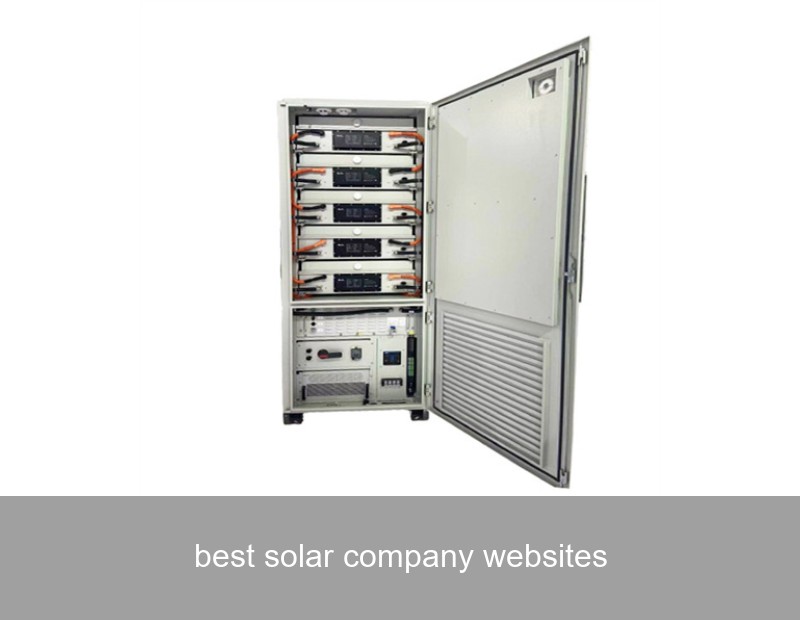
You've decided to explore solar energy. Your first step? A quick online search. You're immediately met with dozens of options, each claiming to be the "best solar company." Their websites flash with promises of savings and sustainability. But as a savvy consumer or business owner in Europe or the US, you know better. A slick homepage isn't enough. The true best solar company websites are strategic hubs that bridge the gap between your initial curiosity and a confident investment in a cleaner, more resilient energy future.
Think of it this way: your journey from "just browsing" to "powering my home or business with sunlight" is complex. It's filled with technical questions, financial considerations, and a need for deep trust. A superior website doesn't just sell; it guides, educates, and empowers. It transforms from a digital brochure into a reliable consultant. So, what are the non-negotiable elements that separate the industry leaders from the also-rans?
Beyond Aesthetics: The Core Pillars of a Top-Tier Solar Website
The landscape has shifted. A 2023 study by the Solar Energy Industries Association (SEIA) highlighted that over 90% of solar customers start their research online. The competition for attention is fierce, but the opportunity for genuine connection is massive. Let's break down the essential pillars.
Pillar 1: Clarity and Education (Demystifying the Complex)
The best sites avoid jargon overload. They explain how solar photovoltaic (PV) systems, battery storage, and energy management work in simple, relatable terms.
- Interactive Tools: Look for advanced solar calculators that go beyond simple savings estimates. The most effective ones ask for your address (using services like Google's Solar API), consider local utility rates, and even factor in future battery storage needs.
- Resource Hubs: Comprehensive blogs, whitepapers, and video libraries that address real concerns: "How does net metering work in California?", "What is the lifespan of a lithium-ion battery?", or "Can solar power my factory overnight?"
Image Source: Unsplash. A quality website provides interactive tools for personalized estimates.
Pillar 2: Trust and Transparency (Building Confidence Digitally)
Solar is a significant investment. Trust isn't given; it's earned through transparency.
- Detailed Case Studies: Real projects with real data. Not just "Commercial Farm in Spain," but "5.2MW PV + 2MWh Storage System for Agri-Cooperative in Andalusia, reducing grid dependence by 78%."
- Unambiguous Pricing & Financing: Clear explanations of CAPEX vs. PPA models, available tax credits (like the US ITC), and European subsidy programs. No hidden fees.
- Third-Party Validation: Displaying certifications (MCS, UL, IEC), partnerships, and reviews from trusted platforms.
Pillar 3: Personalization and Engagement (The Human Connection)
Even the most advanced website needs a human touch. The best platforms seamlessly connect digital research to expert consultation.
| Website Feature | What It Does | Why It Matters | |
|---|---|---|---|
| Smart Questionnaires | Asks about your primary goal (savings, backup power, sustainability). | Routes you to the most relevant solution and expert. | |
| Live Chat with Experts | Connects you to a technical sales engineer, not just a generic agent. | Provides immediate, knowledgeable answers to complex questions. | Provides immediate, knowledgeable answers to complex questions. |
| Project Portfolio & Monitoring Demos | Shows real-time dashboards of installed systems. | Demonstrates the company's ongoing commitment and technology prowess. |
Case Study: From Website Visitor to Microgrid Partner
Let's look at a real-world example from the European market. A medium-sized dairy processing plant in Germany faced two challenges: volatile energy costs and a corporate mandate to achieve 80% renewable energy usage by 2025. Their energy manager started the search online.
They needed more than just panels; they needed a system that could handle high daytime cooling loads and provide stable power for refrigeration at night. The website that won their business featured:
- A detailed Industrial Solutions section with focus on food & beverage sector challenges.
- A configurable microgrid simulator where they could input their load profile and see the interplay of solar PV, battery storage, and grid power.
- A publicly accessible case study of a similar cheese production facility in the Netherlands, complete with 12 months of performance data showing a 65% reduction in grid energy draw and a 40% decrease in energy costs.
This content didn't just inform; it demonstrated proven capability. The initial website engagement led to a consultation, resulting in a turnkey Highjoule solution: a 850kW rooftop PV array coupled with a 500kWh Highjoule H2 Series battery storage system and intelligent energy management software. The project is on track to meet their 2025 goal two years early.
The Highjoule Approach: Where Digital Excellence Meets Physical Innovation
At Highjoule, we believe our digital front door must reflect the intelligence and reliability of the physical systems we install. Our online platform is designed to be the starting point for a lasting partnership.
For homeowners, our Home Energy Planner tool provides a holistic view, showing how our high-efficiency solar panels and compact H1 Series home batteries work in concert during a blackout or to maximize self-consumption.
For commercial and industrial clients, the website serves as a gateway to our Microgrid as a Service (MaaS) offerings. We know your CFO and your Sustainability Officer have different priorities. Our content and tools speak to both, quantifying ROI while detailing carbon displacement metrics. You can explore the specifications of our scalable H3 Series containerized battery energy storage systems (BESS) and even schedule a virtual tour of a live monitoring center.
Image Source: Unsplash. Advanced monitoring and control, as showcased by leading providers, is key for complex systems.
Future-Proofing Your Solar Journey
The technology is evolving rapidly. The best solar company websites today are already talking about the integration of vehicle-to-grid (V2G) technology, AI-driven energy forecasting, and participation in virtual power plants (VPPs). They position solar not as a standalone product, but as the core of a dynamic, smart energy ecosystem.
So, as you browse and evaluate, ask yourself: Does this website see me as a one-time sale, or as a partner in a long-term energy transition? Does it empower me with knowledge, or keep me in the dark? The difference is clear.
What specific energy challenge for your home or business has been hardest to find a clear, trustworthy answer for online?
 Inquiry
 Online Chat