


Dach Solaranlage mit Speicher: The Smart Home Energy Revolution
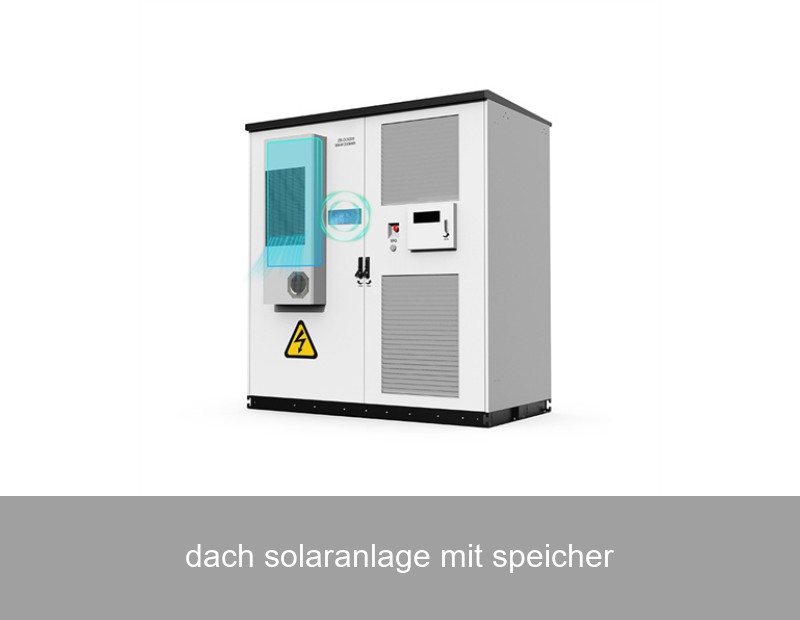
You've seen the solar panels popping up on rooftops across your neighborhood. You've likely considered them for your own home, drawn by the promise of clean energy and lower bills. But if you're in Germany, Austria, Switzerland, or the broader European market, you might be asking: "Is solar alone enough?" The modern answer is a resounding no. The true game-changer is a Dach Solaranlage mit Speicher – a rooftop solar system with integrated battery storage. This isn't just about generating power; it's about fundamentally changing your relationship with energy, achieving true independence, and maximizing every kilowatt-hour your roof produces.
Table of Contents
The Phenomenon: Why Solar Alone is No Longer Optimal
Here's the classic dilemma of a solar-powered home without storage: The sun shines strongest in the middle of the day when you're often at work or school. That's when your system is producing a surplus. Conversely, in the evening when energy demand peaks—lights, cooking, heating, TV—your panels are inactive, forcing you to buy expensive electricity from the grid. You become a passive trader, selling low and buying high. This mismatch between production and consumption profiles is the core challenge a battery storage system solves.

Image: The evening energy gap is precisely when a battery storage system proves its worth. (Source: Unsplash)
The Data: Quantifying the Self-Consumption Advantage
The numbers make a compelling case. According to the Fraunhofer Institute for Solar Energy Systems (ISE), a typical German household with only a solar PV system uses about 30-40% of its self-generated electricity directly. The rest is fed into the grid. By adding a suitably sized battery, self-consumption can soar to 70% or even 80%. This dramatically reduces reliance on the volatile grid and protects you from rising electricity prices. With feed-in tariffs (EEG in Germany) continuing to fall below retail electricity costs, maximizing self-use has become the primary economic driver for homeowners.
| Metric | Solar Only | Solar + Storage | Change |
|---|---|---|---|
| Self-Consumption Rate | 35% | 78% | +123% |
| Grid Purchases (Annual) | 3,500 kWh | 1,200 kWh | -66% |
| Grid Feed-in (Annual) | 4,200 kWh | 1,800 kWh | -57% |
A Real-World Case: The Müller Family in Bavaria
Let's look at a concrete example. The Müller family near Munich installed a 9.8 kWp solar system on their south-facing roof in 2020. While happy with reduced bills, they were frustrated that their daytime surplus wasn't helping with their high evening load (family of four, electric vehicle). In 2022, they decided to retrofit a Highjoule ResiFlow 10 battery storage system with a usable capacity of 10.2 kWh.
- Energy Independence Increased from 42% to 89%: They now cover nearly all their daily electricity needs from their own roof for 8 months of the year.
- Annual Electricity Bill Reduction: From an average of €1,850 to €320 – saving over €1,500 annually.
- Backup Power: During a planned 6-hour grid outage, the ResiFlow's integrated backup power function kept their lights, refrigerator, and internet running seamlessly, a feature they hadn't fully appreciated until they needed it.
"The system doesn't just save money," says Mr. Müller. "It gives us peace of mind and a tangible sense of controlling our own energy future. The intelligent energy management software automatically prioritizes charging our EV with solar surplus, which is incredibly smart."

Image: Modern, compact home battery systems like Highjoule's ResiFlow integrate seamlessly into garages or utility rooms. (Source: Unsplash)
The Modern Solution: Intelligent Storage Systems
Today's Dach Solaranlage mit Speicher is a sophisticated energy ecosystem, not just a collection of parts. The battery is the heart, but the brain is the intelligent energy management system (EMS). This software optimizes energy flows in real-time: storing excess solar, scheduling discharges during peak hours, and even integrating with smart home devices or electric vehicles.
At Highjoule, with nearly two decades of experience in advanced energy storage, we design our residential systems like the ResiFlow Series with this holistic intelligence. Our systems feature:
- High-Density Lithium Iron Phosphate (LFP) Chemistry: Renowned for safety, longevity (over 6,000 cycles), and stable performance.
- Adaptive Power Management: The system learns your household's consumption patterns and weather forecasts to optimize charging and discharging cycles.
- Grid Services Ready: In some markets, systems can be configured to support grid stability, potentially opening up future revenue streams for homeowners.
- Scalable Design: Start with what you need, and easily expand battery capacity as your needs grow (e.g., adding a second EV).
Integrating such a system from the start with a new solar installation is ideal, but retrofitting to an existing array, as the Müllers did, is also highly effective.
Choosing the Right System for Your Home
Selecting the optimal Dach Solaranlage mit Speicher involves several key considerations:
- Energy Audit: Analyze your past electricity bills to understand your annual consumption and daily load profile.
- Solar Potential: Assess your roof's size, orientation, and shading. Tools like the EU's PVGIS can provide valuable estimates.
- Battery Sizing: The goal is to cover your evening/night load. A common rule of thumb is to size the battery to store 1-1.5 times your average daily consumption that occurs after sunset. Highjoule's design experts specialize in creating this tailored balance.
- Future-Proofing: Consider plans for an electric vehicle, heat pump, or home expansion. Your energy system should be able to grow with you.
The Future of Home Energy
The combination of a Dach Solaranlage mit Speicher is evolving from a premium choice to the standard for new energy-conscious homes. As electric vehicles become ubiquitous, the home battery will act as a buffer for EV charging. With the rise of dynamic electricity tariffs, your intelligent system will automatically buy energy when it's cheap and store it, or even sell it back at peak times. You're moving from being a consumer to a "prosumer" – in control of your personal energy ecosystem.
This shift aligns perfectly with Highjoule's mission to provide intelligent, efficient, and sustainable power solutions. We see every home with a solar-storage system as a vital cell in a more resilient and renewable energy grid for communities across Europe and North America.

Image: Transparency and control are key benefits, allowing families to visualize their energy independence. (Source: Unsplash)
So, as you look at your roof and your next energy bill, what will be the first step you take to not just generate power, but truly own it?
 Inquiry
 Online Chat