


Finding the Best Solar Panel in Australia: A Guide to Smarter Energy Independence
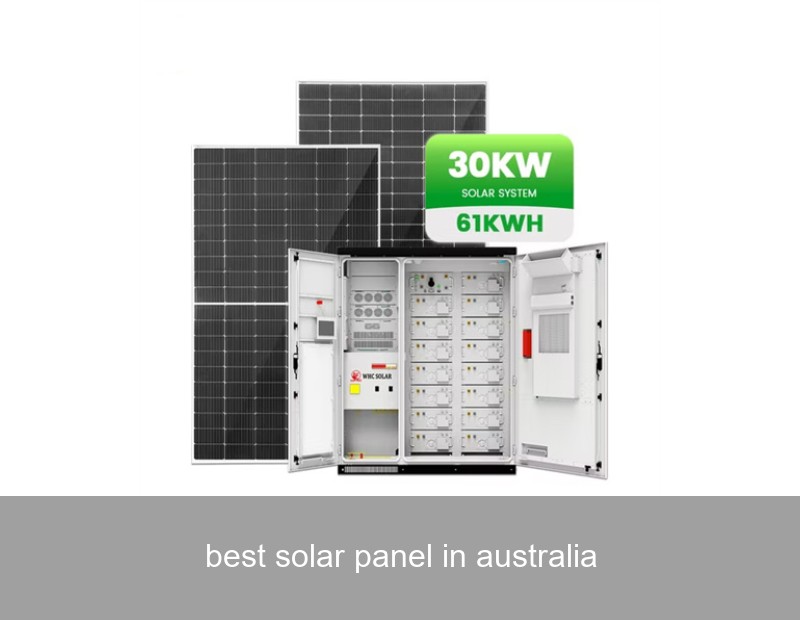
If you're an Australian homeowner or business owner, you've felt it: the relentless sun beating down, promising not just a hot day but also a tremendous opportunity. With some of the highest solar radiation levels in the world, it's no surprise Australia leads in rooftop solar uptake. But amidst the sea of brands, wattages, and warranties, the search for the single "best solar panel in Australia" can feel overwhelming. Is it the one with the highest efficiency rating? The longest warranty? The most attractive price point? The truth is, focusing solely on the panel is like choosing a car engine without considering the transmission, battery, and onboard computer. In today's energy landscape, the best solar solution is an integrated, intelligent system designed for Australia's unique conditions. Let's unpack what that truly means.
What Makes the "Best" Solar Panel in Australia?
The Australian environment is a brutal proving ground. Panels must withstand extreme UV exposure, hailstorms, coastal salt spray, and desert dust. Therefore, the "best" panels here share key traits:
- Proven Durability & Warranty: Look for panels with a 25+ year linear performance warranty and a 12-15 year product warranty. Tier-1 manufacturers use robust frames and tempered glass that can survive AS/NZS 5033 standards and Clean Energy Council recommendations.
- High Temperature Coefficient: Panels get hot. A lower temperature coefficient (e.g., -0.3%/°C vs. -0.4%/°C) means they lose less efficiency on scorching summer days.
- Real-World Efficiency: Laboratory "peak efficiency" is one thing, but real-world performance under diffuse light (early morning, late afternoon, cloudy days) is crucial for daily yield.
However, these factors only tell part of the story. A premium panel connected to a mediocre inverter and installed poorly will underperform. Your system's brain is just as important as its brawn.
The Critical Role of the Inverter and Software
Your solar panels generate Direct Current (DC). Your home uses Alternating Current (AC). The inverter is the crucial translator. A high-quality, correctly sized inverter ensures maximum conversion efficiency and system reliability. But modern inverters go further—they are the gateway to smart energy management. This is where the concept of the "best solar panel" evolves into the "best solar energy ecosystem."
Beyond the Panel: Why Your Complete System Matters More
Imagine generating 20kWh of solar energy on a perfect Saturday. Without a way to store it, excess energy is exported to the grid for a minimal feed-in tariff, while you buy it back at night at a much higher rate. This is the fundamental flaw of a panels-only setup. The true value of your solar investment is unlocked when you can store and manage the energy you produce.
This is precisely where advanced Battery Energy Storage Systems (BESS) transform the equation. By pairing your high-quality solar array with an intelligent battery system, you can:
- Increase self-consumption from 30-40% to 70-90% or more.
- Protect against blackouts with backup power.
- Manage time-of-use tariffs by using stored energy during peak price periods.

Image: A complete solar and storage system maximizes energy independence. (Source: Unsplash, representative image)
Real-World Case Study: Maximising Output in Queensland
Let's look at a concrete example. A medium-sized manufacturing facility in Brisbane installed a 100kW solar array in 2019 with quality panels. While daytime grid consumption dropped, they still faced high demand charges and expensive evening shifts. In 2022, they integrated a Highjoule HI-Stack 50 commercial battery storage system (50kW/105kWh).
| Metric | Before BESS (Panels Only) | After BESS Integration |
|---|---|---|
| Daily Self-Consumption of Solar | ~35% | ~85% |
| Peak Demand from Grid | Reduced by 15% | Reduced by 68% |
| Monthly Grid Energy Cost | $4,200 AUD (avg.) | $1,100 AUD (avg.) |
| ROI Period | 5.5 years (solar only) | Projected 4.2 years (combined system) |
The Highjoule system's intelligent software was programmed to perform peak shaving and arbitrage automatically. It stores excess solar and dispatches it during operational peaks and high-tariff periods, turning a cost centre into a strategic asset. This case shows that the "best" component was not a different panel, but the addition of smart storage and control.
The Highjoule Solution: Intelligent Energy Management
At Highjoule, with nearly two decades of experience as a global advanced储能系统 provider, we understand that sustainable power is about synergy. While we don't manufacture panels, we specialise in the technology that maximises their value. Our role is to provide the intelligent backbone for your solar investment.
For Australian homes and businesses, our H-Residential Series and HI-Stack Commercial battery systems are designed for compatibility with all major solar panel and inverter brands. What sets them apart is the Highjoule Energy Operating System (HEOS). This sophisticated platform doesn't just store energy; it learns your consumption patterns, weather forecasts, and tariff schedules to autonomously optimise energy flow.
- For Homes: The H-Residential system seamlessly integrates, offering app-controlled energy management, blackout protection, and the ability to participate in Virtual Power Plant (VPP) programs for additional revenue.
- For Business & Industry: Our scalable HI-Stack systems provide critical load management, demand charge reduction, and can be configured for complex microgrid applications, ensuring operational resilience.
By choosing Highjoule, you're not just adding a battery; you're installing an intelligent energy partner that ensures every kilowatt-hour from your "best solar panel in Australia" is used in the most economical and efficient way possible.

Image: Scalable, industrial-grade battery storage systems form the core of modern energy management. (Source: Unsplash, representative image)
Future-Proofing Your Investment: Emerging Trends
The energy market is dynamic. The Australian Energy Market Operator (AEMO) is actively managing a grid with soaring renewable penetration. This brings opportunities like:
- VPP Integration: Aggregating distributed batteries to support the grid and earn incentives.
- Dynamic Export Limits: Some networks now limit solar export, making storage essential to capture all self-generated power.
- EV Integration: The future involves charging your electric vehicle with your own solar-stored energy, creating a closed-loop ecosystem.
Your system's software must be capable of adapting to these trends. An open, updateable platform like HEOS ensures your investment remains relevant and profitable for decades.
A Note on Installation and Standards
Regardless of the components, professional installation accredited by the Clean Energy Council is non-negotiable in Australia. Proper design, wiring, and compliance with AS/NZS standards are critical for safety, performance, and eligibility for rebates like STCs.
Your Next Step: From Consumer to Prosumer
So, is there a single "best solar panel in Australia"? The answer is nuanced. The best panel for you is a high-durability, reliably warranted panel that forms part of a cohesive, intelligent system designed for your specific load profile and goals. The ultimate metric isn't just panel efficiency; it's the level of energy independence and bill reduction you achieve.
This shift in perspective turns you from a passive consumer into an active "prosumer"—both producing and intelligently managing your energy. The right combination of robust generation, scalable storage, and smart software is the key to unlocking the full potential of Australia's abundant sunshine.
What specific energy challenge—be it rising demand charges, lack of blackout protection, or simply a desire to maximise your existing solar—would you want an intelligent storage system to solve for you first?
 Inquiry
 Online Chat