


Finding the Right Cabinet 24U Supplier: A Guide for Energy Storage Professionals
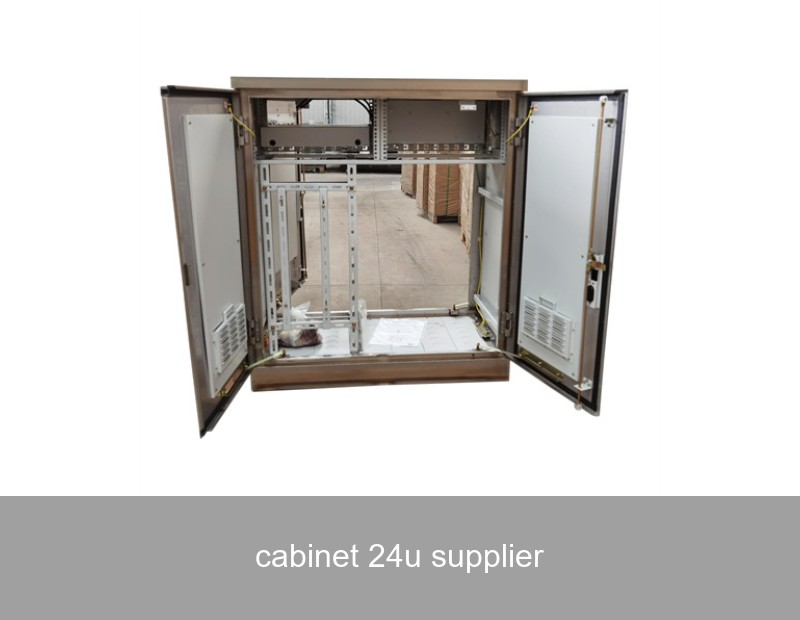
If you're designing or expanding a battery energy storage system (BESS), you know the critical role of the enclosure. That 24U cabinet isn't just a metal box; it's the first line of defense for your valuable battery modules, power conversion systems, and control electronics. Choosing the right cabinet 24U supplier becomes a decision that impacts system safety, longevity, and total cost of ownership. For integrators and project developers in Europe and the US, this choice is even more significant amidst evolving grid codes and stringent safety standards. Let's explore what makes a supplier not just a vendor, but a strategic partner in your energy storage journey.
Table of Contents
The Core Challenge: More Than Just Rack Space
Many first-time buyers focus solely on dimensions and price per unit. However, a cabinet for lithium-ion battery systems must perform under demanding conditions. It must manage heat generated during high C-rate cycling, contain potential thermal events, shield sensitive BMS communications from EMI, and often withstand outdoor installation. A standard IT server rack simply won't suffice. The market demands enclosures engineered for the specific electro-thermal and safety dynamics of modern energy storage.
Data Point: The Thermal Management Imperative
Studies indicate that optimal battery cell temperature windows are narrow, typically between 15°C and 35°C. Operating outside this range can accelerate degradation. A well-designed 24U cabinet with integrated, efficient thermal management can maintain this window, potentially extending cycle life by 20-30% compared to passive solutions in harsh environments. This isn't just about fans; it's about airflow design, sealing from particulates, and compatibility with facility cooling systems.

Image source: Unsplash - Representative image of industrial cabinet installation.
Key Criteria for Selecting Your 24U Cabinet Supplier
So, what should you prioritize? Here’s a checklist based on industry best practices:
- Safety & Certification: Look for UL 9540 (Energy Storage Systems) and UL 9611 (Rack Systems) listings in North America. In Europe, IEC 61439 and CE marking are essential. The cabinet should be designed for fire containment and have provisions for integrated gas detection and suppression ports.
- Thermal Design: Assess CFM ratings, fan placement for uniform airflow, and compatibility with chilled water or DX cooling interfaces. Redundant fan modules are a plus for critical applications.
- Structural Integrity & EMI Shielding: Heavy-duty steel construction (often 14-gauge or better) is standard. Electromagnetic interference (EMI) gasketing on doors is crucial to protect BMS communication signals.
- Supplier Expertise: Does the supplier understand energy storage systems, or just metal fabrication? A partner with BESS domain knowledge can offer invaluable design-for-manufacturability advice.
| Feature | Generic IT 24U Cabinet | Purpose-Built BESS 24U Cabinet |
|---|---|---|
| Primary Design Goal | Equipment housing & organization | Thermal management & safety containment |
| Typical Cooling | Perforated doors, basic fans | Sealed front/back, high-CFM redundant fans, liquid-cooling ready |
| Safety Standards | UL/IEC for IT equipment | UL 9540, UL 9611, IEC 61439-5 |
| EMI Protection | Minimal | Full gasketing for RFI/EMI shielding |
A Real-World Case: Grid Support in Southern Europe
Consider a 2023 project in Italy, where an integrator deployed a 2 MWh containerized BESS for a commercial microgrid providing peak shaving and frequency regulation. The initial design used off-the-shelf IT racks. During prototype testing, the integrator faced two major issues: localized hot spots exceeding 45°C within the cabinets during simultaneous charge/discharge cycles, and EMI causing sporadic BMS communication drops.
The Solution: They partnered with a specialized cabinet 24U supplier who provided a redesigned enclosure. The new cabinets featured:
- Zoned forced-air cooling with temperature-sensor feedback loops.
- EMI-shielded compartments separating power wiring from comms lines.
- Fire-rated barriers between every 4U of battery modules.
The Result: Peak cell temperatures were reduced to a stable 32°C, communication errors fell to zero, and the system passed local fire safety regulations (based on Italian CEI 0-21) seamlessly. This single change de-risked the entire project timeline. For more on grid codes, see the U.S. Department of Energy's solar integration research.
The Highjoule Approach: Integrated Solutions from a Single Source
This is where Highjoule's philosophy makes a tangible difference. As a global provider of advanced energy storage systems since 2005, we view the cabinet not as a commodity, but as the foundational platform for our smart, efficient, and sustainable power solutions. For our commercial and industrial clients, we don't just supply cabinets; we provide fully integrated, pre-tested 24U rack subsystems.
A Highjoule IntelliRack 24U cabinet comes pre-configured with:
- Integrated Thermal Management: Our SmartFlow system dynamically adjusts cooling based on real-time cell-level data from the BMS, optimizing energy use.
- Built-in Safety Architecture: Pre-wired for smoke, heat, and gas detection, with easy conduit access for suppression systems, simplifying on-site installation.
- Plug-and-Play Compatibility: Designed to seamlessly house Highjoule's own battery modules and third-party PCS units, reducing integration time by up to 40%.
By acting as our own cabinet 24U supplier, we maintain strict control over quality and safety from the cell level to the complete enclosure. This vertical integration allows us to offer comprehensive warranties and single-point accountability, a significant advantage for EPCs and asset owners. Learn about system safety from a leading authority like NFPA 855.

Image source: Unsplash - Conceptual image of a well-organized energy storage cabinet interior.
Future-Proofing Your Investment
The energy landscape is evolving. Today's cabinet might need to support different battery chemistries tomorrow or interface with new grid-forming inverters. Selecting a supplier with a roadmap is crucial. Highjoule designs for modularity. Our cabinet frames allow for easy internal reconfiguration, and our firmware is field-upgradable to support new protocols and functionalities. This protects your capital expenditure against rapid technological obsolescence.
Considerations for the US and European Markets
In the US, focus on UL certifications and local AHJ (Authority Having Jurisdiction) requirements, which can vary by state. In Europe, the new Battery Directive and specific grid connection codes (like VDE-AR-N 4110 in Germany) will influence design. A knowledgeable supplier like Highjoule, with a deep presence in both regions, navigates these complexities for you, ensuring compliance is baked into the product design from the start.
The journey to a successful BESS deployment is complex. The choice of your cabinet 24U supplier can either be a recurring pain point or a pillar of reliability. It’s worth asking: As you plan your next project, are you looking for just a rack, or are you seeking a system-level partner that ensures your enclosure is an asset, not a liability?
What specific integration challenge in your current or upcoming storage project keeps you up at night, and how might the right enclosure solution help solve it?
 Inquiry
 Online Chat