


Unlocking Grid Stability: The Critical Role of the Cabinet for BESS Battery Systems
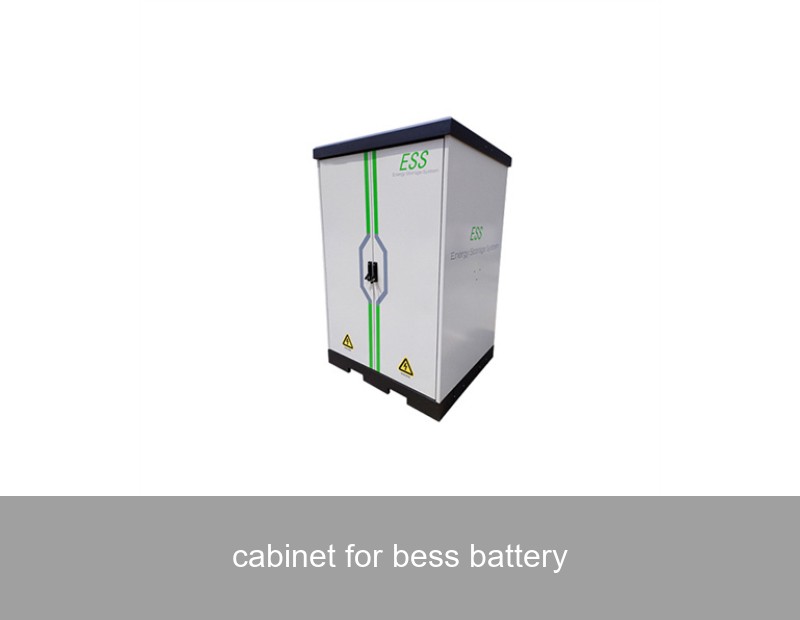
If you're exploring the world of battery energy storage, you've likely encountered the term "BESS." But the true powerhouse, the unsung hero that determines the safety, longevity, and performance of the entire system, is often overlooked: the cabinet for BESS battery. This isn't just a metal box; it's a sophisticated, integrated ecosystem designed to protect a significant investment and ensure reliable power. For businesses, communities, and grid operators across Europe and the U.S., understanding this component is key to deploying storage that lasts.
Table of Contents
- What is a Cabinet for BESS Battery? Beyond the Metal Enclosure
- Key Components Inside a High-Performance BESS Cabinet
- Critical Design Considerations for Safety and Performance
- Real-World Impact: A Case Study from Southern Europe
- Choosing the Right BESS Cabinet Solution: A Guide for Project Developers
What is a Cabinet for BESS Battery? Beyond the Metal Enclosure
At its core, a cabinet for BESS battery is the physical structure that houses the battery modules, battery management system (BMS), thermal management systems, fire suppression, and power conversion components. Think of it as the "smart home" for your battery cells. A high-quality cabinet does far more than provide shelter; it actively creates and maintains the ideal environment for lithium-ion batteries to operate safely and efficiently for 15-20 years.
The shift from simple racks to intelligent, containerized or modular cabinets represents a major evolution in energy storage. It’s a response to real-world challenges: extreme temperatures in Texas or Spain, stringent fire codes in Germany and California, and the need for rapid, scalable deployment. This is where expertise from a seasoned provider like Highjoule becomes invaluable. With nearly two decades of engineering excellence, Highjoule designs its EnerCubeTM Modular Cabinet Systems not as an afterthought, but as the foundational platform for safety and performance, integrating cutting-edge thermal management and multi-layer protection directly into the cabinet architecture.
Key Components Inside a High-Performance BESS Cabinet
Let's open the door and look at what makes a top-tier BESS cabinet tick. It's a symphony of critical subsystems working in unison.
- Battery Modules & Racks: The core energy storage units, arranged for optimal density and accessibility.
- Battery Management System (BMS): The "brain" that monitors cell voltage, temperature, and state of charge for each module, ensuring balance and health.
- Thermal Management System (TMS): Arguably the most vital system. It maintains an optimal operating temperature (typically 20-25°C) using liquid or air cooling, preventing degradation and thermal runaway.
Image: Advanced liquid cooling is essential for high-density BESS cabinets. Source: Unsplash (Representative Image)
- Fire Suppression System: Dedicated, cabinet-level systems using aerosol or chemical agents to detect and suppress fire at the earliest possible stage.
- Power Conversion System (PCS) Integration: Often housed in a separate but connected compartment, the PCS (inverter) manages AC/DC conversion.
- Safety Disconnects & Monitoring: Includes manual and automatic disconnects, gas venting, and continuous monitoring for smoke and gas.
The Highjoule Difference: Integrated Intelligence
Highjoule’s approach is holistic. Our EnerGuardTM BMS doesn't just monitor; it actively communicates with the cabinet's cooling and safety systems. If a temperature anomaly is detected in a corner module, the TMS responds precisely to that zone, while the BMS can proactively derate power. This level of integration, born from 18 years of field experience, maximizes safety and extends battery life significantly.
Critical Design Considerations for Safety and Performance
Selecting a cabinet isn't about specs on a page. It's about matching engineering to your specific environment and risk profile.
| Consideration | Why It Matters | Highjoule's Solution |
|---|---|---|
| Thermal Runaway Mitigation | A single cell failure must not cascade. Compartmentalization and venting are critical. | Proprietary cell-level isolation and directed venting channels in EnerCube cabinets contain and vent gases safely. |
| Climate Adaptability | Desert heat or Nordic cold demand different TMS designs. | Our liquid-cooled TMS is engineered for ambient ranges from -30°C to 50°C, ensuring consistent performance. |
| Regulatory Compliance | Meeting UL 9540, NFPA 855, IEC 62933, and local codes is non-negotiable. | All Highjoule systems are designed and certified to meet the strictest international and regional standards for the U.S. and EU markets. |
| Serviceability & Uptime | Easy access for maintenance minimizes downtime and O&M costs. | Front-access design and modular swap-out capabilities keep your asset producing revenue. |
Real-World Impact: A Case Study from Southern Europe
Let's move from theory to practice. A 2022 deployment in southern Spain illustrates the tangible value of a well-engineered cabinet for BESS battery systems.
The Challenge: A commercial agro-industrial facility needed to offset high peak-time tariffs and ensure uninterrupted power for refrigeration. The location faced summer temperatures consistently above 40°C (104°F), a known accelerator of battery degradation.
The Solution: The facility partnered with Highjoule to install a 500 kWh / 1 MWh containerized BESS, comprising multiple, linked EnerCube cabinets. The key differentiator was the cabinet's **dual-stage, liquid-cooled TMS**, designed specifically for high-ambient environments.
The Data-Driven Results (After 18 Months of Operation):
- Peak Demand Reduction: Achieved a consistent 32% reduction in peak grid demand, translating to direct cost savings.
- Thermal Performance: Internal cabinet temperature maintained within a 22°C ±3°C band despite external highs of 44°C.
- Degradation Rate: Measured capacity fade was only 2.1%, significantly below the industry average of 3-5% per year for such conditions, as noted in a 2023 NREL report on BESS degradation.
- ROI: Projected payback period improved by 18 months due to preserved capacity and reduced cooling energy overhead.
This case underscores that the cabinet is not a cost center, but a value protector. 
Choosing the Right BESS Cabinet Solution: A Guide for Project Developers
As you evaluate options for your next project, ask these pointed questions of your provider:
- How is thermal runaway contained *within* the cabinet design? Look for details beyond the standard fire suppression unit.
- Can you show historical degradation data from systems operating in a climate similar to mine? Real-world data trumps theoretical models.
- How is the BMS integrated with the cabinet's safety and cooling systems? Seamless integration is a hallmark of mature design.
- What is the operational footprint of the TMS? An inefficient cooling system can consume a surprising amount of the stored energy itself.
Highjoule's Service Ecosystem: Partnership Beyond the Product
Our commitment extends beyond delivering a superior cabinet for BESS battery systems. We provide lifecycle support, including remote performance monitoring via our HorizonTM platform, predictive maintenance analytics, and on-site service. For microgrid and utility-scale applications, our team works with you from feasibility studies to commissioning, ensuring your storage asset meets its financial and operational goals for decades.
In an era where energy resilience is paramount, can your business afford to treat the BESS cabinet as a commodity, rather than the core of a safe, reliable, and high-returning energy asset? What specific environmental or regulatory challenge is your next storage project facing, and how can the right cabinet design turn that challenge into a competitive advantage?
 Inquiry
 Online Chat