


Understanding Talesun Solar Panels Price: A Smart Investment in Your Energy Future
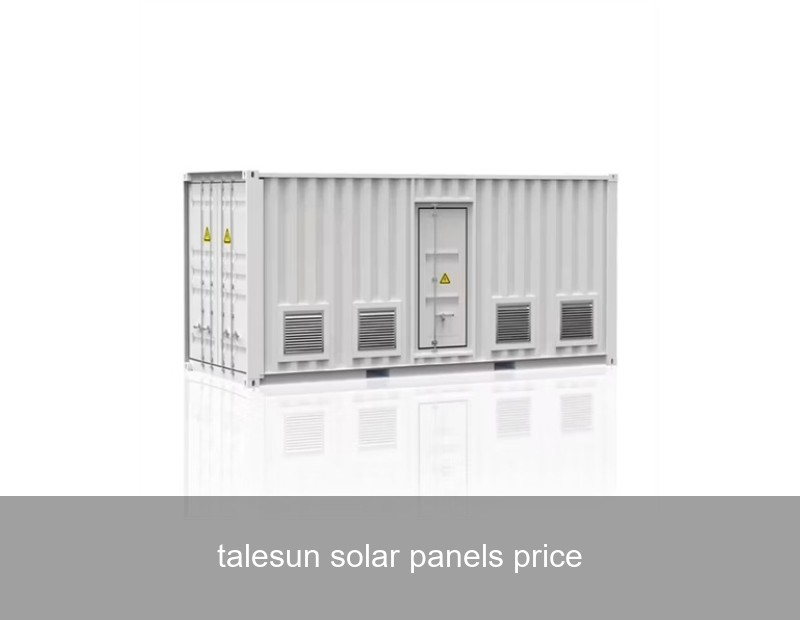
If you're researching solar energy, you've likely typed "Talesun solar panels price" into a search engine. It's a common starting point, but the figure you see is just one piece of a much larger puzzle. The true value of a solar investment isn't just the sticker price of the panels; it's the long-term performance, reliability, and the complete ecosystem that turns sunlight into savings and security. As energy costs remain volatile, making an informed decision requires looking beyond initial cost to understand total lifetime value.
Table of Contents
What Really Drives the Price of Talesun Solar Panels?
When you get a quote for Talesun solar panels, you're not just paying for silicon and glass. You're investing in a chain of technology and quality. Let's break down the key factors influencing that final price point.
- Panel Technology & Efficiency: Talesun offers a range, from high-efficiency monocrystalline PERC panels to more budget-friendly polycrystalline options. Higher efficiency panels (often with a price premium) generate more power per square meter, which is crucial if your roof space is limited. You might need fewer of them to meet your energy goals.
- Durability & Warranties: A panel's ability to withstand hail, wind, and decades of weather is engineered into its cost. Talesun's robust manufacturing and strong performance warranties (often 25+ years on power output) contribute to the price, ensuring your investment is protected.
- Supply Chain & Market Dynamics: Global demand for polysilicon, shipping logistics, and regional market incentives (like the U.S. Investment Tax Credit) all create fluctuations. The price in Germany may differ from that in California due to local import policies and installation labor costs.

Image Source: Unsplash - High-efficiency panels maximize energy production per square foot.
The Bigger Picture: It's a System, Not Just Panels
Focusing solely on "Talesun solar panels price" is like buying a powerful car engine without considering the transmission, wheels, or fuel system. Your solar array is a complete system where every component impacts performance and, ultimately, your return on investment (ROI).
| System Component | Role & Impact on Value | Cost Consideration |
|---|---|---|
| Inverters (String/Micro) | Converts DC solar power to usable AC power. Microinverters optimize each panel's output, especially in shaded conditions. | Higher upfront cost for advanced inverters can lead to significantly greater energy harvest over time. |
| Mounting & Racking | Secures panels to your roof. Quality here ensures longevity and avoids roof damage. | Not a place to cut corners; proper installation is critical for system life. |
| Energy Storage (Battery) | Stores excess solar energy for use at night or during outages. This is where true energy independence begins. | Adds to initial cost but dramatically increases self-consumption and resilience, maximizing solar value. |
This is where the conversation evolves. The most advanced solar panels lose potential if their energy is exported to the grid for low feed-in tariffs instead of being used on-site. To truly capitalize on your solar investment, integrating storage is the logical next step.
Case Study: Maximizing ROI with High-Performance Panels and Smart Storage
Let's look at a real-world scenario from the commercial sector in Southern Europe. A mid-sized winery in Italy installed a 100 kW solar array using high-efficiency Talesun TP6L72M modules. Their goal was to reduce operational costs for refrigeration and irrigation.
- Phenomenon: They generated surplus energy during peak sun hours, but faced high grid consumption in the evening during peak tariff rates.
- Data: Despite a 100 kW system, their grid dependency after sunset meant they were only achieving 40% self-consumption of their solar energy. The rest was sold back at a rate far lower than the peak evening price they had to buy it back at.
- Solution & Outcome: They partnered with Highjoule to integrate a 120 kWh Highjoule H2 Commercial Battery Energy Storage System (BESS). The system's intelligent software was programmed to store midday solar excess and dispatch it during the expensive 6 PM to 10 PM window. The result? Their self-consumption rate soared to over 85%, and they reduced their monthly energy bills by an additional 60% on top of their initial solar savings. The International Energy Agency notes that coupling solar with storage is key to maximizing its economic value, a principle this case clearly demonstrates.
How Highjoule Complements Your Solar Investment
As a global leader in advanced energy storage since 2005, Highjoule doesn't manufacture solar panels. We make the energy they produce infinitely more valuable and controllable. When you pair premium panels like Talesun with a Highjoule system, you move from being a passive producer to an active manager of your energy ecosystem.
Our solutions, such as the H2 Residential and H2 Commercial BESS, are designed with this synergy in mind:
- Intelligent Energy Management: Our AI-driven platform doesn't just store and release energy. It learns your consumption patterns, considers weather forecasts, and can even factor in dynamic electricity tariffs to autonomously optimize when to charge from solar, discharge to your home, or participate in grid services (where available).
- Seamless Integration: Highjoule systems are built to be inverter-agnostic, ensuring smooth compatibility with leading solar inverter brands, creating a future-proof and harmonious system.
- Scalability & Sustainability: From a single home to a large industrial microgrid, our modular systems can grow with your needs. By enabling higher consumption of clean, self-generated solar power, we help you achieve greater sustainability and reduce your carbon footprint beyond what solar alone can do.

Image Source: Unsplash - A complete home energy system with solar generation and wall-mounted battery storage.
Calculating Your True Cost and Long-Term Value
So, how should you evaluate the "Talesun solar panels price" in your context? Shift from thinking about cost per panel to cost per kilowatt-hour over 25 years.
The Value-Centric Calculation:
- Total System Cost: Include panels, inverters, mounting, installation, permits, AND a Highjoule battery storage system if considering full energy independence.
- Estimated Lifetime Production: Use local solar data and panel efficiency to estimate total kWh generated over the system's life.
- Estimated Self-Consumption & Savings: With storage, you might use 80-90% of your solar energy directly. Without it, this could be 30-50%. Calculate the value of the energy you don't have to buy from the grid at future (likely higher) rates.
- Consider Resilience: What is the value of keeping your lights on during a power outage? For a business, this can be substantial. For a homeowner, it's peace of mind.
By this metric, a system with a higher initial investment but superior efficiency and integrated storage often delivers a lower lifetime cost of energy and a higher overall ROI. It transforms the purchase from an expense into a long-term, revenue-generating asset for your property.
As you ponder the numbers, consider this: With the push for electrification and the volatility of global energy markets, is your primary goal the lowest upfront cost, or the highest degree of energy control and savings for decades to come? How will you ensure the solar energy you generate today is still working for you tonight?
 Inquiry
 Online Chat