


Calefacción con Paneles Solares: The Smart Path to Year-Round Comfort and Energy Independence
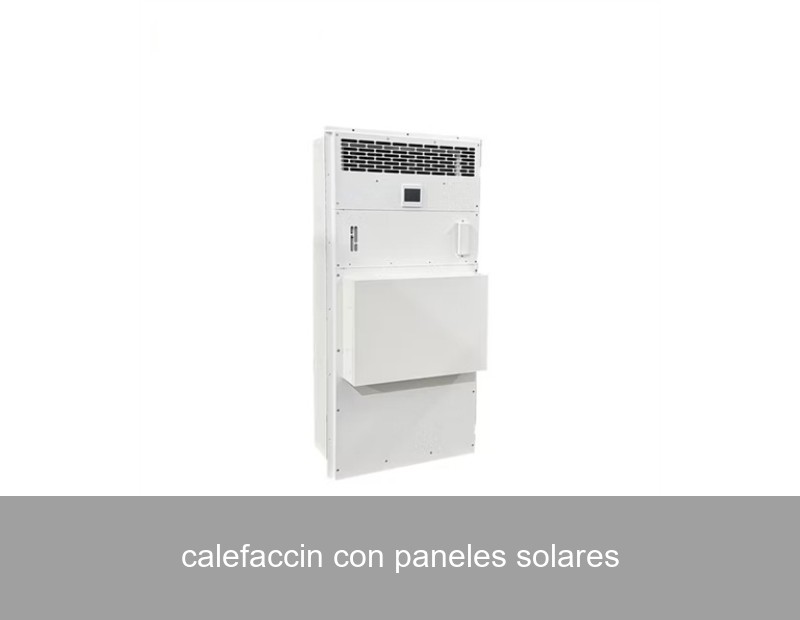
Imagine a home that stays cozy and warm in winter, powered not by volatile gas or oil prices, but by the clean, abundant energy of the sun. For many homeowners in Europe and the US, the concept of "calefacción con paneles solares" – heating with solar panels – is transitioning from a futuristic idea to a practical, cost-effective reality. While solar PV is famously linked to powering lights and appliances, its potential to revolutionize how we heat our spaces and water is a game-changer for energy bills and carbon footprints. This article explores how modern solar technology, paired with intelligent energy management, can provide a sustainable and resilient heating solution for your home or business.
Table of Contents
- How Does Solar-Powered Heating Actually Work?
- The Data Advantage: Why Solar Heating Makes Financial Sense
- A Real-World Case: The Munich Family Home Retrofit
- Beyond the Panels: The Critical Role of Smart Storage
- Highjoule's Integrated Solutions for Solar Heating
- Is Solar-Powered Heating Right for You?
How Does Solar-Powered Heating Actually Work?
At its core, "calefacción con paneles solares" involves using electricity generated by photovoltaic (PV) panels to run heating systems. This is distinct from solar thermal systems, which use collectors to heat water directly. The PV-based approach offers greater flexibility. The generated electricity can power various types of heating equipment:
- Heat Pumps (Air-Source or Ground-Source): The most efficient pairing. Solar electricity runs the compressor of a heat pump, which can deliver 3-4 units of heat for every unit of electricity used.
- Electric Boilers or Resistance Heaters: A straightforward replacement for gas/oil boilers, ideal for hydronic (water-based) radiator systems or underfloor heating.
- Direct Electric Space Heaters: For supplemental heating in specific zones.
The beauty lies in integration. A well-designed system doesn't just send solar power directly to the heater the moment the sun shines. Instead, it uses a smart energy management system to decide the most economical and efficient moment to use that power—whether it's for heating, charging a battery, or powering other home appliances.
The Data Advantage: Why Solar Heating Makes Financial Sense
Let's talk numbers, because the financial and environmental impact is significant. The phenomenon of rising and unpredictable fossil fuel costs is a pain point for millions. The data, however, shows a clear alternative path.
According to the International Energy Agency (IEA), solar PV is now the cheapest source of electricity in history for most of the world. Pair this with the improving efficiency of heat pumps, and the economics become compelling. In regions like Southern Europe or the sunnier states of the US, a properly sized solar array can cover a substantial portion of a household's annual energy needs, including heating.
Consider this: A typical European household might spend €1,500-€2,500 annually on gas/oil for heating and hot water. A solar PV system sized to include heating load can reduce this cost by 60-80%, depending on insulation and local climate. The key to maximizing this offset is not just generating solar energy, but orchestrating its use throughout the day and year. This is where advanced battery storage and energy management become non-negotiable for a reliable "calefacción con paneles solares" setup.
A Real-World Case: The Munich Family Home Retrofit
Let's move from theory to a concrete example. The Schmidt family in Munich, Germany, decided in 2022 to decarbonize their 180m² detached home. Their goal: eliminate natural gas for heating and hot water.
The Challenge: Cold Bavarian winters with peak heating demand in December/January, precisely when solar generation is at its lowest.
The Solution: They installed a 15 kWp solar PV array on their south-facing roof. This was connected not just to the grid, but to a high-capacity, weatherproof battery storage system installed in their garage, ensuring energy availability after sunset. They replaced their old gas boiler with an air-to-water heat pump.
The Heart of the System: A sophisticated energy management system that prioritizes using solar electricity to power the heat pump and charge the battery. It intelligently decides when to draw from the battery, when to use a small amount of grid power, and when to export excess solar energy.
The Data-Driven Outcome (First Full Year, 2023):
| Metric | Result |
|---|---|
| Annual Heating & Hot Water Cost | Reduced from €2,100 (gas) to €450 (grid + system fees) |
| Solar Self-Consumption Rate | Reached 78% (well above the ~30% typical for systems without smart storage) |
| Carbon Emissions from Heating | Reduced by an estimated 4.8 tonnes CO2e annually |
The Schmidts' experience underscores a critical insight: success in solar heating hinges on the integration of generation, storage, and intelligence. The panels alone aren't enough for year-round comfort; you need a system that bridges the gap between solar production peaks and heating demand peaks.

A modern home equipped for solar-powered heating, featuring both rooftop PV and an air-source heat pump unit.
Beyond the Panels: The Critical Role of Smart Storage
As the Munich case shows, the battery is the linchpin. Think of it as your personal energy reservoir for heating. On a bright autumn afternoon, your solar panels might produce a surplus. Without storage, this energy goes to the grid for a small feed-in tariff. With a Highjoule battery storage system, that energy is stored and then dispatched to run your heat pump on the cold evening that follows, directly displacing expensive grid power.
For "calefacción con paneles solares" to be effective, you need a storage solution built for the demands of heating:
- High Capacity & Power: Heating requires significant energy. Residential batteries with 10 kWh+ capacity and high continuous power output are essential.
- All-Weather Resilience: Batteries are often installed in garages or basements. They must operate efficiently in a range of temperatures.
- Cycling Stability: A heating-focused system will charge and discharge the battery daily, especially in winter. The battery must be designed for thousands of deep cycles without significant degradation.
- Grid-Forming Capability: In the event of a power outage, an advanced system can use the battery to form a microgrid, keeping your heat pump and essential loads running—a crucial resilience feature.
Highjoule's Integrated Solutions for Solar Heating
At Highjoule, with nearly two decades of experience in advanced energy storage, we design systems specifically for this kind of integrated energy independence. Our approach to enabling effective "calefacción con paneles solares" goes beyond selling components; we provide a cohesive ecosystem.
Our HPS (Highjoule Power System) series of residential and commercial battery storage units are engineered for high-cycling, high-power applications like heating. Coupled with our Energy Hub controller, the system acts as the brain of your home's energy flows. It seamlessly integrates with your solar inverters, heat pump, and even EV charger, making real-time decisions to maximize comfort and savings.
For larger projects, such as multi-family buildings, schools, or commercial facilities, our containerized BESS (Battery Energy Storage Systems) can be scaled to meet the substantial thermal energy demand, often integrated with large-scale solar carports or rooftop arrays. This turns an entire building's heating strategy into a predictable, sustainable, and cost-controlled operation.

The result of a well-integrated system: sustainable, comfortable, and cost-effective warmth.
Is Solar-Powered Heating Right for You? Key Considerations
Embarking on a solar heating project requires careful planning. Here are the essential factors to evaluate:
- Your Current Heating System: The efficiency of your home (insulation, windows) and the type of heat distribution (radiators, underfloor heating) will impact the size and type of heat pump needed.
- Solar Resource: A professional site assessment is crucial. Roof orientation, shading, and local climate data will determine the viable size of your PV array.
- Energy Consumption Profile: Understanding your annual and seasonal heating loads is key to sizing both the solar generation and battery storage correctly. This is where Highjoule's design expertise adds immense value.
- Financial Incentives: Markets across Europe and the US offer generous incentives for solar PV, batteries, and heat pumps (e.g., tax credits in the US, BAFA grants in Germany). These can dramatically improve the return on investment.
The journey to energy-independent heating is not a distant dream. It's a practical technology stack available today: Solar PV + Smart Battery Storage + Efficient Heat Pump + Intelligent Control. By mastering the interplay of these elements, homeowners and businesses can lock in long-term energy price stability and contribute meaningfully to a cleaner grid.
What's the first step you could take this season to understand your home's potential for solar-powered warmth?
 Inquiry
 Online Chat