


Can Solar Panels Power a House? The Complete Guide to Energy Independence
It’s a question millions of homeowners across Europe and the US are asking as energy prices fluctuate and environmental consciousness grows: can solar panels power a house? The short, exciting answer is a resounding yes. But the journey from a simple "yes" to confidently flipping the switch on your utility company is where the real story lies. It's not just about mounting panels on your roof; it's about designing an intelligent, resilient energy ecosystem for your home. Let's demystify the process, look at real data, and explore how modern technology makes true energy independence more achievable than ever.
The Phenomenon: From Sunlight to Socket
First, let's address the elephant in the room. Solar panels only produce electricity when the sun is shining. So, the core question morphs from "can solar panels power a house" to "can solar panels power my house around the clock?" This is the fundamental challenge of solar energy: its intermittent nature. You might be generating a surplus at noon but drawing power from the grid at night. This mismatch between production and consumption is the puzzle that needs solving.
Image Source: Unsplash - A home with solar panels at dusk, the critical time when energy storage becomes essential.
The Data: Sizing Up Your Solar Needs
To understand if solar can power your specific home, we need to talk numbers. The average US household consumes about 886 kWh per month (approximately 29 kWh per day), according to the U.S. Energy Information Administration (EIA). In Europe, consumption varies widely, from roughly 150-350 kWh per month for efficient homes to higher levels comparable to the US.
A typical modern solar panel might be rated at 400 watts. In a sunny region like Southern California or Southern Spain, one panel can produce about 1.5 - 2 kWh per day. To cover 29 kWh daily, you'd need a system of 15-20 panels (a 6-8 kW system). But this is a simplified daytime calculation. The critical metric is self-consumption—the percentage of your solar energy you use directly. Without storage, this often hovers around 30-50%, sending the excess back to the grid.
| Time of Day | Solar Production | Home Demand | Solar-Only Scenario (Grid Interaction) | Solar + Storage Scenario |
|---|---|---|---|---|
| Midday (Sunny) | High | Low | Excess energy exported to grid | Excess energy charges battery |
| Evening (No Sun) | None | High | Energy imported from grid | Home powered by battery |
| Overnight | None | Low-Medium | Energy imported from grid | Home powered by battery |
| Morning (Cloudy) | Low | Medium | Deficit imported from grid | Battery supplements low production |
The Real-World Case: The Smith Family in Arizona, USA
Let's make this concrete. The Smith family in Phoenix, Arizona, installed a 9.6 kW solar array in 2022. Their historical consumption was 1,100 kWh/month. Post-installation, their summer electricity bills dropped dramatically... but they still paid "grid connection" fees and bought power at night. Their self-consumption rate was just 40%.
In 2023, they decided to answer "can solar panels power our house completely?" by integrating a Highjoule H2 Series Home Energy Storage System with a 22 kWh usable capacity. The results after one year were telling:
- Grid Independence: Achieved 94% self-sufficiency, only drawing from the grid during a rare week of prolonged monsoon clouds.
- Financial Impact: Reduced their annual energy cost from an average of $1,800 to just under $150 (primarily grid service fees).
- Resilience: During a local grid outage affecting neighbors for 8 hours, their home continued to operate seamlessly on solar + battery power.
This case highlights the transformative role of storage. The solar panels were the engine, but the battery was the fuel tank that allowed the Smiths to use their solar energy on their own schedule.
The Key Component: Why Energy Storage Changes Everything
As the Smith family's story shows, the bridge between a partial and a (near-)complete solar-powered home is energy storage. A battery storage system like those developed by Highjoule acts as your personal energy reservoir:
- Time-Shifting Energy: Stores cheap, clean solar energy produced at noon for use in the expensive, carbon-intensive evening hours.
- Providing Backup Power: Keeps essential loads running during grid outages, a feature whose value is increasingly recognized in both Europe and the US.
- Maximizing Self-Consumption: Raises your direct use of solar power from ~40% to over 80%, dramatically improving the return on your solar investment.
The Highjoule Solution: Intelligent, All-Weather Power
At Highjoule, with nearly two decades of expertise, we've moved beyond just providing components. We deliver integrated, intelligent systems designed to make the answer to "can solar panels power a house" a confident and reliable "yes." Our approach centers on the Highjoule Harmony OS, an intelligent energy management platform that orchestrates solar production, battery storage, home consumption, and the grid.
For residential clients, our H2 Series Battery Storage System is a cornerstone. Its modular design allows homeowners to start with a base capacity and expand as needed. With industry-leading round-trip efficiency and a compact, safe lithium iron phosphate (LFP) chemistry, it's built for daily cycling and long life. Paired with our hybrid inverters, the system doesn't just store energy—it makes smart decisions in real-time, like charging from the grid during ultra-low overnight rates to supplement solar on a predicted cloudy day.

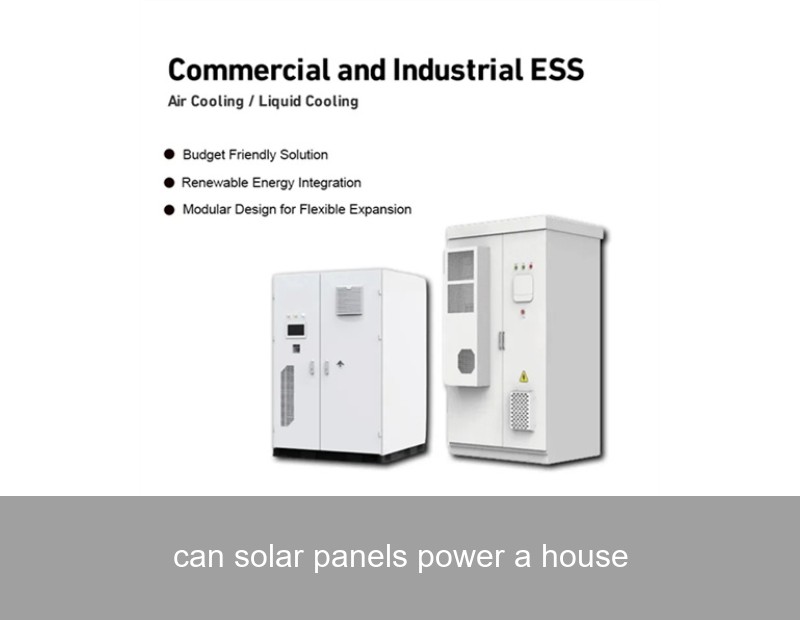
Image Source: Unsplash - A sleek, modern home battery unit, representing the core of energy storage technology.
For larger properties, off-grid aspirations, or commercial applications, our Microgrid Controller can integrate multiple power sources (solar, wind, generator) with our C&I-scale battery storage, creating a truly independent and resilient energy asset. This is how we empower not just houses, but entire communities and businesses.
Beyond the Basics: Factors for Total Energy Independence
To fully answer the question, consider these final pieces of the puzzle:
1. Home Energy Efficiency
Before sizing a system, a home energy audit is wise. Upgrading insulation, switching to LED lighting, and choosing energy-efficient appliances reduce the total load your solar system must cover, making independence easier and more affordable to achieve.
2. Climate and Solar Resource
A home in Stockholm will need a larger system than one in San Diego to achieve the same output. Tools like PVGIS from the European Commission provide highly accurate solar production estimates for any location in Europe and beyond.
3. Future-Proofing for Electrification
Are you planning an electric vehicle? A heat pump? These major loads must be factored into your system design. An undersized system will fail to meet your future "all-electric" needs. Highjoule's scalable systems are designed specifically for this evolving energy landscape.
Your Energy Future: The Final Consideration
So, can solar panels power a house? Absolutely. The technology is proven, the economics are compelling, and the environmental benefits are clear. The modern equation is simple: Solar Panels + Intelligent Energy Storage = Energy Independence. It's no longer a futuristic concept but a practical home upgrade, delivering control, resilience, and long-term savings.
What unique energy challenges does your home face—be it peak demand charges, frequent outages, or simply the desire to break free from volatile utility rates—and how could an intelligent storage system transform your relationship with the power you use?
 Inquiry
 Online Chat