


Unlocking Energy Independence: Your Guide to the 10000 Watt Solar Energy Storage Cabinet
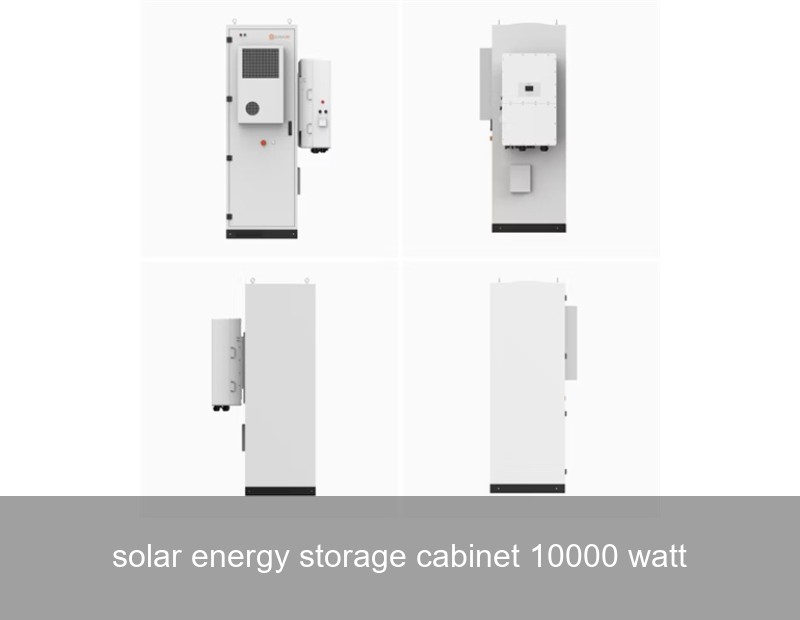
your solar panels are working hard under the midday sun, but you're at the office. That clean energy is flowing back to the grid. Later, as the sun sets and your home's energy demand peaks, you're buying power back at a premium rate. There's a smarter way. Enter the 10000 watt solar energy storage cabinet—a game-changing system designed to capture, hold, and dispatch that precious solar energy exactly when you need it. For homeowners and small business owners in Europe and the US with significant energy appetites, this isn't just a battery; it's the cornerstone of a modern, resilient, and cost-effective energy strategy.
Why a 10kW Storage Cabinet is the Modern "Sweet Spot"
You might wonder, why 10,000 watts (or 10 kilowatts)? The shift towards this capacity is a direct response to real-world energy patterns. Modern all-electric homes with heat pumps, EVs, and home offices have moved beyond the needs of a few lights and a fridge. A 10kW system provides the perfect balance between capacity, cost, and practicality. It can typically power the critical loads of a large home or a small commercial operation for several hours during an outage, and, more importantly, it can seamlessly manage daily self-consumption.
Let's look at the data. According to the U.S. Energy Information Administration, the average annual electricity consumption for a U.S. residential utility customer was about 10,500 kWh in 2023. That breaks down to roughly 29 kWh per day. A well-configured 10kW solar energy storage cabinet, paired with a sufficient solar array, is designed to cover a substantial portion of this daily cycle, dramatically reducing grid dependence.

Image: A modern energy-independent home setup. Source: Unsplash
The Problem It Solves: Intermittency and Economics
Solar power's inherent intermittency—the sun doesn't always shine—creates a mismatch between generation and consumption. Grid-tied systems without storage are at the mercy of net metering policies, which are becoming less favorable. A solar energy storage cabinet 10000 watt class system directly addresses this by:
- Maximizing Self-Consumption: Using your solar power first, before exporting any surplus.
- Providing Backup Power: Keeping essential systems running during grid failures.
- Enabling Time-of-Use (TOU) Arbitrage: Storing cheap off-peak or solar energy to use during expensive peak hours.
Key Components of a Robust 10kW Solar Energy Storage Cabinet
Think of the cabinet as an energy command center. It's not just a box of batteries. A high-performance system integrates several critical components:
| Component | Role | What to Look For |
|---|---|---|
| Battery Cells & Chemistry | The core energy storage medium. Lithium Iron Phosphate (LFP) is now the dominant, safe chemistry for stationary storage. | LFP chemistry, UL 9540 certification, >6000 cycle life at 80% depth of discharge. |
| Battery Management System (BMS) | The "brain" that monitors cell voltage, temperature, and health, ensuring safety and longevity. | Advanced, proprietary BMS with cell-level monitoring and active balancing. |
| Hybrid Inverter/Charger | The "heart" that converts DC from solar/batteries to AC for your home, and manages energy flow. | High peak power capability (surge power for motor starts), >97% efficiency, seamless switchover. |
| Thermal Management | Maintains optimal battery temperature for performance and lifespan. | Liquid cooling or intelligent forced-air systems, especially for compact cabinets. |
| Energy Management Software | The user interface for monitoring, control, and optimizing for savings. | Intuitive app, grid service program compatibility (e.g., virtual power plant readiness). |
A Real-World Case Study: The Bavarian Dairy Farm
Let's move from theory to practice. A family-run dairy farm in Bavaria, Germany, faced rising energy costs and sought to stabilize operations. Their goals were clear: reduce grid dependency, ensure refrigeration units never failed, and monetize their large rooftop solar array more effectively.
They installed a solar energy storage cabinet with a 10000 watt continuous power output and 25 kWh of usable capacity. The results, monitored over one year, were compelling:
- Self-Consumption Rate Increased: From 35% to over 85% of their solar generation.
- Grid Energy Cost Reduced: By approximately €4,200 annually, despite increased milk production.
- ROI Timeline: Projected payback period of under 7 years, factoring in German subsidy programs.
- Resilience: The system successfully maintained critical cooling and milking equipment during two grid outages, preventing spoilage and operational halts.
This case underscores the dual value proposition: economic savings and operational resilience. For this farm, the storage cabinet became an essential piece of infrastructure, not just an accessory.

Image: Renewable energy solutions for agricultural businesses. Source: Unsplash
Choosing the Right 10kW System: Questions to Ask Your Provider
Not all 10kW cabinets are created equal. When evaluating options, ask these critical questions:
- Is the power rating continuous or peak? A quality system clearly states a 10,000-watt continuous rating, with a higher surge rating for starting motors (like well pumps or AC compressors).
- What is the usable energy capacity (in kWh)? Power (kW) is how fast you can drain the battery; capacity (kWh) is how much total energy is stored. A good 10kW cabinet often pairs with 15-30 kWh of storage.
- How is the system integrated and managed? Does it require a separate inverter, or is it an all-in-one unit? Is the software user-friendly and feature-rich?
- What does the warranty actually cover? Look for a warranty that guarantees both capacity retention (e.g., 70% after 10 years) and cycle life.
The Highjoule Solution: Engineered for Performance and Peace of Mind
At Highjoule, with nearly two decades of expertise since 2005, we've engineered our HPS-10 series to be the benchmark for reliable 10kW-class storage. We understand that a storage cabinet is a long-term investment, which is why our design philosophy prioritizes safety, longevity, and intelligent control.
The Highjoule HPS-10 cabinet is a fully integrated, AC-coupled solution built around automotive-grade LFP cells. Its liquid-cooled thermal system ensures consistent performance from the icy winters of Minnesota to the hot summers of Spain. What truly sets it apart is the Highjoule Energy OS, our proprietary software platform. It doesn't just monitor; it learns your home's patterns and automatically optimizes for cost savings, whether by leveraging time-of-use rates or participating in grid flexibility programs where available.
Our services extend beyond the hardware. We provide comprehensive site assessment tools, professional installer training networks across Europe and North America, and remote system monitoring to ensure your 10000 watt solar energy storage cabinet performs optimally for years to come. We view it as a partnership in your energy independence journey.
The Future-Proofing Element
Considering the rapid evolution of energy markets, the Highjoule HPS-10 is designed to be future-proof. Its modular architecture allows for capacity expansion if your needs grow. Furthermore, its software is regularly updated to interface with new smart grid standards and virtual power plant (VPP) aggregators, a trend rapidly gaining traction as noted by the International Energy Agency. Your investment today can become a revenue stream tomorrow.

Image: Interior of a modern, well-organized energy storage system. Source: Unsplash
So, as you contemplate taking control of your energy footprint, ask yourself this: What would true energy resilience look like for your home or business, and what's the first step you need to take to make that a reality?
 Inquiry
 Online Chat