


Understanding Solar Panel Characteristics: The Key to Maximizing Your Solar Investment
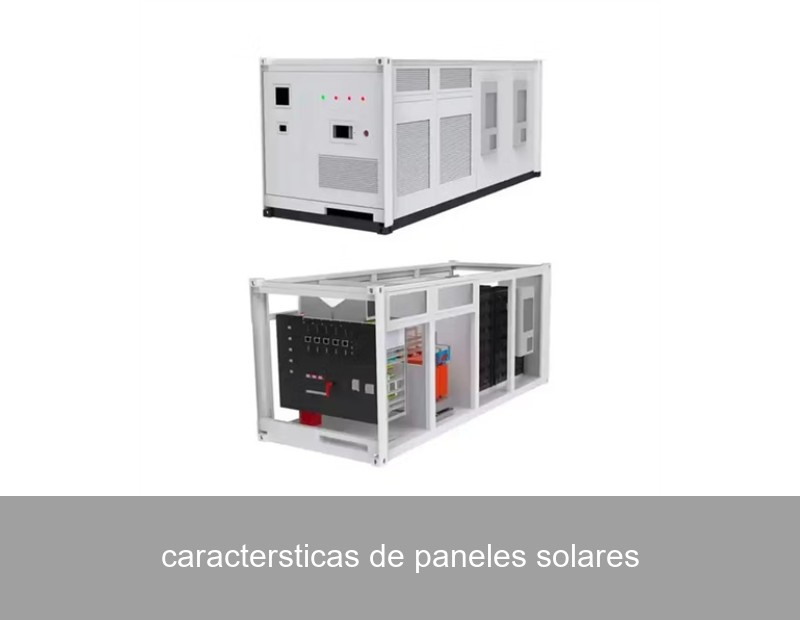
So, you're considering solar panels. You've heard they can cut your electricity bills and reduce your carbon footprint. But when you start looking, you're met with a dizzying array of specs: efficiency ratings, temperature coefficients, N-type vs. P-type. It can feel like you need an engineering degree just to make a choice. Understanding the core características de paneles solares (solar panel characteristics) isn't just for installers—it's crucial for you, the consumer, to make an informed decision that delivers optimal performance and return on investment for decades. Let's demystify these terms and explore how the right panels, paired with intelligent storage, form the backbone of a truly resilient energy system.
Key Solar Panel Characteristics Deconstructed
Think of a solar panel's datasheet as its medical chart. Each metric tells a story about its health, strength, and how it will behave in the real world. Here are the vital signs you need to know.
Efficiency & Power Output: The "Muscle" Metric
Efficiency is the percentage of sunlight hitting the panel that gets converted into usable electricity. Higher efficiency means more power from the same roof space. For instance, while standard polycrystalline panels might hover around 17-19%, advanced monocrystalline panels can reach 22% or more. But raw efficiency isn't everything. The related metric, the Power Output (Wattage), tells you the actual power under ideal lab conditions (Standard Test Conditions, or STC). A 400W panel will, logically, produce more electricity than a 350W panel of the same size.

Image Source: Unsplash - High-efficiency monocrystalline cells.
Temperature Performance & Coefficients: The "Endurance" Factor
Here's a fact that surprises many: solar panels get less efficient as they get hotter. This is where the Temperature Coefficient comes in. It's a negative percentage (e.g., -0.3%/°C) that indicates how much power output decreases for every degree Celsius above 25°C. A panel with a coefficient of -0.3%/°C will outperform one with -0.4%/°C on a scorching summer day. This characteristic is critical in sun-drenched markets like Southern Europe or the American Southwest.
Degradation & Durability: The "Longevity" Promise
Panels don't last forever, but quality ones degrade very slowly. The Degradation Rate is the annual percentage of power loss. An industry-leading rate is 0.25-0.3% per year, meaning after 25 years, the panel still operates at about 92% of its original output. Durability is shown through warranties: a 25-30 year Performance Warranty guarantees a certain output level (e.g., 92% at year 25), while a 12-15 year Product Warranty covers material defects.
Technology & Cell Types: The "Blueprint"
The underlying technology defines a panel's potential. Here's a quick comparison:
| Cell Type | Key Characteristics | Typical Efficiency | Best For |
|---|---|---|---|
| Monocrystalline (PERC, N-Type) | High efficiency, low degradation, better temperature coefficient, higher cost. | 21%+ | Space-constrained roofs, maximizing long-term yield. |
| Polycrystalline | Lower cost, blueish hue, moderate efficiency and temperature performance. | 17-19% | Budget-conscious projects with ample space. |
| Thin-Film (CdTe, CIGS) | Lightweight, flexible, good high-temperature performance, lower efficiency. | 15-18% | Commercial flat roofs, structures with weight limits. |
Modern N-type TOPCon cells, for example, are gaining traction for their superior efficiency and lower degradation compared to traditional P-type cells (NREL, 2023).
Case Study: Real-World Impact in a Spanish Winery
Let's see how these characteristics play out in reality. A renowned winery in La Rioja, Spain, faced rising energy costs and sought sustainability for its temperature-controlled fermentation and storage facilities. Their roof space was limited but received excellent sun exposure.
- Challenge: Maximize energy generation on a fixed roof area to offset high daytime cooling loads.
- Panel Choice: They selected high-efficiency (22.6%) N-type monocrystalline panels with a low temperature coefficient of -0.29%/°C. This ensured robust performance during hot summer harvest periods.
- The System & Result: A 250 kWp solar array was installed. However, the winery's energy needs extended into the night. To fully leverage their premium panels, they integrated a Highjoule H2 Series Commercial Battery Energy Storage System (BESS). The system stores excess solar generation from the day and dispatches it during peak evening hours and for critical nighttime cooling.
- Data & Outcome: The project generates over 380,000 kWh annually, covering 65% of the facility's total energy consumption. The Highjoule BESS captures and utilizes an additional 20% of solar production that would have been exported to the grid at lower rates. This combination reduced their grid dependence by over 80% during peak tariff periods and provided backup power for critical processes.

Image Source: Unsplash - Solar installation at an agricultural facility.
Matching Panel Characteristics to Your Energy Needs
Choosing panels isn't about picking the "best" in a lab; it's about finding the right fit for your scenario. Ask these questions:
- Is your roof space limited? Prioritize high-efficiency monocrystalline panels to get the most power per square meter.
- Do you live in a hot climate (like Southern Europe or Arizona)? A low temperature coefficient becomes a top-tier priority to maintain output on hot days.
- Are you planning for the next 30 years? Invest in panels with a low degradation rate and a strong performance warranty. The slightly higher upfront cost pays dividends in the long run.
- What is your primary goal? Maximum financial return? Prioritize metrics that boost total lifetime yield (efficiency, degradation). Aesthetic integration? Certain black-frame, black-sheet panels might be preferable.
The Highjoule Advantage: Intelligent Integration
At Highjoule, we view premium solar panels as just the beginning. The true potential of a system built with superior características de paneles solares is unlocked only when paired with intelligent energy management. Our advanced battery storage systems, like the H2 Series for Commercial & Industrial applications or the Residential PowerWall solution, act as the perfect complement.
Why does this integration matter? High-efficiency panels often produce more power in the middle of the day than a home or business can immediately use. Without storage, this surplus energy is often sold back to the grid at a low rate. A Highjoule BESS captures every kilowatt-hour of that valuable self-generated electricity, storing it for use when the sun isn't shining, during peak utility rate periods, or as backup power during outages. Our systems are designed with sophisticated energy management software that continuously analyzes production, consumption, and grid conditions to optimize your energy flow automatically—ensuring you get the maximum financial and operational benefit from your investment in top-tier solar technology. Founded in 2005, we've been pioneering these smart, integrated solutions long before they became mainstream.
Now that you understand how the characteristics of your solar panels form the foundation of your energy independence, what would you do with a system that not only generates power efficiently but also gives you complete control over when and how to use it?
 Inquiry
 Online Chat