


Understanding Solar Panel 300 Watt Price: A Smart Buyer's Guide
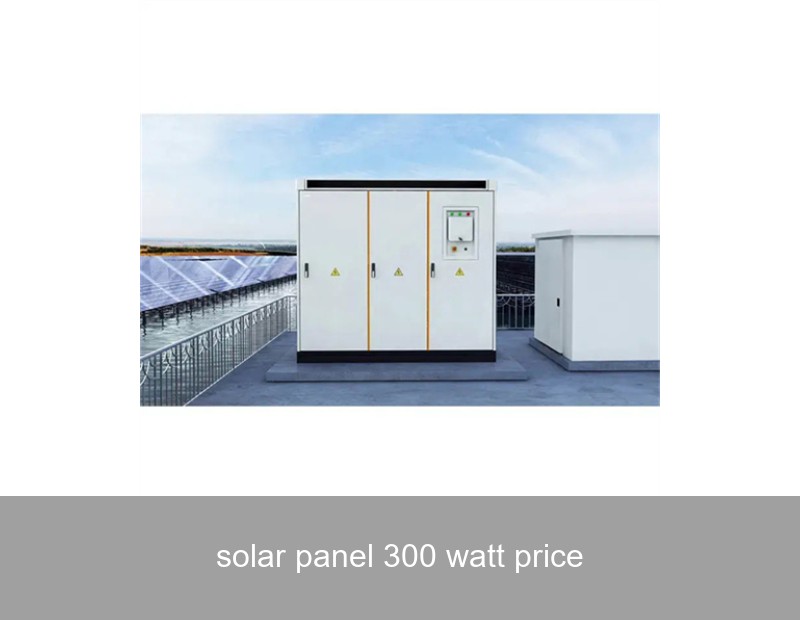
So, you're looking into solar power and keep seeing "300-watt solar panels" pop up everywhere. It's a popular choice for good reason—offering a sweet spot of efficiency and value for many homes and businesses. But when you start searching for the solar panel 300 watt price, you quickly realize the numbers vary wildly. Why is that? Is a cheaper panel a bargain, or a future headache? As a product technology expert at Highjoule, a global leader in advanced energy storage since 2005, I help demystify this daily. Let’s peel back the layers on what truly determines cost and value, ensuring your investment powers your life for decades to come.
Table of Contents
The Real Breakdown of a 300-Watt Solar Panel Price
When you see a price quote, it's rarely just for the physical panel. The solar panel 300 watt price you're quoted typically encompasses a bundle. Let's break down what you're actually paying for:
- The Panel Itself: This is the core cost, influenced by cell technology (monocrystalline is typically more efficient and costly than polycrystalline), brand reputation, and the manufacturer's warranties.
- Balance of System (BOS): This crucial category includes mounting hardware, wiring, connectors, and most importantly, the inverter(s) that convert DC solar power to usable AC power for your home.
- Soft Costs: These include permits, installation labor, design, inspection, and the installer's overhead and profit. In markets like the U.S. and Europe, these can constitute a significant portion of the total project cost.
- Supply Chain & Market Factors: Raw material costs (like polysilicon), import tariffs (relevant in the U.S. market), and regional demand all cause fluctuations.
As of 2024, for a single 300W residential-grade panel, you might see prices ranging from $150 to $300 per panel for the hardware alone. But the more meaningful metric is the cost per installed watt for the entire system. According to the National Renewable Energy Laboratory (NREL), the average installed cost for residential solar continues to decrease, but quality components ensure those savings last.
Monocrystalline vs. Polycrystalline: A Quick Cost vs. Efficiency Note
Most 300W panels today are high-efficiency monocrystalline. You might find polycrystalline panels at a lower solar panel 300 watt price, but they generally require more roof space for the same output and may degrade slightly faster. For limited roof space, the long-term value of mono panels is often superior.
Looking Beyond the Sticker: Quality & Long-Term Value
Focusing solely on the lowest upfront cost is the most common mistake. Two panels with the same 300-watt nameplate rating can perform drastically differently over 25 years. Here’s what separates a quality investment from a disposable one:
| Feature | Budget Panel | Quality Panel (e.g., Highjoule Partners) |
|---|---|---|
| Performance Warranty | May guarantee only 85% output after 25 years | Typically guarantees 92% or higher output after 25 years |
| Degradation Rate | Higher annual loss (e.g., 0.7%) | Lower annual loss (e.g., 0.3-0.5%) |
| Materials & Build | Standard frames, potential for micro-cracks | Robust, corrosion-resistant frames, durable cell encapsulation |
| Temperature Coefficient | Higher loss in heat (e.g., -0.4%/°C) | Better heat tolerance (e.g., -0.3%/°C) |
Think of it this way: a cheaper panel might produce 300 watts today, but a quality panel will produce significantly more cumulative kilowatt-hours over its lifetime. That directly translates to higher savings on your electricity bills and a faster return on investment (ROI). At Highjoule, while we specialize in intelligent storage, we only integrate panels from trusted, tier-1 manufacturers that meet these rigorous long-term performance standards, because your entire system's reliability depends on it.

Image: High-quality monocrystalline panels ensure long-term performance. (Source: Unsplash)
The Power of System Synergy: Why Your Inverter and Battery Matter Most
Here's a perspective we at Highjoule emphasize: a solar panel is a brilliant generator, but it's only one part of an intelligent power ecosystem. The true magic—and the real financial optimization—happens when your panels are perfectly paired with the right inverter and a smart battery storage system.
Your 300-watt panels produce direct current (DC). Your home uses alternating current (AC). The inverter's job is that conversion, and its efficiency (often 97-99% for premium models) determines how much of your precious solar energy you actually get to use. A poor inverter can bottleneck even the best panels.
But let's talk about the game-changer: battery storage. Without a battery, excess solar energy you produce at midday is often sold back to the grid at a low rate, only for you to buy it back at night at a higher price. This is where our core expertise at Highjoule transforms your solar investment.
Our Highjoule HES Series residential energy storage systems are designed for this exact synergy. They store your surplus 300-watt panel production for use when you need it most—during peak rate periods, in the evening, or during a grid outage. This maximizes self-consumption, sometimes doubling the value you get from each solar watt. Suddenly, the solar panel 300 watt price isn't just about panel cost; it's about the value of the fully stored and managed kilowatt-hour it delivers to your appliances.
A Real-World Case: The ROI of Quality in Munich, Germany
Let's ground this with data. Consider a typical family home in Munich, Germany, with a south-facing roof. They install a 6 kWp system using twenty 300-watt panels.
- Scenario A (Budget System): Lower-cost panels and a standard inverter, no battery. Total system cost: €11,000. Annual solar yield: ~5,700 kWh. With Germany's feed-in tariff and offset grid consumption, the simple payback period is roughly 9-10 years.
- Scenario B (Highjoule Integrated System): Premium 300W panels, a high-efficiency hybrid inverter, and a Highjoule HES 10 kWh battery. Total system cost: €18,500. Annual solar yield: ~6,000 kWh (better low-light performance), with 85% self-consumption due to the battery.
By avoiding peak grid purchases and maximizing self-use, the integrated system dramatically reduces the family's energy bill. The payback period, considering rising energy prices (IEA reports on energy prices), drops to 7-8 years. Beyond payback, for the system's remaining 15+ year life, they enjoy near-total energy independence and protection from blackouts—a value that's hard to price. This synergy is what we engineer for.

Image: A modern home battery storage system, like the Highjoule HES, maximizing solar self-consumption. (Source: Unsplash)
Making Your Choice: Key Questions Before You Buy
Armed with this knowledge, how should you evaluate your options? Move the conversation with your installer beyond just the solar panel 300 watt price. Ask these questions:
- "What is the annual degradation rate and the 25-year performance warranty of these specific panels?"
- "What is the efficiency and warranty of the inverter? Is it a hybrid inverter ready for a future battery?" (Future-proofing is key).
- "How would adding a battery, like a Highjoule system, improve my ROI and energy independence, given my consumption patterns?"
- "Can you provide a detailed projection of my levelized cost of energy (LCOE) over 20 years, not just the system price?"
Remember, you are not buying panels; you are buying a personalized power plant. The goal is to secure the lowest cost of clean electricity over the system's lifetime.
Where Highjoule Fits Into Your Solar Journey
At Highjoule, we provide the intelligence and resilience layer for your solar investment. Our commercial and residential energy storage systems and microgrid controllers are designed to integrate seamlessly with high-quality solar arrays. We ensure that every watt your 300-watt panels produce is harvested, stored, and dispatched with maximum efficiency, giving you control and peace of mind in an uncertain energy landscape.
So, as you compare quotes and ponder the solar panel 300 watt price, I'll leave you with this: Is your primary goal the lowest upfront cost today, or the highest guaranteed return and energy security for the next 25 years? How will your system adapt when energy prices and policies change again?
 Inquiry
 Online Chat