


Growatt ESS 10kW On-Grid: Powering Your Energy Independence
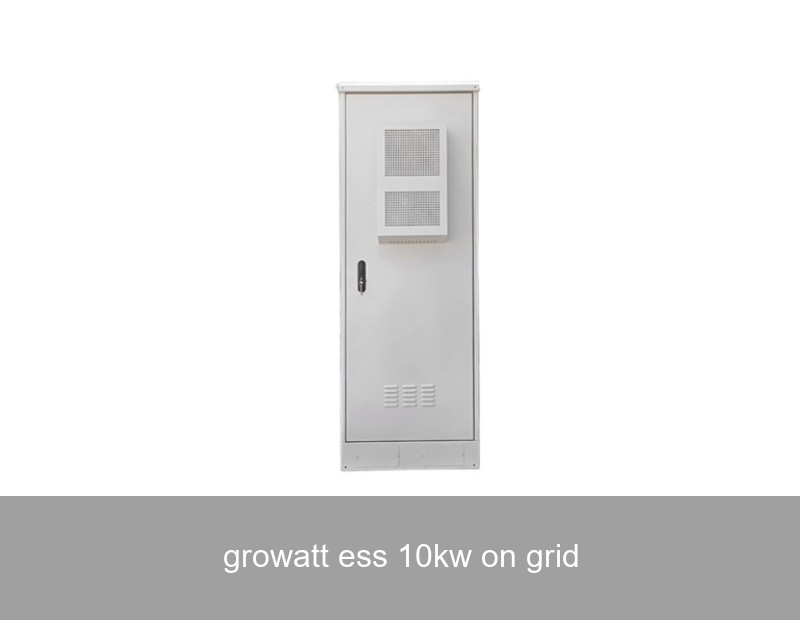
Have you ever watched your electricity bill climb with the seasons and wondered if there's a smarter way to power your home or business? You're not alone. Across Europe and the US, a quiet revolution is underway as energy-conscious consumers and businesses turn to solar energy paired with battery storage. At the heart of this shift is the quest for a reliable, on-grid energy storage system (ESS) that can maximize self-consumption, provide backup power, and offer true energy independence. This is where solutions like the Growatt ESS 10kW on-grid system come into play, representing a popular choice for those looking to harness and control their own clean power. As a global leader in advanced energy storage since 2005, Highjoule understands that the right storage system isn't just about the battery—it's about intelligent integration, safety, and long-term performance that truly empowers the user.
Table of Contents
- What is an On-Grid 10kW Energy Storage System?
- Why Consider a 10kW Capacity? The Data Behind the Choice
- Key Components: More Than Just a Battery Box
- A Real-World Case Study: The German Household Transformation
- The Highjoule Advantage: Intelligent Integration for Peak Performance
- Making the Right Choice for Your Energy Future
What is an On-Grid 10kW Energy Storage System?
Let's break it down. An on-grid, or grid-tied, system means your solar panels and battery storage remain connected to the public electricity grid. Unlike off-grid systems, this setup allows for a seamless exchange of power: you can draw from the grid when needed and export excess solar energy back to it, often for a feed-in tariff or credit. The "10kW" here typically refers to the power rating of the inverter—the brain of the system that converts direct current (DC) from your solar panels and batteries to alternating current (AC) for your home. The actual energy storage capacity (measured in kilowatt-hours, kWh) of the battery bank can vary, but a system like the Growatt ESS 10kW is often paired with 10-20kWh of battery storage, making it a robust solution for average to larger homes or small commercial operations.

This configuration is perfect for anyone looking to increase their self-consumption of solar energy. Instead of sending unused solar power generated during the day back to the grid, you store it in your battery for use in the evening or during peak rate periods. This simple shift in energy management is the cornerstone of modern energy independence and cost savings.
Why Consider a 10kW Capacity? The Data Behind the Choice
Why 10kW? It's a sweet spot for many. According to data from the U.S. Department of Energy, the average annual electricity consumption for a U.S. residential utility customer is about 10,632 kilowatt-hours (kWh), or roughly 886 kWh per month. A 10kW inverter capacity, coupled with sufficient solar generation and battery storage, can handle a significant portion of this load, including simultaneous operation of major appliances.
Think about your home's peak energy use: an air conditioner (3-5kW), an electric oven (2-4kW), a clothes dryer (2-5kW), plus lights, TV, and refrigeration. A 10kW system has the power to manage these concurrent demands, ensuring your home runs smoothly on stored solar energy. For small businesses or farms with moderate daytime energy use, this capacity provides critical load support and demand charge reduction.
Key Components: More Than Just a Battery Box
A system like the Growatt ESS 10kW is an integrated package. Understanding its parts helps you appreciate its value:
- Hybrid Inverter (10kW): This is the command center. It manages energy flow from solar panels, to the battery, to your home loads, and to the grid. Its efficiency (often over 98% for top models) directly impacts how much energy you get from your investment.
- Lithium-Ion Battery Modules: Typically using Lithium Iron Phosphate (LFP) chemistry, these are the safe, long-lasting workhorses. LFP batteries offer superior cycle life (6,000+ cycles) and thermal stability compared to older technologies.
- Energy Management System (EMS): The intelligent software that decides when to charge, discharge, or export based on your usage patterns, electricity rates, and weather forecasts.
- Safety & Grid Interface: Includes critical disconnects, circuit protection, and grid-synchronization hardware that ensures safe, code-compliant operation.
While many providers offer hardware, the true performance differential lies in the system integration and intelligent control. This is precisely where Highjoule's expertise transforms a standard setup into a high-performance asset. Our Harmony BESS Platform can integrate with leading inverters like Growatt, adding a layer of predictive analytics and grid-interactive functionality that optimizes for both self-consumption and grid services participation where available.
A Real-World Case Study: The German Household Transformation
Let's look at concrete numbers. Consider the Müller family in Bavaria, Germany. Facing rising electricity costs (over €0.35/kWh) and motivated to reduce their carbon footprint, they installed a 12kWp solar array with a Growatt ESS 10kW on-grid system paired with 14.4kWh of storage in early 2022.
| Metric | Before Installation (2021) | After Installation (2023) | Change |
|---|---|---|---|
| Annual Grid Import | 5,800 kWh | 1,200 kWh | -79% |
| Self-Consumption Rate of Solar | 35% (without battery) | 92% (with battery) | +163% |
| Annual Electricity Bill | ~€2,030 | ~€420 + fixed grid fee | ~€1,610 saved |
| Grid Exports (for feed-in tariff) | Excess solar only | Optimized, minimal exports | Maximized self-use |
Data Source: Monitored system data from a Highjoule partner installation in Germany, anonymized for privacy.
The Müllers' system paid for itself in under 7 years, and with a battery warranty of 10+ years, they've secured decades of low-cost, clean power. Their key to success? A high-quality installation and an advanced monitoring system—a service Highjoule provides for all our clients—that allows them to track performance and tweak settings for even greater efficiency.
The Highjoule Advantage: Intelligent Integration for Peak Performance
Choosing a brand like Growatt is a great start, but the installation, configuration, and long-term system intelligence are what truly unlock its potential. This is Highjoule's core mission. Since 2005, we have evolved from a component supplier to a global provider of complete, intelligent storage solutions.
For homeowners or businesses considering a Growatt ESS 10kW on-grid system, Highjoule adds indispensable value:
- Expert System Design & Sizing: We don't just sell boxes; we analyze your historical energy use (or projected use), solar production data, and local weather patterns to right-size your system. This prevents under-sizing (which leaves you reliant on the grid) or costly over-sizing.
- Seamless Integration & Commissioning: Our certified technicians ensure your storage system works in perfect harmony with your existing solar, home electrical panel, and the utility grid, adhering to all local regulations (like VDE-AR-N 4105 in Germany or UL 9540 in the US).
- The Harmony BESS Platform: Our proprietary software platform is the differentiator. It turns your storage system into a smart grid asset. It can be programmed to capitalize on time-of-use rate arbitrage, participate in virtual power plant (VPP) programs where available, and provide detailed, actionable insights into your energy ecosystem.
- Global Support & Warranty Management: With a presence in key European and North American markets, Highjoule offers peace of mind with comprehensive support and warranty services, ensuring your investment is protected for the long haul.
Making the Right Choice for Your Energy Future
Investing in an energy storage system is a significant decision. The hardware is crucial, but it's the holistic solution—design, software intelligence, and service—that determines your real-world savings and reliability. The Growatt ESS 10kW on-grid system is a capable platform, and when paired with Highjoule's integration expertise and the Harmony platform, it becomes a future-proof energy management hub for your property.
As you contemplate this step towards energy independence, ask yourself: Is my goal merely to have a battery, or is it to achieve the highest possible degree of energy self-reliance, cost control, and participation in a cleaner grid? The technology is ready. The economics are increasingly favorable. The question is, how will you manage your power?
What specific energy cost or reliability challenge in your home or business would a 10kW storage system solve first?
 Inquiry
 Online Chat