


Central Power Systems & Services: The Intelligent Backbone of a Modern Grid
Imagine a world where power outages are a distant memory, where energy costs are predictable, and where every watt of renewable energy is harnessed to its full potential. This isn't a distant utopia; it's the reality being built today by advanced central power systems & services. For facility managers, city planners, and energy directors across Europe and the US, these systems are evolving from simple backup solutions into the intelligent, beating heart of energy resilience and sustainability. But what exactly are they in today's context, and how can they transform your energy strategy?
Table of Contents
The Phenomenon: Grid Pressure is Mounting
You've likely felt it, even if indirectly. Electricity bills are more volatile, extreme weather events threaten stability, and the push for electrification (from EVs to heat pumps) is straining existing infrastructure. The traditional, one-way flow of power from a centralized plant to your facility is becoming obsolete. We're now in an era of bidirectional energy, where your site can both consume and produce power. This complexity creates a new challenge: how do you manage this dynamic flow efficiently, securely, and cost-effectively? The answer lies in upgrading from a passive connection to an active, intelligent central power system.
The Data: Quantifying the Need for Central Control
Let's look at the numbers. According to the U.S. Energy Information Administration (EIA), U.S. electricity customers experienced an average of just over 5 hours of power interruptions in 2021. For a medium-sized factory, even one hour can mean six-figure losses. On the renewable side, the International Energy Agency (IEA) notes that solar PV generation in Europe has surged, but its intermittency requires smart management to avoid grid congestion. This is where data becomes critical. A modern central power system isn't just about hardware; it's a data-centric service that analyzes consumption patterns, weather forecasts, and grid signals to make autonomous decisions in milliseconds.
The Logical Progression: From Backup to Brain
- Level 1: Basic Backup (Past): A diesel generator that starts after an outage. It's a reactive, noisy, and polluting safety net.
- Level 2: Integrated Storage (Present): Battery Energy Storage Systems (BESS) store solar energy or grid power for later use, providing short-term backup and basic load shifting.
- Level 3: Intelligent Central System (Future-Now): This is where a true central power service shines. It integrates solar arrays, BESS, existing generators, and grid connections into a single, AI-optimized platform. It doesn't just react; it predicts and orchestrates.
Case Study: A European Industrial Park's Transformation
Consider the real-world example of "Mittelpunkts Industriepark" in Germany. Facing rising grid demand charges and ambitious corporate sustainability targets, the park's management needed a solution. Their old diesel generators were costly and carbon-intensive.
They implemented a new central power system & service built around a 2.5 MW/5 MWh battery storage system, integrated with their existing 1.8 MW of rooftop solar. The intelligent controller, powered by predictive algorithms, manages energy flow based on real-time electricity prices, solar production forecasts, and the park's scheduled manufacturing loads.
| Metric | Before Implementation | After Implementation |
|---|---|---|
| Grid Demand Charges | €180,000 annually | €95,000 annually (47% reduction) |
| Renewable Self-Consumption | ~35% of solar generation | ~82% of solar generation |
| Backup Runtime (Critical Loads) | 2 hours (diesel-limited) | 6+ hours (battery + solar) |
| CO2e Emissions from Backup | ~45 tonnes/year | 0 tonnes/year (diesel eliminated) |
The system paid for itself in under 4 years through pure energy savings and revenue from grid balancing services. More importantly, it turned the industrial park from a grid burden into a grid asset.

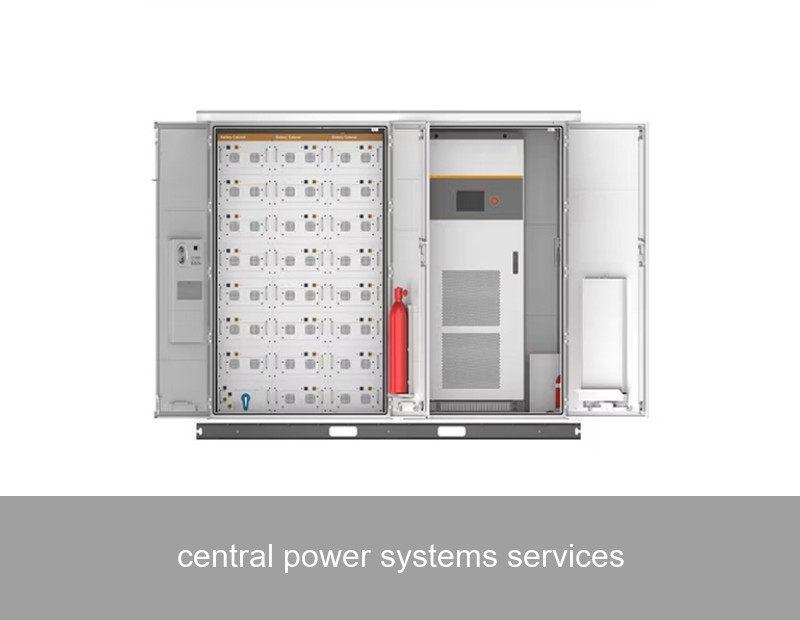
Image: A modern Battery Energy Storage System (BESS) installation, a core component of intelligent central power systems. (Source: Unsplash)
Core Components of a Modern Central Power System
So, what makes up these intelligent systems? It's a symphony of hardware and software.
- The Physical Layer (The Hardware): This includes the battery storage system (like Highjoule's C.I.M. (Centralized Intelligent Matrix) BESS), solar inverters, switchgear, and existing generators. Quality here is non-negotiable for safety and longevity.
- The Intelligence Layer (The Brain): This is the Energy Management System (EMS) software. A superior EMS, like Highjoule's AegisAI platform, uses machine learning to forecast energy needs and optimize dispatch across all assets.
- The Grid Interface Layer (The Connector): Secure, bi-directional communication hardware that allows the system to receive grid signals (like frequency regulation requests) and safely island from the grid during outages.
- The Service Layer (The Expertise): This is often overlooked but critical. It includes 24/7 remote monitoring, performance guarantees, preventative maintenance, and financial optimization services provided by your vendor.
Highjoule's Role: Intelligence as a Service
At Highjoule, we view the central power system not as a one-time product sale, but as a long-term partnership for energy resilience. Our approach is built on three pillars of service:
- Adaptive System Design: We don't offer one-size-fits-all solutions. Our engineers analyze your load profiles, site constraints, and financial goals to design a system where every component is optimally sized and integrated.
- Proactive Lifecycle Management: Our AegisAI platform provides continuous, cloud-based monitoring. We don't wait for you to report an issue; we often predict and resolve it remotely before it impacts your operations. This is the core of our central power services offering.
- Revenue Stacking Guidance: Especially in markets like the US (CAISO, ERCOT) and Europe, we help qualified clients enroll their systems in grid service programs, turning their energy asset into a revenue stream. It's about maximizing total value, not just saving costs.
For a large commercial building in Texas, for instance, our system might automatically decide to discharge the battery to avoid a 4 PM peak grid charge, then recharge later using excess wind power, all while holding enough capacity to provide backup if a storm is forecasted. That's intelligent orchestration.

Image: Centralized control and monitoring are key to modern power system services. (Source: Unsplash)
The Future: From Centralized to Orchestrated Power
The trajectory is clear. The future grid will be a network of thousands of intelligent, interconnected central power systems—in factories, campuses, and neighborhoods—acting in concert. This "virtual power plant" model is already being piloted successfully. A report by the National Renewable Energy Laboratory (NREL) highlights how aggregating distributed energy resources can reliably meet grid demands, deferring the need for costly traditional infrastructure upgrades.
Your Next Question
The technology is proven, the economics are compelling, and the need for resilience is undeniable. The question for you is no longer "if" but "how and when." What is the single biggest energy challenge—cost volatility, reliability concerns, or sustainability targets—that a truly intelligent central power system & service could solve for your organization in the next 18 months?
We invite you to explore this question further. What would a detailed analysis of your site's energy data reveal about your potential for savings and resilience?
 Inquiry
 Online Chat