


Masdar Oman Solar Battery Storage Project: A Blueprint for Sustainable Energy Transition
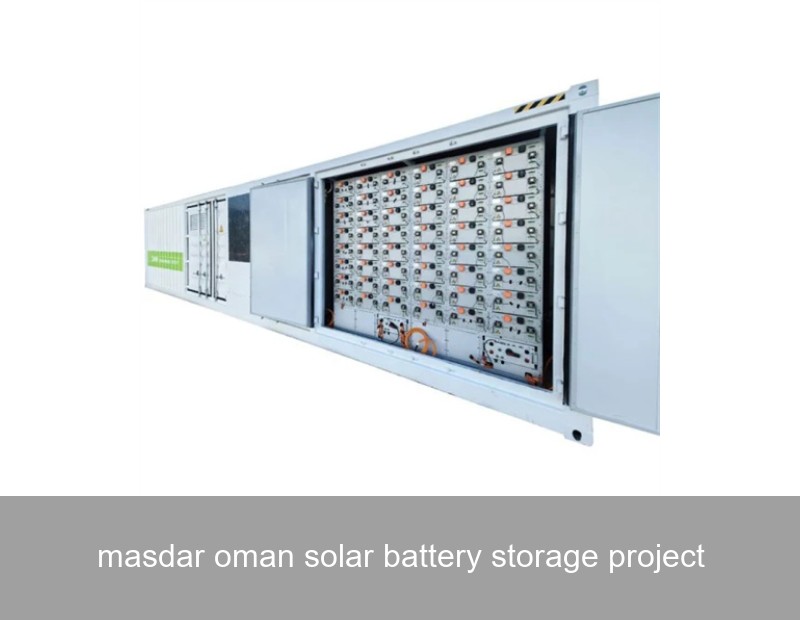
Imagine a vast, sun-drenched landscape where the power of the sun is not just captured but mastered—stored intelligently to light up homes and power industries long after sunset. This is the vision becoming a reality in the Middle East, and the Masdar Oman Solar Battery Storage Project stands as a landmark example. As nations globally strive to integrate more renewable energy, the critical challenge of intermittency comes to the fore. Solar panels produce abundantly when the sun shines, but what about at night or during peak demand? This is where advanced battery storage systems (BESS) step in, transforming solar from a variable resource into a reliable, dispatchable powerhouse. In this deep dive, we'll explore how this pioneering project in Oman is setting new benchmarks and what it reveals about the future of grid stability and sustainable energy.
Table of Contents
The Challenge: Solar Intermittency and Grid Stability
The global shift towards renewables is undeniable. However, as the share of solar photovoltaic (PV) energy grows, grid operators face a fundamental technical puzzle. The sun doesn't align perfectly with our electricity consumption patterns. The "duck curve"—a graph showing the timing imbalance between peak solar production and peak evening demand—illustrates this perfectly. This mismatch can lead to grid instability, curtailment of renewable energy (essentially wasting clean power), and a continued reliance on fast-ramping fossil fuel plants.
This is precisely the challenge Oman and its partners aimed to solve. With abundant solar resources, the goal was not just to generate clean energy, but to make it a firm, dependable part of the national grid. The success of such an endeavor hinges on one key technology: large-scale, utility-grade battery storage.
The Masdar Oman Project: A Closer Look
Led by Masdar (Abu Dhabi Future Energy Company) in partnership with Oman's national entities, the Ibri II Solar PV Independent Power Project (IPP) is a cornerstone of Oman's 2040 vision. While the solar plant itself is impressive, the integrated battery storage component is what makes it a trailblazer.
- Scale: The solar plant has a capacity of over 500 MWac, powering an estimated 50,000 homes.
- Storage Integration: Crucially, it includes one of the region's largest grid-connected battery energy storage systems.
- Primary Function: The BESS is engineered for frequency regulation and voltage control. This means it acts like a shock absorber for the grid, responding in milliseconds to fluctuations to maintain a stable 50Hz frequency—a non-negotiable requirement for modern electrical equipment.
- Secondary Benefits: It also enables energy time-shifting, allowing a portion of the solar energy generated in the afternoon to be stored and used during higher-demand evening hours, optimizing the asset's output and economic value.
According to a report by the International Energy Agency (IEA), projects like this are critical for de-risking the integration of variable renewables and providing essential grid services that were traditionally the domain of thermal power plants.

Credit: Unsplash - A representation of a modern solar farm integrated with battery storage units.
The Critical Role of Battery Energy Storage Systems (BESS)
So, what makes a BESS so indispensable in a project like Oman's? Let's break down the core technological pillars:
| Function | Description | Benefit to Grid |
|---|---|---|
| Frequency Regulation | Instantaneous injection or absorption of power to maintain grid frequency. | Prevents blackouts and equipment damage. |
| Ramp Rate Control | Smooths out sudden increases or decreases in solar output (e.g., from passing clouds). | Provides predictable power flow, reducing strain on other generators. |
| Energy Arbitrage | Stores energy when it's abundant/cheap and discharges it when demand/price is high. | Maximizes renewable utilization and improves project economics. |
| Black Start Capability | Ability to restart a grid section after a total outage without external power. | Enhances grid resilience and recovery. |
For a project of Oman's scale, the BESS isn't an add-on; it's the enabling technology that ensures the massive solar investment delivers value reliably and safely 24/7. The choice of battery chemistry, system architecture, and control software determines its success.
Expertise in Action: Highjoule's Approach to Large-Scale Storage
While the Masdar Oman project utilizes specific vendor technology, it exemplifies the kind of complex, high-impact challenge that Highjoule is built to solve. Since 2005, we have been at the forefront of designing and deploying intelligent battery storage systems for utility, commercial, and industrial applications worldwide.
Our approach to a project with similar objectives would be grounded in three core principles:
- Adaptive System Design: We don't believe in one-size-fits-all. Our engineering team would design a BESS solution tailored to Oman's specific grid code requirements, desert climate (managing thermal performance is crucial), and the precise load profile of the connected network. Our GridSynergy platform uses advanced algorithms to stack multiple revenue streams—from frequency response to capacity services—maximizing ROI.
- Technology Agnosticism & Safety: Whether Lithium-Iron-Phosphate (LFP) or the latest chemistry is optimal, we select the best-in-class battery cells. We then integrate them with our proprietary, multi-layered Sentinel BMS (Battery Management System) and Vigilant Thermal Management systems. This ensures not only peak performance but also the utmost safety and longevity, a non-negotiable for a 20+ year asset.
- Intelligent Integration: The true magic happens in the software. Our Highjoule Energy Operating System (HEOS) would act as the brain of the storage system, seamlessly communicating with the solar plant's controllers and the grid operator's commands. It makes millisecond-level decisions to prioritize grid stability, making the entire renewable asset a predictable and valuable grid citizen.
For a deeper look at global storage trends that inform our designs, the Energy-Storage.news site provides ongoing analysis of market developments.

Credit: Unsplash - Centralized control is key for managing large-scale BESS performance and safety.
Global Implications and the Path Forward
The Masdar Oman Solar Battery Storage Project is more than a national achievement; it's a signal to the world. It proves that with the right technology, regions with high solar potential can become leaders in stable, clean energy provision. This model is directly applicable to sun-rich areas in the southwestern United States, Southern Europe, and beyond.
The lessons are clear: the future of energy is not just about generation, but about intelligent storage and integration. As battery costs continue to decline and software intelligence grows, the economic case for pairing solar with storage becomes irrefutable. It transforms the grid from a one-way street into a dynamic, resilient network.
What does your organization envision for its energy future? Are you looking at a large-scale solar PV development, an industrial microgrid needing stability, or seeking to provide critical grid services? The technology blueprint has been proven.
We invite you to explore how Highjoule's proven expertise in advanced, safe, and intelligent battery storage systems can be the cornerstone of your next renewable energy project. What specific grid challenge or sustainability goal could we help you solve with a tailored storage solution?
 Inquiry
 Online Chat