


Centrales Termicas Solares: The Power of Stored Sunlight for a Stable Grid
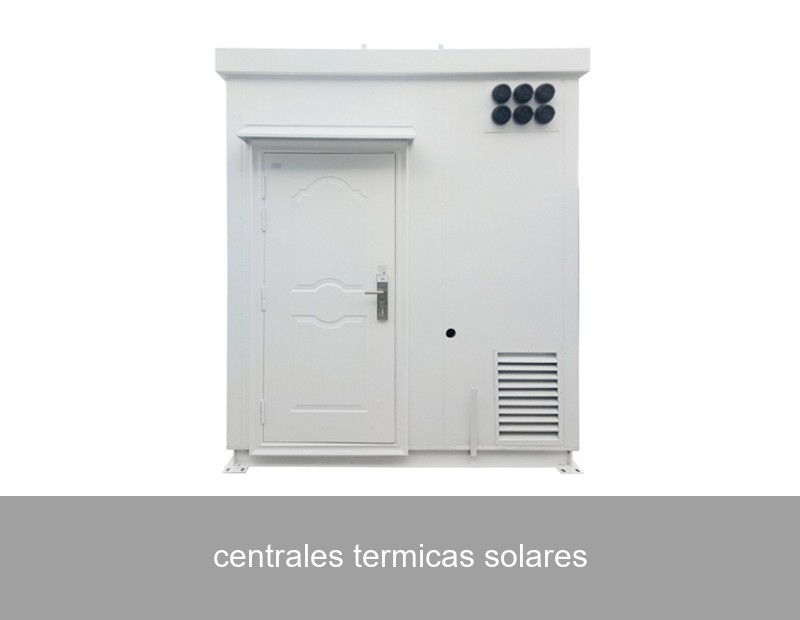
Imagine a power plant that doesn't burn fossil fuels but instead uses thousands of mirrors to capture the sun's heat, converting it into reliable electricity even after sunset. This isn't science fiction; it's the reality of centrales termicas solares, or Concentrating Solar Power (CSP) plants. Unlike common photovoltaic (PV) panels that convert sunlight directly to electricity, CSP uses mirrors to concentrate solar thermal energy to heat a fluid. This high-temperature fluid then produces steam to drive a turbine, much like in a traditional power plant, but with a crucial, clean advantage: its heat can be stored efficiently before being converted to power.
For energy planners in Europe and the United States, this inherent storage capability makes CSP a compelling piece of the decarbonization puzzle. But to truly understand its value and future, we need to look beyond the mirror arrays and into the heart of the system: thermal energy storage and the innovative battery solutions that are making solar thermal power a 24/7 reality.
The Intermittency Challenge: When the Sun Sets, the Grid Needs Power
Let's address the elephant in the room first. Renewable energy's greatest challenge is intermittency. The wind stops, clouds cover the sun, and suddenly, a significant portion of your power generation drops. For centrales termicas solares, the sun's daily cycle is a predictable challenge. A CSP plant without storage typically operates like a peaking plant, generating power only during peak sunlight hours (usually midday to late afternoon). This creates a mismatch: energy demand often peaks in the early evening when solar irradiation is fading.
This phenomenon is clearly visible in the now-famous "California Duck Curve," a graph that shows the net load on the grid plunging during sunny afternoons and then ramping up steeply as the sun sets. While this curve was initially associated with PV solar, it highlights a universal grid need: dispatchable renewable energy—power that can be turned on when needed, not just when the source is available.

Image Source: California Energy Commission - Illustrating the net load "duck curve" created by high solar penetration.
The Data: Storage Extends Value and Reliability
The value of adding storage to a solar thermal plant is quantifiable. According to the National Renewable Energy Laboratory (NREL), CSP with thermal energy storage (TES) can achieve capacity factors of 60-80%, rivaling traditional baseload power plants. Without storage, that figure falls to around 20-30%. This isn't just about generating more megawatt-hours; it's about generating valuable megawatt-hours when the grid needs them most, thereby stabilizing energy prices and improving grid resilience.
The Storage Imperative: More Than Just Molten Salt
Traditional CSP plants with storage, like those across Spain and the southwestern US, often use molten salt as both a heat transfer fluid and storage medium. The salt is heated by the concentrated sunlight, stored in insulated tanks at over 500°C, and then dispatched to create steam for electricity generation. This is a brilliant form of thermal battery.
However, the modern energy landscape demands flexibility and hybridization. This is where advanced electrochemical battery storage systems come into play. Think of it as a powerful one-two punch:
- Thermal Storage (Molten Salt): Provides bulk, long-duration (6-15+ hours) energy shifting, perfect for bridging the gap from day to night.
- Battery Energy Storage Systems (BESS): Offer instantaneous response, frequency regulation, and can smooth out short-term fluctuations in output or provide rapid bursts of power to support grid stability during the plant's operation.
A hybrid plant leveraging both technologies can optimize its output for both energy markets (selling stored bulk power) and ancillary service markets (selling grid stability services), maximizing revenue and utility.
Case Study: Solana Generating Station, Arizona, USA
While Spain is a global leader in CSP, a standout example of storage's power exists in the United States. The Solana Generating Station in Arizona, with 280 MW of capacity, integrates a massive 6-hour molten salt thermal storage system. This allows it to power over 70,000 homes during peak evening hours, long after the sun has set.
| Location | Technology | Capacity | Storage Duration | Key Benefit |
|---|---|---|---|---|
| Arizona, USA | Parabolic Trough with Molten Salt Storage | 280 MW | 6 hours | Displaces fossil-fuel peaker plants, provides predictable evening power |
Solana’s success demonstrates the core principle: storage transforms centrales termicas solares from variable generators into predictable, dispatchable assets. It provides a blueprint for future plants, especially when considering the next step: integrating even faster-responding battery storage to handle sub-second grid demands.
Highjoule's Role: Advanced Storage for a Stable Solar Future
This is where Highjoule's expertise becomes critical. As a global leader in advanced energy storage solutions since 2005, we see centrales termicas solares as a perfect candidate for hybridization with our cutting-edge battery energy storage systems (BESS).
While the thermal storage handles the bulk energy time-shift, a co-located Highjoule BESS can provide crucial grid-forming services. Imagine a CSP plant that can:
- Black Start Capability: Use its stored battery power to help restart the turbine or assist the local grid after an outage, without relying on external fossil fuel generators.
- Frequency Regulation: Instantly inject or absorb power to maintain the grid's stable 50Hz or 60Hz frequency, compensating for sudden changes in supply or demand elsewhere on the network.
- Ramp Rate Control: Smooth the plant's own power output as clouds pass or during startup/shutdown, ensuring a perfectly steady flow of electricity to the grid.
Our IntelliBESS platform for commercial and industrial applications, and our scalable GridMax solutions for utility-scale projects, are engineered with this kind of intelligent integration in mind. They are not standalone units but sophisticated partners to renewable generators, making installations like solar thermal plants more valuable, reliable, and grid-friendly.

Image Source: Unsplash - Representative image of a battery storage system co-located with solar generation.
The Synergy: A Technical Perspective
Integrating a BESS with a CSP plant creates a multi-talented power asset. The thermal storage is the marathon runner, providing endurance. The lithium-ion or alternative chemistry BESS is the sprinter, providing bursts of speed and agility. Together, controlled by Highjoule's advanced energy management system (EMS), they allow plant operators to respond dynamically to market signals and grid operator requests, unlocking multiple revenue streams from a single, sustainable facility.
The Future Outlook: A Hybrid and Intelligent Grid
The evolution of centrales termicas solares is a microcosm of the broader energy transition. The future isn't about one technology winning, but about the intelligent integration of multiple technologies—CSP, PV, wind, thermal storage, and electrochemical batteries—all working in concert. The International Renewable Energy Agency (IRENA) consistently highlights this systems-based approach as essential for a cost-effective and secure net-zero grid.
For regions like Southern Europe, the Middle East and North Africa (MENA), the southwestern US, and parts of South America with high direct normal irradiance (DNI), CSP with storage remains a uniquely valuable tool. When augmented with fast-responding battery systems, its potential to provide firm, clean, and flexible power is unparalleled.
So, the question for energy developers and utilities is no longer just "CSP or batteries?"
It's becoming: "How can we best design our centrales termicas solares with an optimized blend of thermal and electrochemical storage to maximize value for our investors and reliability for our grid?" The answer lies in a partnership that combines solar thermal engineering excellence with cutting-edge storage intelligence.
What specific grid challenge in your region—whether it's evening peak demand, frequency instability, or the need for black-start resources—could a hybrid CSP-plus-BESS plant uniquely solve?
 Inquiry
 Online Chat