


China Hybrid Solar Inverter: The Global Powerhouse Driving Energy Independence
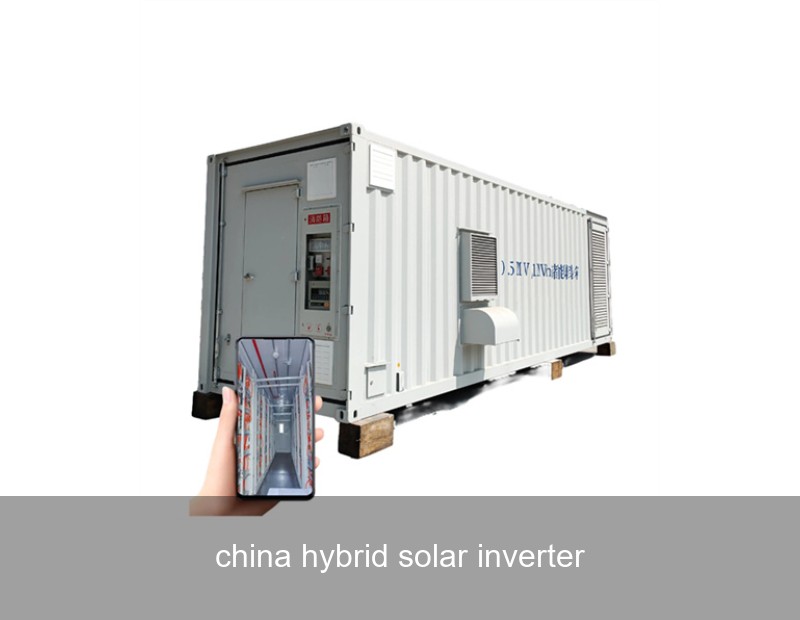
Have you ever wondered how homes and businesses can seamlessly switch between solar power, battery storage, and the grid, all while optimizing every kilowatt-hour? The answer often lies in a single, intelligent device: the hybrid solar inverter. And when it comes to innovation, scale, and technological advancement in this field, one region stands out—China. The rise of the China hybrid solar inverter is more than a manufacturing story; it's a global shift towards smarter, more resilient, and cost-effective energy management. This article explores why these devices are becoming indispensable worldwide and how leading companies like Highjoule integrate this advanced technology into robust, user-centric solutions for markets in Europe and the United States.
Table of Contents
- What is a Hybrid Solar Inverter?
- The Chinese Advantage: Innovation at Scale
- The Data: Market Dominance and Technological Leap
- Case Study: A German Business Cuts Costs & Gains Resilience
- Beyond the Box: Highjoule's Intelligent Ecosystem
- Choosing the Right System for Your Needs

Credit: Unsplash / Andreas Gücklhorn
What is a Hybrid Solar Inverter?
Let's break it down simply. A traditional solar inverter converts the direct current (DC) electricity from your panels into alternating current (AC) for your home. A battery inverter manages the charging and discharging of a storage system. A hybrid solar inverter combines both functions into one unit, and adds a third, crucial capability: intelligent energy management.
Think of it as the brain and central hub of a modern energy system. It constantly makes decisions:
- Should solar power directly run the appliances?
- Should surplus energy charge the battery for use at night?
- Should excess solar be sold back to the grid?
- During a power outage, should it instantly disconnect from the grid and power critical loads using solar and battery?
This multifunctionality is why hybrid inverters are the core of integrated solar-plus-storage systems, a market experiencing explosive growth globally.
The Chinese Advantage: Innovation at Scale
China's dominance in the hybrid solar inverter market isn't accidental. It's the result of a perfect storm of factors:
- Complete Supply Chain: From silicon and lithium cells to advanced semiconductors, China hosts the world's most complete renewable energy supply chain. This vertical integration drives down costs and accelerates iteration.
- Massive Domestic Market: Huge domestic demand for solar and storage provides a testing ground, allowing manufacturers to deploy, learn, and refine technology at an unparalleled pace.
- R&D Investment: Chinese firms invest heavily in research, particularly in power electronics and battery management software (BMS), leading to inverters with higher efficiency, broader voltage ranges, and sophisticated algorithms.
The outcome? Reliable, feature-rich, and competitively priced inverters that meet a wide array of international standards, making them highly attractive for global distributors and system integrators.
The Data: Market Dominance and Technological Leap
The numbers tell a compelling story. According to industry research, Chinese manufacturers account for over 60% of the global solar inverter supply, with their share in the hybrid and battery segment growing even faster (IEA, Solar PV Global Supply Chains, 2022). But it's not just about volume.
Technological benchmarks set by leading China hybrid solar inverter producers are reshaping expectations:
| Feature | Industry Standard (2020) | Advanced Chinese Hybrid Inverters (2024) |
|---|---|---|
| Peak Efficiency | 97-98% | >99% |
| Battery Compatibility | Often proprietary | Open protocol, multi-brand Li-ion support |
| Grid Services Readiness | Basic feed-in | Frequency regulation, virtual power plant (VPP) ready |
| Warranty Period | 5-10 years | Up to 15 years standard |
This rapid evolution means end-users get more power, flexibility, and longevity for their investment.
Case Study: A German Business Cuts Costs & Gains Resilience
Consider the real-world example of a medium-sized bakery in Bavaria, Germany. Facing rising energy costs and occasional grid instability, they installed a 50kW solar array with a 120kWh battery storage system, centered on a high-efficiency China hybrid solar inverter. The system was integrated and optimized by Highjoule's European engineering team.
The Results (12-month period):
- Grid Independence: Achieved 73% self-consumption rate, up from 35% with solar-only.
- Cost Savings: Reduced electricity bills by 68%, saving over €14,000 annually.
- Resilience: Seamlessly powered critical refrigeration during two grid outages, preventing spoilage.
- ROI: Projected payback period of under 7 years, thanks to the system's high overall efficiency and intelligent energy arbitrage.
This case highlights that the value isn't just in the inverter hardware, but in its expert integration and configuration for local conditions—a core service of companies like Highjoule.

Credit: Unsplash / American Public Power Association
Beyond the Box: Highjoule's Intelligent Ecosystem
At Highjoule, we view the advanced China hybrid solar inverter as the vital component, but not the entire solution. Since 2005, we have built our reputation on designing, integrating, and supporting complete energy systems. Our approach is to leverage the best-in-class hardware—including top-tier hybrid inverters sourced from our strategic partners in China—and enhance it with our proprietary intelligence.
Our Highjoule Energy Operating System (EOS) is a cloud-based platform that turns a hardware setup into a truly smart grid asset. For our commercial and industrial clients in the US and Europe, this means:
- Predictive Energy Management: Algorithms forecast solar production and energy usage, optimizing battery charge/discharge cycles to maximize savings based on dynamic utility rates.
- VPP Participation: We aggregate distributed systems to participate in grid service markets, creating a new revenue stream for our clients. (U.S. Department of Energy on Virtual Power Plants).
- Remote Monitoring & Proactive Support: Our team can monitor system health globally, often resolving issues before the client is even aware.
For residential customers, our Home Energy Hub package provides a similar level of sleek, user-friendly control via a smartphone app, making energy independence simple and manageable.
Choosing the Right System for Your Needs
With so many options, how do you choose? The key is to focus on the system provider, not just the inverter brand. Ask these questions:
- Does the provider offer a complete, warranty-backed system? Highjoule supplies compatible, certified components and assumes single-point responsibility.
- Is the software platform intuitive and powerful? The brains of the system determine its financial return.
- Does the provider understand my local regulations and incentives? From German EEG to the US ITC and net metering rules, local expertise is non-negotiable.
- What is the service and support model? Look for providers with in-region technical support and a proven track record.
By partnering with an experienced provider like Highjoule, you harness the technological excellence of global manufacturing while ensuring a solution perfectly tailored to your energy profile, economic goals, and local grid landscape.

Credit: Unsplash / Kindel Media
Ready to explore what a truly intelligent hybrid energy system, built around reliable core technology and enhanced by global expertise, can do for your energy bills and carbon footprint? What's the first question you would ask an energy solutions provider about making your home or business more resilient?
 Inquiry
 Online Chat