


Pandora's Energy: How Much Can It Truly Unleash for Your Home or Business?
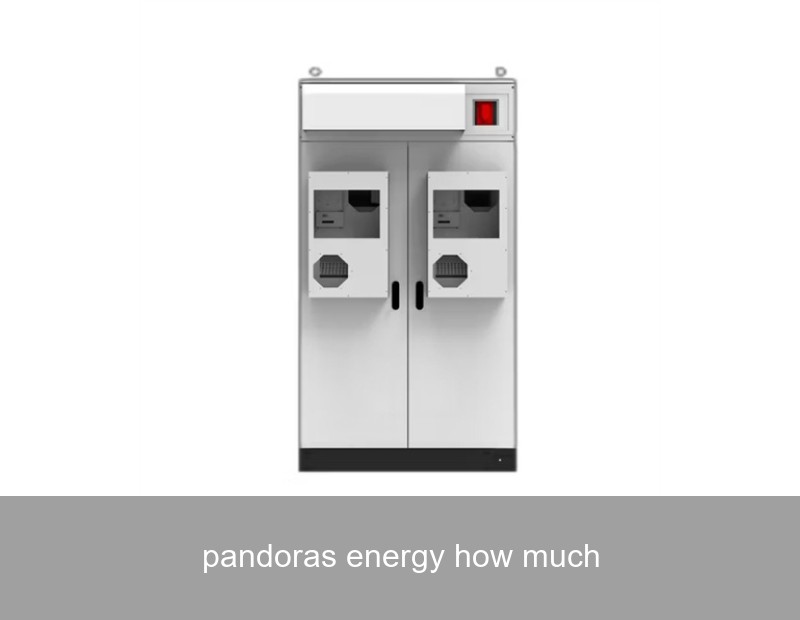
You've likely heard the buzzword: "Pandora's Energy." It's not a new mythological force, but a powerful metaphor for the vast, and often untapped, potential of renewable energy. Just like the fabled box, opening the world of solar and storage can seem daunting—what's inside? How much power is truly available? And more importantly, how much can it save you and contribute to a sustainable future? For homeowners and businesses across Europe and the US, this isn't just a philosophical question; it's a practical one with real financial and environmental implications. Let's demystify the potential of your own "Pandora's Energy" and explore how modern technology can help you harness it precisely, efficiently, and intelligently.
Table of Contents
- The Phenomenon: From Sunlight to System Overload
- The Data: Quantifying Your Energy Potential
- The Case Study: A German Bakery's Recipe for Energy Independence
- The Solution: Unlocking Control with Intelligent Storage
- Highjoule's Role: Your Partner in Precision Energy Management
- Your Next Step: Opening Your Box
The Phenomenon: From Sunlight to System Overload
It's a brilliantly sunny afternoon. Your rooftop solar panels are producing at peak capacity, flooding your property with clean, free electricity. But here's the catch: you're at work, your home's energy demand is low, and your business might even be closed. Where does all that excess energy go? Traditionally, it gets fed back into the grid, often for a modest feed-in tariff that's significantly lower than the price you pay to draw power later that evening.
This is the first layer of Pandora's Energy—the surplus phenomenon. The sun provides an abundance, but our consumption patterns are misaligned. At night, or during cloudy periods, you're forced to buy back energy from the grid at peak rates. The result? You're not maximizing your investment, and the grid itself can become stressed by these unpredictable inflows and outflows. The true question evolves from "how much energy can I produce?" to "how much of the energy I produce can I actually use and control?"
The Data: Quantifying Your Energy Potential
Let's put some numbers to the story. According to the U.S. Department of Energy, the amount of sunlight hitting the Earth in just 90 minutes could power the entire world's energy consumption for a year. For a typical home in Southern Europe or California, a well-sized solar system can generate 8,000 to 12,000 kWh annually—more than enough to cover average consumption.
However, without storage, self-consumption rates (the portion of solar energy used directly on-site) typically hover between 30% and 50%. That means 50-70% of your clean energy is exported, and you remain 50-70% dependent on the grid. The financial and resilience potential locked away is substantial.
| Scenario | Solar Energy Self-Consumed | Energy Exported to Grid | Energy Imported from Grid |
|---|---|---|---|
| Without Battery Storage | 30-50% | 50-70% | 50-70% |
| With Intelligent Battery Storage | 70-90%+ | 10-30% | 10-30% |
The data clearly shows that adding storage effectively doubles your ability to use your own solar generation. It transforms Pandora's Energy from a fleeting surplus into a constant, reliable resource.

Credit: Photo by Andreas Gücklhorn on Unsplash. A modern home harnessing solar energy, with a battery storage unit visible—key to unlocking higher self-consumption.
The Case Study: A German Bakery's Recipe for Energy Independence
Let's look at a real-world example. "Bäckerei Schmidt," a mid-sized bakery in Bavaria, Germany, faced soaring energy costs. Their ovens, refrigeration, and lighting created a demanding load profile with high morning peaks and consistent afternoon usage. They installed a 100 kWp solar array, but were still buying 65% of their power from the grid, especially during early mornings and evenings.
Their turning point was integrating a Highjoule Industrial Energy Storage System (HI-ESS) with advanced energy management software. The system was configured to:
- Store midday solar surplus.
- Discharge during the high-tariff morning baking rush and evening hours.
- Provide backup power for critical refrigeration during grid outages.
The results after one year were compelling:
- Grid Independence: Increased self-consumption from 35% to 82%.
- Cost Savings: Reduced annual energy bills by €18,500.
- ROI: Projected payback period of under 7 years, with a system lifespan of 15+ years.
- Resilience: Secured 8 hours of backup power for cold storage, protecting inventory.
For Bäckerei Schmidt, the question of "Pandora's Energy: how much?" was answered in euros, kilowatt-hours, and operational security. They didn't just produce more energy; they gained control over the energy they already had.
The Solution: Unlocking Control with Intelligent Storage
The key to harnessing Pandora's Energy isn't just a battery—it's an intelligent energy management system. A basic battery stores and releases energy. A smart system learns, predicts, and optimizes. It considers:
- Weather Forecasts: Will tomorrow be sunny? If so, it might conserve battery tonight to store more tomorrow.
- Tariff Structures: In regions with time-of-use pricing (common in California and parts of Europe), it automatically discharges during expensive peak periods.
- Your Consumption Patterns: It learns when you typically use power and pre-emptively manages resources.
- Grid Services: Advanced systems can even provide grid support, creating potential revenue streams.
This intelligence is what bridges the gap between raw potential and practical, daily benefit. It's the difference between opening Pandora's Box and being overwhelmed by its contents, versus having a precise inventory and control system for every ounce of power within.
Highjoule's Role: Your Partner in Precision Energy Management
This is where Highjoule's nearly two decades of expertise come into play. Since 2005, we've moved beyond simply providing hardware to delivering comprehensive, intelligent power solutions. We understand that the answer to "how much" is unique for every home, factory, or microgrid.
For residential clients, our Home Energy Hub integrates seamlessly with solar inverters, offering an intuitive app that shows exactly how much energy you're producing, storing, and using in real-time. You can set preferences for backup security or cost savings, and the system executes automatically.
For commercial and industrial applications, our C&I ESS solutions are scalable, robust, and come with Highjoule's proprietary EnergyOS platform. This software is the brain of the operation, performing the complex optimization described above, ensuring you extract maximum value from every kilowatt-hour. As the International Energy Agency notes, smart storage is a cornerstone for a flexible and secure energy system.

Credit: Photo by American Public Power Association on Unsplash. Monitoring and control are vital for maximizing the value of industrial-scale energy storage.
Your Next Step: Opening Your Box
So, Pandora's Energy: how much is waiting for you? The potential is inherently there, on your rooftop and in your local climate. The limiting factor is no longer technology, but the choice to implement the right system. It's a choice that leads to lower bills, greater independence from volatile energy markets, and a tangible contribution to decarbonization.
The journey begins with a precise assessment. What is your current consumption profile? What are your local energy rates and solar incentives? What are your resilience needs? These are the questions that define your unique energy potential.
Are you ready to open your box and discover not chaos, but control, savings, and sustainability? What would you do with the certainty of knowing exactly how much of your own energy you can use, day and night?
 Inquiry
 Online Chat