


Why Your Climate Controlled Cabinet is Key to Energy Storage System Longevity
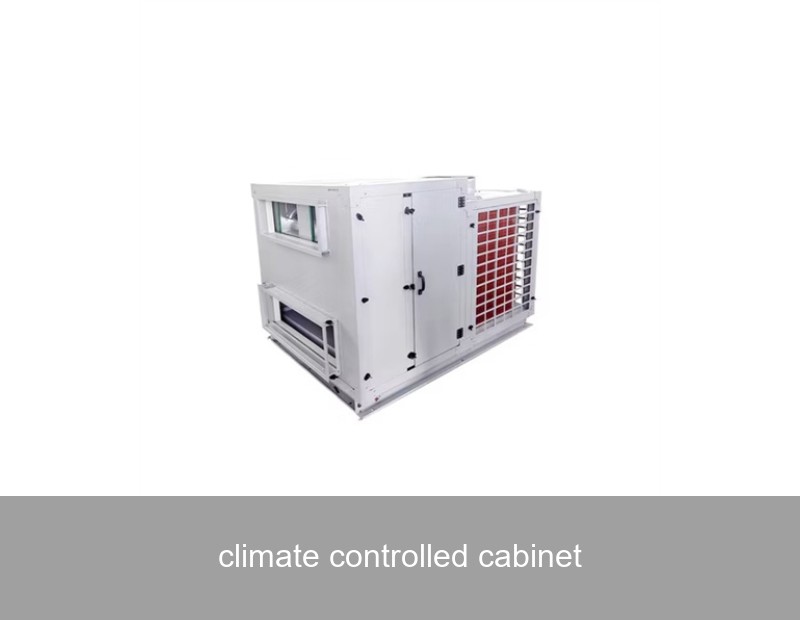
When we talk about renewable energy systems, the conversation often centers on solar panels or the latest battery chemistry. But there's a silent, critical component working behind the scenes in every commercial and industrial installation: the climate controlled cabinet. For system integrators and facility managers, maintaining the precise environment for power electronics isn't just an afterthought—it's a fundamental requirement for safety, performance, and return on investment. Let's explore why this unsung hero is so vital and how getting it right can make or break your energy resilience strategy.
Table of Contents
- The Hidden Threat: How Temperature and Humidity Sabotage Your ESS
- The Data Behind the Cost of Failure
- A European Case Study: When a Cabinet Saved the System
- Beyond Temperature: The Multi-Function Role of Modern Cabinets
- The Highjoule Approach: Integrated, Intelligent Climate Control
- Future-Proofing Your Investment
The Hidden Threat: How Temperature and Humidity Sabotage Your ESS
you've invested in a state-of-the-art battery energy storage system (BESS) to stabilize your factory's power supply and shave peak demand charges. The batteries themselves are housed in a robust, weather-proof enclosure. But what about the inverters, the battery management system (BMS), the communications hub, and all the sensitive electronics that make the system intelligent? These components are the brain and nervous system of your ESS, and they are incredibly sensitive to their operating environment.
Excessive heat accelerates the aging of electronic components, leading to premature failure of capacitors and semiconductors. It can cause thermal runaway in neighboring battery cells if heat isn't managed. On the other hand, cold temperatures can increase the internal resistance of components, reducing efficiency and causing condensation. Humidity is an equally insidious enemy, promoting corrosion on circuit boards and creating the risk of short circuits. A standard metal cabinet does nothing to mitigate these risks; it merely contains them. A purpose-built climate controlled cabinet actively defends against them.
The Data Behind the Cost of Failure
The impact isn't theoretical. Industry studies and reliability data paint a clear picture. According to a foundational report by the NASA Reliability Center, electronic component failure rates can double for every 10°C (18°F) increase in operating temperature above their rated threshold. In the context of an ESS, a failed inverter or BMS doesn't just mean a repair bill. It means your entire storage system is offline.
Consider the financial implications for a commercial operation:
- Lost Savings: Inability to participate in demand response programs or arbitrage energy prices.
- Downtime Costs: For critical operations, even a few hours without backup power can cost tens of thousands.
- Warranty Voidance: Many component manufacturers void warranties if their equipment is operated outside specified environmental conditions.
This is precisely why at Highjoule, we don't view climate control as an add-on. Since 2005, our engineering philosophy has been to design our IntelliBESS commercial storage systems with integrated environmental management from the ground up. The cabinet housing our power conversion and control systems is not a passive box; it's an active, monitored subsystem ensuring the core intelligence of the solution operates at peak reliability 24/7.
A European Case Study: When a Cabinet Saved the System
Let's look at a real-world example from a project we supported in Southern Germany. A mid-sized dairy processing plant installed a 500 kWh / 750 kVA Highjoule IntelliBESS to manage time-of-use electricity costs and provide backup for critical refrigeration. The system was installed in a dedicated utility room adjacent to the production floor—a space subject to significant ambient temperature swings from process heat and frequent wash-downs that raised humidity.
During a particularly hot week in July, with ambient room temperatures spiking to 38°C (100°F), the facility manager received an automated alert from our Highjoule Nexus™ monitoring platform. The alert wasn't about the batteries, which were comfortably within range. It was a status update from the power electronics cabinet's climate system. The data showed:
| Parameter | Ambient Room Temp | Internal Cabinet Temp (Maintained) |
|---|---|---|
| Peak Afternoon | 38°C (100.4°F) | 25°C (77°F) |
| Relative Humidity | 65% | 45% |
The integrated cooling and dehumidification system had worked overtime, maintaining a perfect 25°C internal environment. The internal logs revealed that without this active control, temperatures would have exceeded 55°C (131°F), triggering automatic safety shutdowns and halting the energy cost-saving operations. The climate controlled cabinet wasn't just protecting hardware; it was ensuring operational continuity and financial return. The plant avoided an estimated €8,200 in lost savings and potential downtime during that single event.

An industrial-grade climate control system is essential for electronics in harsh environments.
Beyond Temperature: The Multi-Function Role of Modern Cabinets
Today's advanced climate controlled cabinet does more than just heat and cool. It's a hub for system integrity. Key features that should be standard include:
- Dynamic Thermal Management: Using variable-speed fans and highly efficient heat exchangers to respond to load, not just ambient temperature.
- Condensation Prevention: Active dehumidification that kicks in based on dew point calculations, not just relative humidity.
- Air Filtration: Protecting sensitive components from dust, which acts as an insulator and traps heat, and from corrosive airborne particles common in industrial settings.
- Integrated Monitoring: Continuous sensors feeding data into the overall BEMS (Building Energy Management System) or, as with Highjoule systems, our proprietary Nexus™ platform for predictive maintenance alerts.
This holistic approach transforms the cabinet from a utility into a strategic asset. For instance, data from the cabinet's climate system can predict filter replacement needs or indicate when external conditions are so extreme that system output should be gently derated to maintain longevity—intelligence that protects your capital investment.
The Highjoule Approach: Integrated, Intelligent Climate Control
Drawing on nearly two decades of field experience across thousands of global installations, Highjoule engineers its environmental control with the same rigor as its battery stacks. Our IntelliGuard Cabinet Systems are available as part of our complete storage solutions or as retrofittable units for existing infrastructure.
What sets our approach apart is integration and intelligence. The climate system isn't a separate, dumb appliance. It communicates directly with the BMS and inverter. If the BMS anticipates a high-power discharge event (which generates more heat in the electronics), it can pre-emptively ramp up cooling. This proactive coordination, a feature of our Unified System Architecture, minimizes thermal stress cycles—the primary wear-and-tear mechanism for electronics.
For microgrid and critical backup applications, this reliability is non-negotiable. When the grid fails, every component must perform flawlessly, regardless of the weather outside. A climate controlled cabinet ensures that the "brains" of your resilient power system are always ready for action.

Centralized monitoring platforms, like Highjoule's Nexus™, provide visibility into environmental conditions alongside performance data.
Future-Proofing Your Investment
The energy landscape and technology are evolving rapidly. When specifying a climate controlled cabinet today, consider tomorrow's needs. Will you be adding more power conversion capacity? Might you integrate additional monitoring sensors for air quality or security? Choosing a solution with modular capacity and communication bandwidth, like Highjoule's platform, allows for cost-effective expansion without replacing the entire environmental system.
A well-designed cabinet also contributes to overall system efficiency. By using high-efficiency, digitally controlled compressors and fans, the climate system's own energy consumption is minimized. This "parasitic load" is a key metric in the total efficiency calculation of an ESS. As noted by the U.S. Department of Energy regarding system efficiency, managing auxiliary loads is critical for maximizing net energy benefits. An efficient cabinet directly boosts your project's bottom line.
Your System's First Line of Defense
As we push for higher energy densities, faster response times, and longer system lifespans in storage technology, the importance of a controlled, stable operating environment only grows. The most advanced lithium-ion battery or silicon carbide inverter can be undermined by a simple, avoidable environmental stressor.
So, the next time you evaluate an energy storage proposal, look beyond the headline battery specs. Ask the integrator: "How will you protect the electronic heart of this system for the next 15 years?" The answer will tell you a great deal about the long-term viability of the entire project.
Is the environmental control in your current or planned storage system an integrated, intelligent partner, or just a basic thermostat in a box? The difference could define your system's success.
 Inquiry
 Online Chat