


Cold Room Price: How Much Will It *Really* Cost Your Business?
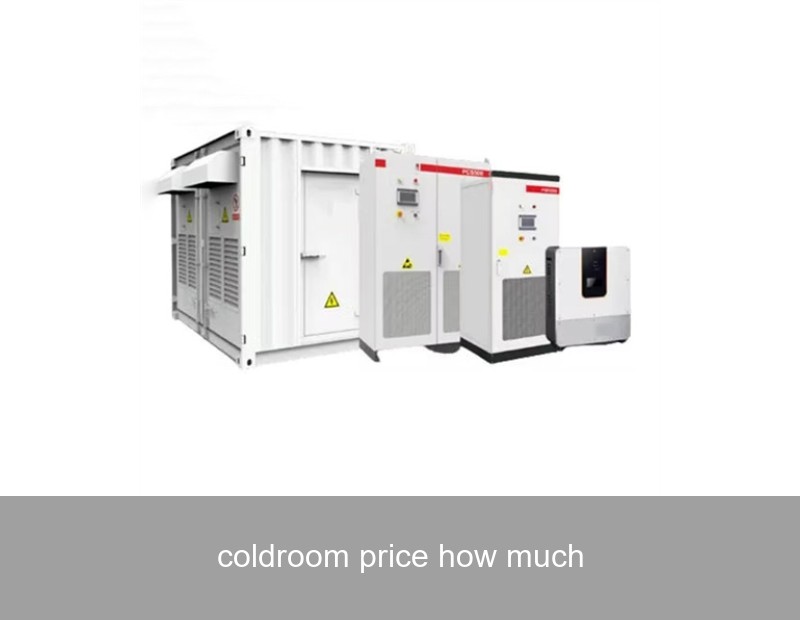
If you’re searching for “cold room price how much?”, you’ve likely already seen the sticker shock. A quick quote for a commercial walk-in cooler or freezer can range from a few thousand to tens of thousands of dollars. But here’s the truth every experienced business owner in the food, pharmaceutical, or hospitality industry knows: the purchase price of the unit itself is just the tip of the iceberg. The real answer to "how much does a cold room cost?" lies beneath the surface, in the ongoing, often volatile, operational expenses—primarily energy. In an era of fluctuating electricity prices and a strong push for sustainability, understanding and managing these hidden costs is no longer just good accounting; it's critical for resilience and profitability.
The Hidden Cost of Keeping Things Cold
Commercial refrigeration is a notorious energy hog. According to the U.S. Department of Energy, refrigeration can account for up to 50% of the total electricity used in supermarkets and food service facilities. In Europe, with energy prices experiencing significant volatility, this percentage translates directly into severe and unpredictable overheads. Your cold room runs 24/7/365. Every time energy rates spike—due to grid demand, geopolitical factors, or market shifts—your profitability takes a direct hit. So, while the initial capital expenditure (CapEx) is a key figure, the total cost of ownership (TCO), dominated by operational expenditure (OpEx), is what truly defines your cold room's price tag over 10 or 15 years.

Image Source: Unsplash - A commercial cold room is a major long-term investment.
Beyond the Unit: What Really Drives Your Cold Room Price?
Let's break down the comprehensive cost structure. Think of it as a financial pyramid, with the purchase price at the small top.
1. Energy Consumption: The Silent Budget Killer
This is the largest variable. Factors influencing it include:
- Insulation & Build Quality: Higher R-value insulation costs more upfront but slashes energy bills for years.
- Compressor Efficiency: Inverter-driven compressors are more efficient than fixed-speed ones.
- Local Electricity Rates: A cold room in California or Germany has vastly different hourly running costs than one in a region with cheaper, less stable power.
- Usage Patterns: Door openings, ambient temperature, and load density all affect runtime.
2. Installation & Site Preparation
Don't underestimate this. Costs can include electrical work, flooring, ventilation, and potentially reinforcing the building structure. A complex installation can sometimes rival the cost of the cold room unit.
3. Maintenance & Unexpected Downtime
Regular servicing is essential. However, a compressor failure in peak season isn't just a repair bill; it's lost inventory and business disruption. Reliability has a direct cost value.
| Cost Category | Low-End Estimate | High-End Estimate | Notes |
|---|---|---|---|
| Unit Purchase & Delivery | $15,000 | $40,000 | One-time cost, varies by size/specs. |
| Installation & Site Prep | $3,000 | $15,000 | Highly variable based on site conditions. |
| Energy Costs (10 Years) | $25,000 | $70,000+ | Largest variable. Assumes rising rates. |
| Maintenance & Repairs | $5,000 | $20,000 | Preventative vs. reactive scenarios. |
| Estimated Total TCO | $48,000 | $145,000+ | Energy is often 40-60% of TCO. |
A Real-World Case: The Bakery That Chilled Its Costs
Consider "Leclerc Patisserie," a mid-sized artisan bakery in southern France (name changed for privacy). In 2021, they expanded, adding a €28,000 cold room for dough retardation and ingredient storage. Their annual electricity bill for refrigeration jumped by €4,800. With the European energy crisis in 2022, their rates increased by 35%, adding nearly €1,700 in unexpected annual cost just for that one unit—eroding their expansion's profit margin.
Their solution? They partnered with a local installer to integrate a Highjoule residential-commercial battery storage system with their existing solar PV. The battery system was programmed to charge from their solar panels during the day and from the grid during off-peak, low-tariff hours at night. It then powers the cold room's compressor during the expensive peak afternoon and evening hours. The result? They reduced their cold room's grid energy cost by over 60%, shielding themselves from rate volatility and paying back the storage investment in under 4 years. The cold room's operational price became predictable and controlled.
The Modern Solution: Smart Energy Storage as a Cost Stabilizer
This is where the conversation about cold room costs is evolving. Forward-thinking businesses are no longer just asking for the cheapest unit. They are asking for the most cost-effective system over time. Integrating an advanced Battery Energy Storage System (BESS) transforms your cold room from a passive energy consumer into an intelligent asset.
- Peak Shaving: The battery discharges during expensive peak-rate periods, capping your demand from the grid and avoiding high utility demand charges.
- Load Shifting: As seen in the bakery case, you run the cold room on stored, cheap energy during peak times.
- Backup Power: During a grid outage, a seamless transition to battery power keeps your valuable inventory safe, preventing catastrophic loss.
- Renewables Integration: Maximize the use of your solar or wind power by storing excess generation to run refrigeration overnight.

Image Source: Unsplash - A modern battery storage system for commercial energy management.
Highjoule: Your Partner in Sustainable Cold Chain Management
At Highjoule, with nearly two decades of experience since 2005, we see the complete picture. We provide more than just batteries; we deliver intelligent energy resilience for businesses where temperature control is mission-critical. For a new or existing cold room installation, our H-series commercial battery systems can be seamlessly integrated.
Our Energy Management System (EMS) is the brain. It continuously analyzes electricity tariffs (leveraging time-of-use rates where available), weather forecasts for solar production, and your cold room's load patterns. It automatically optimizes charge and discharge cycles to ensure your refrigeration runs on the most economical and cleanest power possible, 24 hours a day. For larger operations like food processing plants or microgrids for agricultural storage, our containerized MegaJoule solutions offer utility-scale storage to manage entire fleets of cold rooms and processing equipment.
By partnering with Highjoule, you're not just buying a battery; you're investing in a long-term strategy to lock in a stable, lower operational "price" for your cold room, turning a cost center into a showcase of efficiency and sustainability.
Asking the Right Question About Your Cold Room
The journey begins by shifting the question. Instead of just "cold room price how much?", what if you asked your supplier or consultant: "How can we design a cold storage solution with the lowest possible total cost of ownership, including integration with on-site renewables and smart energy storage to mitigate future price risk?"
What is the one vulnerability in your cold chain operation that keeps you up at night—is it the next grid outage, or the next electricity bill spike?
 Inquiry
 Online Chat