


Demystifying Commercial Solar Panels Price: A Smart Investment for Your Business
If you're a business owner, facility manager, or an energy decision-maker, you've likely considered solar. The promise of reduced operating costs and a smaller carbon footprint is compelling. But the first question that often comes to mind is: "What's the real commercial solar panels price, and is it worth it?" The initial price tag can seem daunting, but today's market reveals a more nuanced story—one where price is just the entry point for a conversation about long-term value, energy independence, and strategic resilience. Let's break down the factors, the true cost of ownership, and how leading providers like Highjoule are transforming this investment.
Table of Contents
What Goes Into the Commercial Solar Panels Price? A Detailed Breakdown
Understanding the commercial solar panels price requires looking under the hood. It's rarely a simple "per-panel" cost. Instead, it's a system price influenced by several key components:
- Equipment (Hardware): This includes the solar panels themselves, inverters (which convert DC solar power to usable AC power), mounting structures, and wiring. Panel efficiency and brand reputation play a significant role here. Higher efficiency panels might cost more upfront but produce more energy in a limited space.
- Installation & Labor: The complexity of your roof (flat vs. sloped, material), electrical system upgrades, and local labor rates will impact this segment. A professional, certified installer is non-negotiable for safety, performance, and warranty validity.
- Permitting & Interconnection: Navigating local building codes, securing permits, and coordinating with your utility company to connect the system to the grid involves administrative costs and fees.
- System Size & Design: The total commercial solar panels price is directly proportional to your energy needs. A detailed energy audit is crucial to right-sizing a system that meets your consumption patterns without significant overproduction.

Image: A crucial phase in determining the final commercial solar panels price: site assessment and system design. Source: Unsplash
According to data from the National Renewable Energy Laboratory (NREL), the median installed price for commercial solar PV systems in the U.S. has dropped by over 69% since 2010. This trend, driven by technology improvements and market maturity, means your investment buys significantly more power today.
Looking Beyond the Sticker Price: The Total Value Equation
Focusing solely on the upfront commercial solar panels price is like buying a car based only on the showroom ticket. The smarter approach is to evaluate the Levelized Cost of Energy (LCOE)—the average net present cost of electricity generation over the system's lifetime. Solar shines here due to minimal "fuel" (sunlight) costs.
Consider these value drivers that offset the initial price:
- Dramatic Reduction in Utility Bills: Solar directly displaces purchased electricity, often the largest ongoing expense after payroll and rent for many businesses.
- Incentives & Tax Benefits: In markets like the U.S. and Europe, significant financial mechanisms exist. The U.S. federal Investment Tax Credit (ITC) allows for a substantial deduction. Many European countries offer feed-in tariffs or favorable net metering schemes.
- Protection Against Energy Price Volatility: By locking in a fixed cost for a portion of your electricity for 25+ years, you insulate your business from unpredictable utility rate hikes.
- Enhanced Sustainability Profile: For companies with ESG (Environmental, Social, and Governance) goals, solar is a visible, impactful commitment that resonates with customers, investors, and employees.
This is where partnering with a full-solution provider like Highjoule makes a critical difference. We don't just provide hardware; we deliver a comprehensive energy solution. Our process includes a deep financial analysis, incentive navigation, and system design focused on maximizing your return on investment, not just minimizing the initial commercial solar panels price.
Real-World Impact: A European Logistics Hub Case Study
Let's move from theory to practice. A major logistics company operating a 40,000 sq. meter warehouse in Northern Germany approached Highjoule with a dual challenge: reduce soaring energy costs and enhance their operational sustainability to meet corporate mandates.
The Highjoule Solution: We designed and installed a 750 kWp rooftop solar PV system integrated with a 500 kWh Highjoule HES Series battery energy storage system (BESS). The solar array was sized to cover the facility's daytime base load. The intelligent battery system was programmed for two key functions: peak shaving (discharging during periods of highest grid demand and price) and backup power for critical refrigeration units.
| Metric | Result |
|---|---|
| Annual Solar Generation | 720,000 kWh |
| Annual Grid Energy Cost Reduction | 68% |
| Peak Demand Charge Savings | €18,500 per year |
| Projected Payback Period | 5.2 years |
| Annual CO2 Emissions Avoided | ~340 metric tons |
The synergy between solar generation and intelligent storage was the game-changer. The battery effectively "time-shifted" solar energy and managed demand, turning a good solar investment into an exceptional one. The client now views their energy system as a strategic asset, not just a cost center. You can explore more about the importance of storage in modern grids from the Energy Storage News platform.
Future-Proofing Your Investment: The Role of Smart Storage
As the grid evolves, the conversation about commercial solar panels price is increasingly incomplete without considering storage. Solar panels generate when the sun shines, but your business's energy needs operate on a different clock.
Integrating a battery system, like Highjoule's HES Series for commercial/industrial use or the ResiCore for smaller applications, unlocks the full potential of your solar investment:
- Energy Arbitrage: Store excess solar energy produced at midday and use it during expensive evening peak periods.
- Enhanced Resilience: Maintain critical operations during grid outages, a feature becoming vital for sectors from data centers to agriculture.
- Grid Services Participation: In some markets, businesses can earn revenue by allowing their aggregated storage to provide grid stability services.

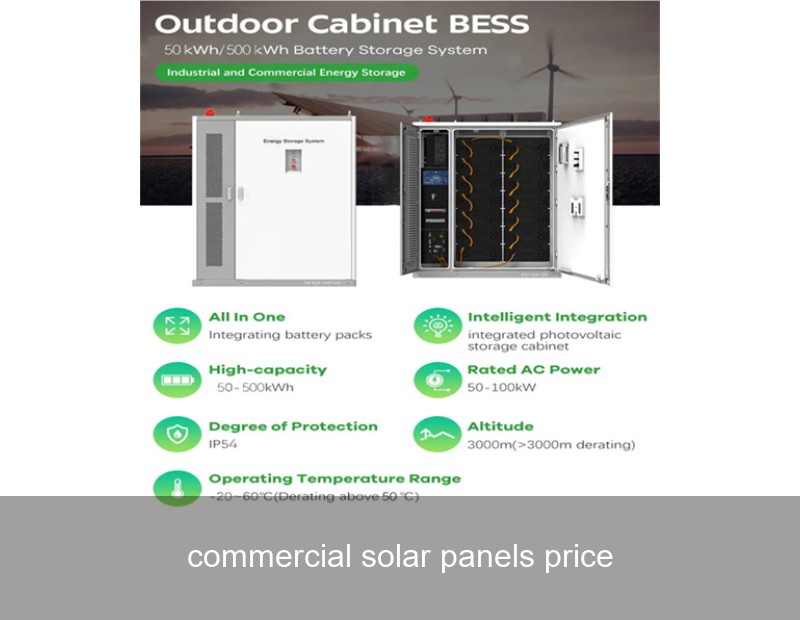
Image: The heart of a modern commercial BESS, like Highjoule's HES Series, enabling energy independence and financial optimization. Source: Unsplash
Highjoule's AI-powered energy management platform sits at the core of this, intelligently deciding when to charge, discharge, or hold based on weather forecasts, energy price signals, and your consumption patterns. This turns a static solar array into a dynamic, profit-optimizing asset.
Is Your Business Ready to Re-evaluate Its Energy Costs?
The landscape of commercial solar panels price has transformed. It's no longer just an environmental statement; it's a formidable financial tool for savvy businesses. The question has shifted from "Can we afford it?" to "Can we afford to wait?" With incentives at their peak and energy market volatility a constant, delaying action means leaving money on the table and ceding control of a major operational expense.
What would a 5-year energy cost forecast look like for your business if you locked in a significant portion of your rate today? How would the predictability and resilience of an integrated solar-plus-storage system impact your operational planning and risk management?
We invite you to start that conversation. Highjoule's experts are ready to provide a customized assessment that moves beyond a simple commercial solar panels price quote to deliver a clear roadmap for energy savings, sustainability, and independence. The sun is offering a predictable price for power—are you ready to accept?
 Inquiry
 Online Chat