


Choosing the Right Supplier of Solar Items for Your Energy Independence
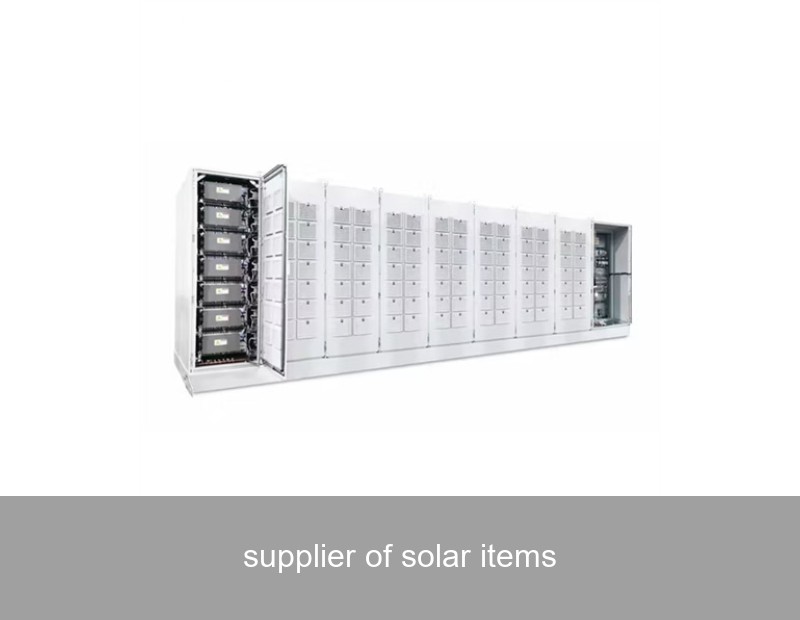
You've decided to harness the sun's power. It's a smart move, promising lower bills and a lighter carbon footprint. But here's the crucial step many overlook: the success of your entire solar project hinges on the supplier of solar items you choose. This isn't just about buying panels; it's about selecting a partner for a complex energy ecosystem. A truly advanced supplier provides the complete, intelligent system—panels, inverters, and crucially, the battery storage that turns sunlight into reliable, 24/7 power. Let's explore how to make that critical choice.
The Phenomenon: More Than Just Panels on a Roof
For years, solar adoption was driven by a simple equation: install panels, reduce grid consumption, save money. However, homeowners and businesses across Europe and the U.S. are encountering a new reality. Energy needs are dynamic—spiking in the evening when solar production falls. Grid electricity prices are increasingly volatile, and power outages remain a concern. This has revealed a gap: a system that only generates power when the sun shines addresses just half of the energy independence equation. The modern challenge is managing and dispatching that energy intelligently.

Image Source: Unsplash (Representative image of integrated home energy)
The Data: Why the "Balance of System" Matters
The financial and operational performance of your solar installation depends heavily on components beyond the panels, often called the "balance of system" (BOS). According to the National Renewable Energy Laboratory (NREL), BOS costs can represent 50-70% of total utility-scale photovoltaic system costs. For residential and commercial systems, the inverter's efficiency and the battery storage system's longevity and depth of discharge are paramount. A high-quality panel underperforms if paired with a mediocre inverter, and without robust storage, up to 60% of your generated energy could be exported to the grid at low rates, instead of powering your home or business directly.
The Core Components of a Modern Solar System
| Component | Traditional Role | Advanced Role |
|---|---|---|
| Solar Panels | Generate DC electricity | High-efficiency, durable models with better low-light performance |
| Inverter(s) | Convert DC to AC power | Smart, hybrid inverters that manage grid, solar, and battery flow dynamically |
| Battery Storage | Optional backup power | The essential hub for energy autonomy, time-of-use optimization, and grid services |
| Energy Management System (EMS) | Basic monitoring | AI-driven platform that learns usage patterns and maximizes economic return |
Case Study: A U.S. Manufacturing Plant's Journey
Consider a real-world example: a mid-sized automotive parts manufacturer in Ohio. Their goal was to lock in energy costs and ensure production continuity. They initially sourced panels and a standard inverter from one supplier of solar items and a battery from another. The result? System integration headaches, suboptimal performance during peak demand, and no unified view of their energy data.
Their solution was to partner with a single, integrated solution provider. By installing a synchronized system featuring high-efficiency bifacial panels and a containerized, grid-interactive battery energy storage system (BESS), they achieved:
- 42% reduction in monthly demand charges from the utility.
- 85% self-consumption of solar generation, up from 35%.
- Seamless backup power for critical assembly lines during two grid interruptions, preventing an estimated $120,000 in downtime losses.
This case underscores that the value is created not by individual components, but by their intelligent integration and control.
The Supplier Evolution: From Box-Mover to Solution Architect
The market has matured. The leading supplier of solar items today is no longer just a distributor. They are an energy solution architect. They ask about your load profile, your local utility's rate structure, your sustainability goals, and your risk tolerance for outages. They then design a system where hardware and software work in concert. This is where companies like Highjoule redefine the partnership. With nearly two decades of experience since 2005, Highjoule doesn't just supply components; we engineer integrated, intelligent storage systems that become the beating heart of your energy setup.
Key Criteria for Your Solar Items Supplier
How do you identify a true solution architect? Ask these questions:
- Do you offer integrated storage solutions, not just add-ons? Look for proprietary or deeply partnered battery and inverter technology.
- What is the expected cycle life of your batteries, and what is the warranty? Highjoule's commercial battery systems, for instance, are engineered for thousands of deep cycles with industry-leading warranties.
- Can your system provide grid services or participate in virtual power plants (VPPs)? This future-proofs your investment, potentially creating revenue.
- What does the energy management software platform offer? It should provide clear analytics, control, and forecasting.
The Highjoule Approach: Intelligent Storage as the Core
At Highjoule, our philosophy is that storage is the central intelligence of the modern energy system. As a global provider, we serve commercial, industrial, residential, and microgrid applications with this core principle. Our product suite is designed to meet the exacting demands of the European and U.S. markets:
- Residential PowerStack Series: Scalable lithium-ion battery systems with hybrid inverters, designed for easy installation and seamless integration with existing or new solar arrays. Our intuitive app lets homeowners optimize for self-consumption or backup readiness.
- Commercial & Industrial (C&I) EnergyHub: Modular, containerized BESS solutions. These systems are workhorses for demand charge reduction, peak shaving, and renewable firming. They feature advanced safety systems and are built to UL and IEC standards.
- Microgrid Controller: The brain for off-grid or community projects, seamlessly blending solar, storage, and backup generators for 100% renewable uptime.
Our services extend beyond hardware: we provide detailed energy analytics, system design support, and ongoing performance monitoring. We act as your long-term partner in energy resilience. For more on global storage trends, the International Energy Agency's reports provide excellent context.

Image Source: Unsplash (Representative image of industrial battery storage)
Future-Proofing Your Investment
The energy landscape is shifting rapidly. Electric vehicle charging loads are accelerating. Time-of-use electricity rates are becoming the norm. A system designed only for today's needs may be obsolete in five years. Your chosen supplier of solar items must demonstrate a roadmap for software updates, hardware scalability, and adaptability to new market mechanisms like VPPs.
This is where Highjoule's commitment to open-standards communication protocols and software-upgradable hardware shines. We ensure your energy asset can adapt and capture value for years to come.
Your Next Step
The journey to true energy independence starts with a conversation that goes beyond price-per-watt. It starts with a partner who sees your energy profile as unique. What specific energy challenge—whether it's peak demand charges, backup power anxiety, or a corporate sustainability target—is most critical for you to solve in the next quarter?
 Inquiry
 Online Chat