


Demystifying the Key Components of Smart Grid: A Blueprint for a Resilient Energy Future
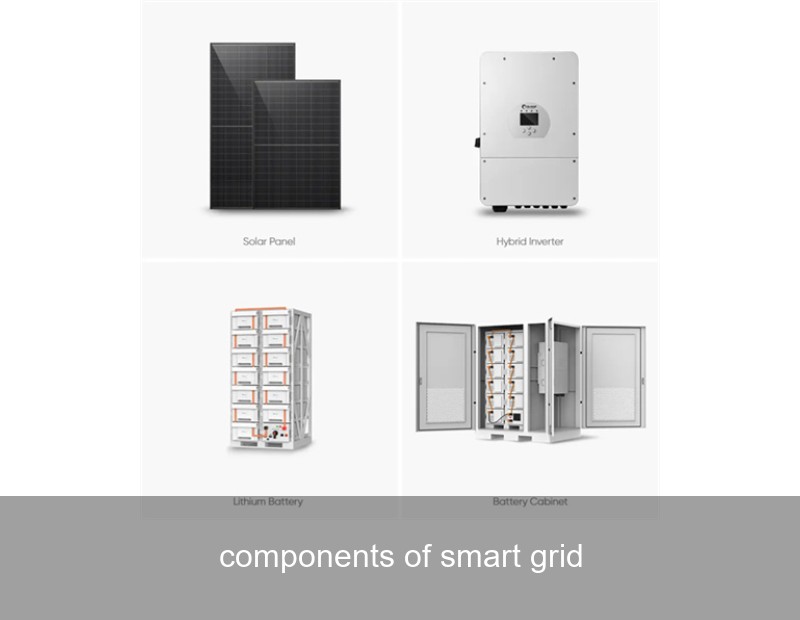
Have you ever wondered how our power networks can seamlessly integrate rooftop solar, electric vehicles, and large-scale wind farms, all while keeping your lights reliably on? The answer lies in the transformative architecture of the components of smart grid technology. Unlike the traditional, one-way grid, a smart grid is a digital ecosystem. It's a symphony of interconnected components working in concert to optimize electricity generation, distribution, and consumption. For businesses, communities, and homeowners, understanding these components is the first step toward unlocking greater energy independence, efficiency, and sustainability.
Table of Contents
- The Core Challenge: From Passive Consumption to Active Management
- The Foundational Layer: Advanced Sensing and Control
- The Intelligence Hub: Communication Networks and Data Management
- The Game Changer: Distributed Energy Resources (DERs) and Storage
- Case in Point: Microgrid Stability in California
- Highjoule's Role: Integrating Components into Cohesive Solutions
- The Human Component: Empowerment and Interaction
The Core Challenge: From Passive Consumption to Active Management
Our century-old grid was designed for a simpler era: large power plants sending electricity in one direction to passive consumers. Today, this model is strained by volatile renewable generation, climate-induced extreme weather, and evolving demand patterns like EV charging. The result? Potential inefficiencies, vulnerabilities, and missed opportunities for optimization. The smart grid directly addresses this by transforming the network into a dynamic, two-way dialogue of power and data.
The Foundational Layer: Advanced Sensing and Control
Think of this as the nervous system of the smart grid. These components are the sensors and actuators that provide real-time visibility and automated control across the entire network.
Smart Meters & Phasor Measurement Units (PMUs)
Smart meters, the most visible component to end-users, replace traditional meters. They provide granular, time-based data on energy use, enabling dynamic pricing and giving consumers insights to shift usage. At the utility level, Phasor Measurement Units (PMUs) are the high-precision tools. They measure voltage, current, and frequency synchrophasors across the grid up to 60 times per second, allowing operators to detect and respond to disturbances in near real-time, preventing localized issues from cascading into widespread blackouts.
Intelligent Electronic Devices (IEDs)
IEDs are the localized decision-makers installed in substations and along power lines. They can autonomously protect equipment by isolating faults, reconfigure circuits, and regulate voltage. This decentralized intelligence is crucial for resilience, allowing sections of the grid to self-heal automatically.

Image Source: Unsplash - Representative image of modern grid control equipment
The Intelligence Hub: Communication Networks and Data Management
Data alone is not power; it's the insights derived from it. The communication backbone—using fiber optics, RF mesh, or cellular networks—shuttles vast amounts of data from sensors to control centers. Here, powerful software platforms known as Distribution Management Systems (DMS) and Advanced Metering Infrastructure (AMI) headends analyze the information. They create a real-time digital twin of the physical grid, run predictive analytics, and enable operators to optimize power flow, integrate renewables, and manage demand response programs effectively.
The Game Changer: Distributed Energy Resources (DERs) and Storage
This is where the grid truly becomes "smart" and interactive. DERs include rooftop solar panels, small-scale wind turbines, combined heat and power units, and, most pivotally, battery energy storage systems (BESS). These components turn consumers into "prosumers" who can generate, store, and sell back electricity. Energy storage acts as the ultimate grid buffer, absorbing excess solar generation during the day and discharging during the evening peak. It provides critical grid services like frequency regulation and black start capability. This is precisely where Highjoule's expertise becomes integral. Our HI-Stack Commercial & Industrial BESS and HI-Power Utility-Scale Storage solutions are engineered to be seamless plug-and-play components of the modern smart grid. They feature advanced grid-forming inverters that can stabilize local networks and are integrated with sophisticated energy management software (EMS) for optimal performance and revenue stacking.
Case in Point: Microgrid Stability in California
Let's look at a real-world application that brings all these components together. In California, where Public Safety Power Shutoffs (PSPS) due to wildfire risk and abundant solar can cause grid volatility, a community microgrid project in the Bay Area provides a compelling case. The project integrated:
- DERs: 2.5 MW of existing rooftop solar.
- Storage: A 4 MWh containerized battery storage system (similar to Highjoule's HI-Power product line).
- Control: A microgrid controller (the brain) and smart switches.
- Sensing: Advanced metering at all critical points.
During a planned PSPS event in 2022, the microgrid successfully islanded from the main grid for 42 consecutive hours. The BESS provided seamless transition power, managed the variable solar output, and prioritized power to critical loads like a community cooling center and communications hub. Data from the California Public Utilities Commission shows such microgrids can reduce outage times for critical facilities by over 90% during such events, proving the tangible value of coordinated smart grid components.
| Component | Role | Outcome |
|---|---|---|
| Solar PV (2.5 MW) | Primary Generation | Supplied ~60% of daytime load |
| Battery (4 MWh) | Storage & Grid Stability | 100% reliability during 42h islanding |
| Microgrid Controller | System Intelligence | Automated islanding and load prioritization |
| Smart Meters/Switches | Monitoring & Control | Real-time visibility and safe disconnection |
Highjoule's Role: Integrating Components into Cohesive Solutions
Understanding individual components is one thing; making them work together harmoniously is another. Highjoule acts as a system integrator and technology provider. We don't just supply best-in-class battery storage; our HI-Grid EMS platform is the unifying software layer that orchestrates diverse components—from your existing solar inverters and building management systems to the utility's demand signals. For our industrial clients across Europe and the US, this means we design solutions that treat their facility as a nano-grid, a perfect subset of the larger smart grid. Our systems automatically decide when to store energy, when to discharge, when to participate in grid service markets, and when to maximize self-consumption, all while protecting critical operations.

Image Source: Unsplash - Representative image of an energy management system interface
The Human Component: Empowerment and Interaction
Finally, a truly smart grid empowers its users. This is achieved through Home/Building Energy Management Systems (HEMS/BEMS) and consumer portals. These interfaces translate complex grid dynamics into actionable insights: "Your EV is scheduled to charge at 2 AM when wind energy is plentiful and rates are lowest." By engaging consumers and businesses in this dialogue, the smart grid taps into a vast resource of flexible demand, making the entire system more efficient and renewable-friendly. According to a IEA report on digitalization, such demand-side flexibility could save $270 billion in global grid investment by 2040.
As you look at your own energy footprint—be it a manufacturing plant, a hospital, or a household—which smart grid component do you believe would deliver the most immediate value in terms of cost savings and resilience for your specific context?
 Inquiry
 Online Chat