


Unlocking the True Potential of Solar Resources for Sale: From Sunlight to Strategic Assets
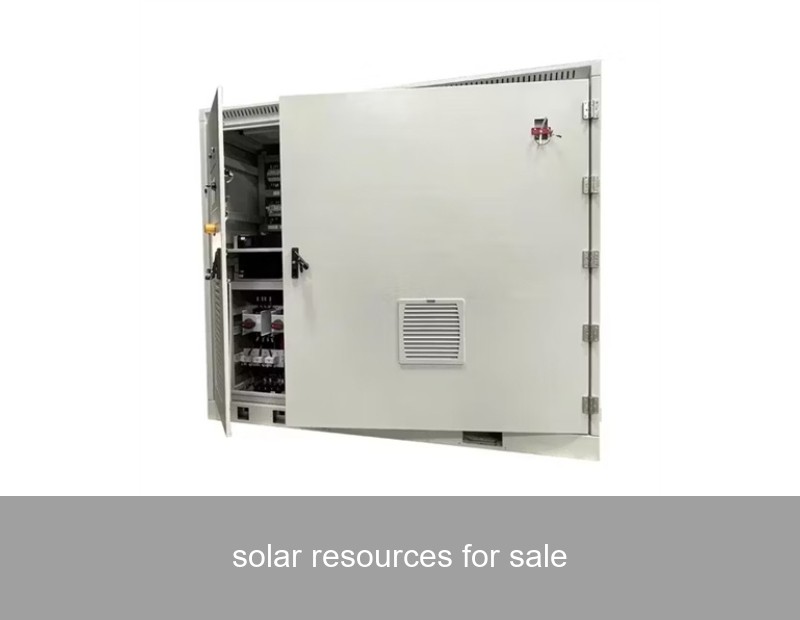
When we hear "solar resources for sale," the mind often jumps to solar panels on a warehouse roof or a field of glistening modules. But in today's energy landscape, especially in markets like Europe and the U.S., this phrase has evolved. It no longer just describes the hardware; it signifies a comprehensive, intelligent, and monetizable energy asset. The true value isn't merely in capturing sunlight, but in how reliably, efficiently, and profitably you can use and store that power when it's needed most. This shift from simple generation to strategic resource management is where the future of energy independence and economic return is being written.
Table of Contents
- The Phenomenon: More Than Just Panels on a Roof
- The Data: Quantifying the Solar + Storage Advantage
- Case Study: A U.S. Manufacturing Plant's Strategic Pivot
- The Solution: Intelligent Systems for Maximizing Your Solar Resource
- Highjoule's Role: Your Partner in Advanced Energy Asset Management
- What Does Your Ideal Energy Asset Portfolio Look Like?
The Phenomenon: More Than Just Panels on a Roof
Businesses and communities investing in solar are increasingly facing a fundamental mismatch. Solar generation peaks in the middle of the day, but energy demand and costs often spike in the early evening when the sun is setting. This creates a scenario where you might be selling excess solar power back to the grid at a low rate, only to buy it back hours later at a premium. Your valuable solar resource is, in effect, being underutilized. The phenomenon is clear: without a means to time-shift that energy, a significant portion of its potential value is left on the table.

Image Source: Unsplash - A visual representation of the timing mismatch between solar production and typical energy demand curves.
The Data: Quantifying the Solar + Storage Advantage
The numbers compellingly make the case for integrating storage with solar resources. According to the National Renewable Energy Laboratory (NREL), pairing commercial solar with battery storage can increase the value of solar by managing peak demand charges, which can constitute 30-70% of a commercial electricity bill. In Europe, where grid prices are volatile, a IRENA report highlights that renewable energy costs continue to fall, making the business case for self-consumption stronger than ever.
Consider this breakdown of value streams for a "solar resource for sale" that includes storage:
| Value Stream | Description | Potential Impact |
|---|---|---|
| Energy Arbitrage | Store cheap solar/off-peak power, use during expensive peak periods. | Reduces time-of-use electricity costs significantly. |
| Demand Charge Reduction | Use stored energy to smooth out peak grid draws, lowering peak demand fees. | Can cut a major portion of commercial utility bills. |
| Backup Power & Resilience | Provide critical power during grid outages. | Prevents operational downtime and data loss. |
| Grid Services | In some markets, systems can provide frequency regulation or capacity services. | Creates a new revenue stream from your energy asset. |
Case Study: A U.S. Manufacturing Plant's Strategic Pivot
Let's look at a real-world example. A mid-sized automotive parts manufacturer in Ohio was facing annual electricity costs of over $1.2 million, with nearly 40% attributed to demand charges. They had a 500 kW rooftop solar array, but it only offset their daytime base load. Their "solar resource" was underperforming financially.
The Solution & Implementation: In 2022, they partnered with an integrator to deploy a Highjoule HJ-Cube 500 battery energy storage system (BESS) alongside their existing solar. The system's intelligent energy management software was programmed to:
- Prioritize charging the batteries with excess solar production.
- Discharge strategically during their short, intense afternoon operational peaks when machinery, HVAC, and lighting all converged.
- Maintain a reserve for short-duration backup power for critical control systems.
The Data-Driven Outcome: Within the first year:
- Demand charges were reduced by 28%, saving over $130,000 annually.
- Overall grid energy consumption dropped by an additional 15% through optimized self-consumption of solar.
- The project achieved a return on investment (ROI) in under 5 years, a figure that will improve further as energy prices rise.
This case demonstrates that the solar resource for sale transformed from a simple cost offsetter into a dynamic, profit-protecting asset.
The Intelligent Core: Software-Defined Energy Management
The true hero in stories like the one above isn't just the battery hardware; it's the brain that controls it. An advanced Battery Energy Storage System (BESS) requires sophisticated energy management software (EMS) that can forecast energy production and consumption, understand complex utility rate structures, and autonomously make the most profitable decisions every second of the day. This software is what turns a collection of components into a true, strategic solar resource for sale.
Highjoule's Role: Your Partner in Advanced Energy Asset Management
This is precisely where Highjoule's expertise comes into play. Since 2005, we've moved beyond being just a component supplier to becoming a provider of intelligent, integrated power solutions. We understand that when you invest in solar resources, you're investing in an energy asset that should work for you 24/7.
Our product suite is engineered to maximize the value of every kilowatt-hour your solar assets produce:
- HJ-Cube Commercial & Industrial (C&I) Series: Containerized or skid-mounted, all-in-one BESS solutions featuring our proprietary EMS. They are the ideal partner for existing or new solar installations, designed to tackle demand charges and optimize self-consumption for factories, data centers, and large facilities.
- HJ-Resilience Home System: For the residential market, particularly in areas of the U.S. prone to outages, this system seamlessly integrates with home solar to provide backup power, energy independence, and bill savings.
- Highjoule EnergyOS Platform: The cloud-based intelligence layer. This platform allows for remote monitoring, performance analytics, and control of distributed energy assets. For developers or owners of multiple sites, it enables portfolio-wide optimization, turning each site's solar and storage into a networked, virtual power plant.

Image Source: Unsplash - Representing the advanced control and monitoring of modern energy systems.
Our approach is holistic. We work with developers, EPCs, and end-users to design systems that don't just store energy, but strategically deploy it based on economics, weather, and operational needs, ensuring your solar resources are fully monetized.
What Does Your Ideal Energy Asset Portfolio Look Like?
The conversation around solar has matured. It's no longer just about being green—it's about being smart, resilient, and economically savvy. The most forward-thinking businesses in Europe and the U.S. are now viewing their energy infrastructure as a portfolio of assets: solar generation, storage capacity, and intelligent software. This portfolio can be tuned to respond to market signals, weather events, and internal demand.
So, we leave you with this question: As energy markets continue to evolve and volatility becomes the norm, what strategic steps will you take to ensure the solar resources you own or are considering are configured not just for generation, but for maximum financial and operational return?
 Inquiry
 Online Chat