


Concentrated Solar Panels: Unlocking High-Efficiency, 24/7 Renewable Power
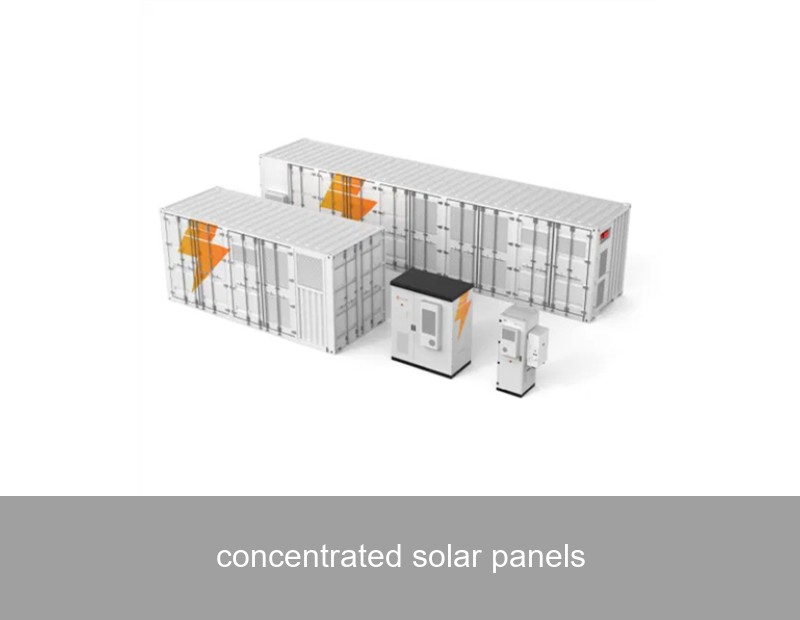
Imagine a solar technology that doesn't just capture sunlight but intensifies it, like a magnifying glass focusing rays to a single, powerful point. This is the core promise of Concentrated Solar Panels (CSP), a fascinating branch of solar power that is redefining what's possible for large-scale, sustainable energy generation. Unlike the photovoltaic (PV) panels on rooftops that convert sunlight directly into electricity, CSP systems use mirrors or lenses to concentrate a large area of sunlight onto a small receiver. The result? Extremely high temperatures that can generate electricity more efficiently and, crucially, store thermal energy for use when the sun isn't shining. For businesses, utilities, and communities looking to achieve true energy independence and decarbonize their operations, understanding this technology is key. As a leader in advanced energy storage, Highjoule recognizes that the future grid hinges on such dispatchable renewables, and our intelligent battery energy storage systems (BESS) are the perfect complement to these stable, clean power sources.
Table of Contents
- How Concentrated Solar Panels Actually Work: Beyond Simple PV
- The Compelling Advantages of Concentrated Solar Power
- Real-World Impact: The Noor Ouarzazate Complex in Morocco
- The Critical Synergy: CSP and Advanced Battery Storage
- Highjoule's Role in Maximizing Your Renewable Investment
- The Future Outlook for Concentrated Solar Technology
How Concentrated Solar Panels Actually Work: Beyond Simple PV
Let's break down the magic. While both technologies start with the sun, their paths diverge dramatically.
- The Concentration Principle: CSP plants use thousands of sun-tracking mirrors (called heliostats) or parabolic troughs to focus sunlight onto a central receiver. This can increase solar energy intensity by a factor of 100 or more.
- Heat is the Medium: The focused sunlight heats a specialized fluid (often molten salt) within the receiver to soaring temperatures, typically between 400°C and 1000°C.
- From Heat to Electricity: This super-heated fluid is then used to produce steam, which drives a conventional turbine connected to a generator, producing electricity—much like a traditional power plant, but with a clean, solar-powered boiler.
The most significant differentiator? That heated fluid can be stored efficiently in large insulated tanks for hours, even up to 10-15 hours, before being used to generate power. This inherent thermal storage capability is CSP's "secret weapon" for providing on-demand, renewable power.
The Compelling Advantages of Concentrated Solar Power
So, why choose CSP over established solar PV farms? The benefits are particularly relevant for grid stability and industrial applications.
| Advantage | Description | Impact |
|---|---|---|
| Inherent Thermal Storage | Molten salt tanks store heat directly, a cheaper and simpler method than storing electricity. | Provides dispatchable power after sunset, reducing reliance on fossil fuel peaker plants. |
| High Efficiency & Grid Stability | High temperatures enable efficient steam turbines that provide synchronous inertia, helping to stabilize grid frequency. | Supports grid resilience and integrates well with other variable renewables like wind and PV. |
| Industrial Process Heat | The high-temperature heat can be used directly for industrial processes like manufacturing, desalination, or chemical production. | Enables decarbonization of hard-to-abate industrial sectors beyond just electricity generation. |
However, it's not a one-size-fits-all solution. CSP plants typically require large, contiguous areas of land with high direct normal irradiance (DNI)—think sun-drenched regions like the southwestern US, Southern Europe, the Middle East, and North Africa. This makes them ideal for utility-scale projects rather than residential use.
Real-World Impact: The Noor Ouarzazate Complex in Morocco
To understand CSP's potential, look no further than the Noor Ouarzazate Solar Complex in Morocco, one of the world's largest CSP plants. It's a powerful testament to the technology's ability to transform a region's energy landscape.
 Image: The Noor Ouarzazate CSP complex. Source: World Bank Photo Collection (CC BY-NC-ND 2.0)
- Scale: The complex has a total capacity of 580 MW, with a significant portion coming from CSP technology with integrated thermal storage.
- Storage Capacity: Noor III, the tower plant within the complex, uses molten salt storage to provide up to 7.5 hours of full-load electricity generation after sunset [1].
- Impact: It supplies power to over a million people and has helped Morocco reduce its fossil fuel dependence, aiming for 52% of its installed capacity from renewables by 2030. The project showcases how CSP can provide reliable, large-scale power day and night, acting as a backbone for a cleaner grid.
The Critical Synergy: CSP and Advanced Battery Storage
Here's where the energy future gets even more interesting. While CSP has built-in thermal storage, pairing it with advanced battery energy storage systems (BESS) creates a "renewable powerhouse" duo. Think of it this way: CSP's thermal storage handles the long-duration, bulk energy shifting (e.g., moving solar power from day to night). A complementary BESS, like those from Highjoule, provides ultra-fast response for grid services—frequency regulation, voltage support, and smoothing out any short-term variability. This hybrid approach maximizes asset utilization and grid value.
For instance, during a cloud passage, a CSP plant's output might dip momentarily. A coordinated BESS can inject power within milliseconds to fill that gap, ensuring flawless power quality. This synergy is a cornerstone of the modern, resilient microgrids and utility-scale renewable parks that Highjoule specializes in supporting.
Highjoule's Role in Maximizing Your Renewable Investment
At Highjoule, our mission is to make renewable energy reliable, intelligent, and fully dispatchable. While we don't build CSP mirrors, our expertise is critical in the ecosystems where CSP thrives. For developers and operators of concentrated solar plants, integrating a Highjoule BESS offers a powerful upgrade:
- Enhanced Grid Stability: Our GridSynk™ BESS platform provides essential grid-forming and black-start capabilities, ensuring that even large-scale solar plants can support, not strain, the local grid infrastructure.
- Optimized Revenue Streams: In markets like California or Texas in the US, or across Europe, our AI-driven Energy Management System (EMS) can autonomously decide when to dispatch CSP power, when to charge/discharge the batteries, and when to participate in lucrative ancillary service markets, maximizing the financial return on the entire asset.
- Future-Proofed Microgrids: For industrial or remote communities using CSP as a primary source, our containerized Microgrid Prime solutions provide the seamless integration and control layer to manage CSP, battery storage, and backup generation as a single, resilient unit.
We see concentrated solar power not as a competitor, but as a perfect partner in building a decarbonized, secure energy future.
The Future Outlook for Concentrated Solar Technology
The journey for CSP is one of innovation and cost reduction. Research is focused on reaching even higher temperatures with new materials like supercritical CO2 as the working fluid, which promises greater efficiency and lower costs [2]. Furthermore, the push for green hydrogen presents a new frontier. The high-temperature heat from CSP can be used to drive highly efficient thermochemical processes for hydrogen production, offering a completely renewable pathway for this crucial future fuel [3].
The question for energy planners and industry leaders isn't necessarily "CSP or PV?" but rather, "What is the optimal mix of technologies—including wind, PV, CSP, and advanced storage—to achieve 24/7 clean power at the lowest total system cost?"
 Inquiry
 Online Chat