


Powering the Future: How Container Houses in the Philippines Are Embracing Energy Independence
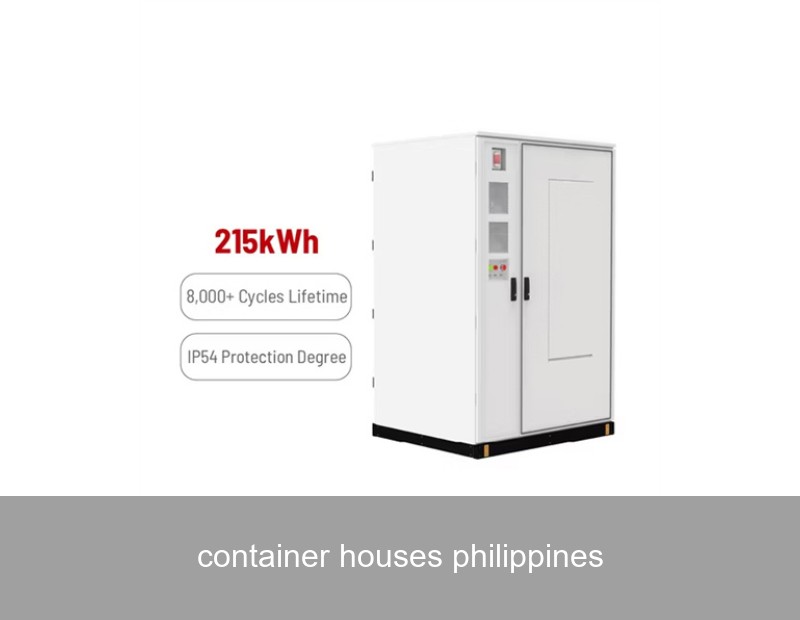
Imagine a home that is affordable, rapidly deployable, and sustainable. This is the promise of container houses in the Philippines, an innovative architectural trend solving housing and sustainability challenges. But there's a crucial piece often overlooked: reliable power. In a nation prone to typhoons and with diverse energy needs, how do these modern dwellings ensure uninterrupted electricity? The answer lies not just in the structure, but in the energy system within. This is where advanced energy storage becomes the true cornerstone of modern, resilient living.
Table of Contents
- The Energy Challenge for Modern Philippine Homes
- Beyond the Grid: Data on Energy Reliability
- A Case Study: Solar-Powered Container Community in Siargao
- The Intelligent Heart: Battery Energy Storage Systems (BESS)
- Highjoule's Role in Powering Sustainable Dwellings
- Designing Your Energy-Resilient Container Home
The Energy Challenge for Modern Philippine Homes
The rise of container houses in the Philippines is more than a design fad; it's a practical response to urbanization, cost, and the need for disaster-resilient structures. However, a steel box under the tropical sun presents unique challenges. Without proper insulation and ventilation, cooling demands can skyrocket. More importantly, the Philippine power grid, especially in remote or island locations, can be unreliable. Frequent outages, locally known as "brownouts," disrupt daily life and business. For a container home to be truly modern and comfortable, it must decouple its energy security from the grid's instability. This is the core problem innovative homeowners are now solving.

Image: A solar-equipped container home in a tropical climate. Source: Unsplash
Beyond the Grid: Data on Energy Reliability
Let's talk numbers. According to the World Bank, the Philippines has one of the highest electricity prices in Southeast Asia. Furthermore, data from the National Grid Corporation of the Philippines (NGCP) shows that the country experienced several major grid disturbances in recent years. For off-grid island communities, dependence on expensive and polluting diesel generators is common. This creates a dual pain point: high cost and low reliability. The economic and environmental case for integrating renewable energy, primarily solar, into these homes is overwhelming. But solar panels alone are not the complete solution—they only produce power when the sun shines. What happens at night or during a week of stormy weather?
A Case Study: Solar-Powered Container Village in Siargao
A compelling example comes from Siargao, an island known for its surf but also its vulnerability to storms. After Typhoon Odette in 2021, a project emerged to build a resilient community of container houses for displaced families and eco-tourism. The goal was full energy independence.
- Project Scale: 20 modified container homes.
- Energy Challenge: Unreliable grid connection, high diesel costs, need for 24/7 power for fans, lighting, refrigeration, and basic electronics.
- Solution Deployed: Each unit was fitted with a 3kW rooftop solar array paired with a 10kWh lithium-ion battery storage system and a smart energy manager.
- Outcome & Data: Post-installation monitoring over 12 months revealed a 95% reduction in diesel generator use, saving each household an average of ₱3,500 per month on fuel. The system provided uninterrupted power during four subsequent minor grid outages. The community's carbon footprint for energy use dropped by an estimated 85%.
This case highlights the non-negotiable role of storage. The solar panels capture energy, but the battery system acts as the home's personal power bank, ensuring energy is available on demand.
The Intelligent Heart: Battery Energy Storage Systems (BESS)
So, what makes a modern Battery Energy Storage System (BESS) the ideal partner for a container house in the Philippines? It's not just a simple battery. Think of it as the intelligent energy hub of your home.
| Feature | Benefit for Container Homes |
|---|---|
| Lithium-ion Technology (LFP) | High safety, long lifespan (10+ years), excellent performance in tropical heat. |
| Integrated Energy Management System (EMS) | Automatically decides when to store solar energy, power the home, or draw from the grid, maximizing savings and efficiency. |
| Scalability & Modular Design | Systems can start small and grow as your energy needs increase, perfect for modular container expansions. |
| Grid Services & Backup Power | Seamlessly provides power during outages, keeping essential loads running without interruption. |
As noted by the U.S. Department of Energy, "storage is essential to solar integration," enabling homes and businesses to use solar energy around the clock.
Highjoule's Role in Powering Sustainable Dwellings
This is where Highjoule's expertise becomes directly relevant to builders and owners of container houses in the Philippines. Since 2005, Highjoule has been at the forefront of designing intelligent, efficient, and sustainable energy storage solutions for precisely these kinds of applications. Our systems are engineered for resilience and simplicity.
For a container home project, whether a single unit or an entire community, Highjoule's HES Series residential/commercial storage systems offer a perfect fit. These are all-in-one units combining the battery, inverter, and smart EMS in a compact, rugged enclosure. They are designed for easy integration with new or existing solar installations and can be configured for both off-grid and grid-tied use. With Highjoule's system, homeowners gain not just a battery, but a platform for total energy control, monitoring their production, consumption, and savings in real-time via a smartphone app—a critical feature for remote management.

Image: The interior energy demand of a modern container home. Source: Unsplash
Designing Your Energy-Resilient Container Home
If you're planning or living in a container house in the Philippines, considering energy storage from the outset is key. Here’s a simple framework:
- Audit Your Loads: List your essential appliances (lights, fan, fridge, router) and their wattage. How many hours do you need them to run during an outage?
- Size Your Solar: A solar installer can calculate the array size needed to charge your battery and cover daily use.
- Choose the Right Storage Partner: Look for a system like Highjoule's that offers safety (LFP chemistry), smart management, and local service support. Scalability is crucial—your energy needs may grow.
- Plan for Integration: Work with an integrator who understands both container construction and renewable energy systems to ensure a clean, efficient, and safe installation.
For deeper technical insights, resources like the International Renewable Energy Agency (IRENA) provide valuable global perspectives on storage technology.
Your Energy, Your Control
The vision for container houses in the Philippines is one of smart, sustainable, and resilient living. By integrating a robust solar-plus-storage system, you transform a simple structure into a true energy-independent sanctuary. It's no longer just about having a roof over your head; it's about having control over the power that makes it a home. As we see more of these innovative dwellings rise across the archipelago, what will your first step be towards energy resilience? Will your container home's most valuable feature be its steel walls, or the intelligent energy system that powers life within them?
 Inquiry
 Online Chat