


The Complete Guide to a Reliable 1kW Off-Grid Solar System (Sistem Fotovoltaic Off Grid 1kW)
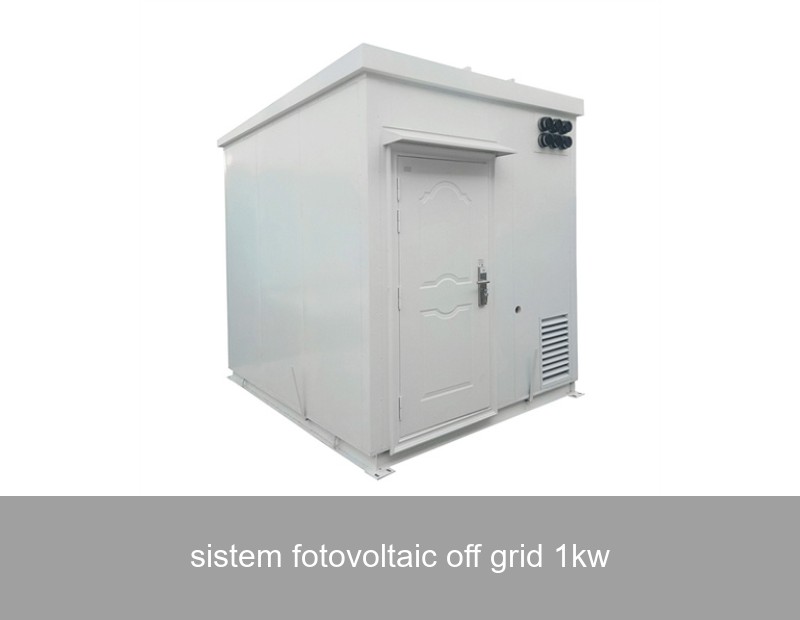
Imagine a small cabin in the woods, a remote research station, or a backup power source for critical equipment—completely independent from the utility grid. This is the promise of off-grid solar. For those seeking true energy autonomy for small-scale applications, a 1kW off-grid solar system (sistem fotovoltaic off grid 1kw) is often the perfect starting point. But what does it truly take to build a system that's reliable, efficient, and sustainable? As a product technology expert at Highjoule, a global leader in advanced energy storage since 2005, I'll guide you through the essentials, from the core components to real-world performance.
Table of Contents
- What is a 1kW Off-Grid Solar System?
- Key Components and Their Role
- The Energy Reality: What Can 1kW Power?
- A Real-World Case Study: Mountain Cabin in the Italian Alps
- Critical Design Considerations for Reliability
- How Highjoule's Expertise Elevates Your Off-Grid Solution
- Your Path to Energy Independence
What Exactly is a 1kW Off-Grid Solar System?
Let's break it down. "1kW" refers to the peak power output of the solar panel array under ideal laboratory conditions (Standard Test Conditions). "Off-grid" means the system operates in complete isolation from the public electricity network. A sistem fotovoltaic off grid 1kw is a self-contained power plant that harvests sunlight, converts it to electricity, stores it, and manages its use for your specific needs. Unlike grid-tied systems, every watt-hour you consume must be produced and stored on-site. This demands intelligent design and robust components, especially the battery storage system—the very heart of off-grid living.
Key Components and Their Role in Your System
Building a reliable off-grid system is like assembling a championship team; each player has a critical role.
- Solar Panels (1kWp Array): Typically 3-4 modern panels. Their job is to capture photons and generate direct current (DC) electricity.
- Charge Controller (MPPT Recommended): The smart regulator. It ensures batteries are charged efficiently and safely, maximizing energy harvest from the panels.
- Battery Bank (The Crucial Core): This is your energy reservoir. For a 1kW system, we're not just talking about a small battery. You need a deep-cycle battery bank with sufficient capacity (measured in kWh) to power your loads through the night and cloudy days. This is where quality and technology make all the difference.
- Inverter: The translator. It converts the DC electricity stored in your batteries into the alternating current (AC) that powers your household appliances.
- Monitoring & Management System: The brain. Modern systems offer remote monitoring and control, giving you insights into production, consumption, and battery health.
Image Source: Unsplash - Representative image of an off-grid solar setup.
The Energy Reality: What Can a 1kW Off-Grid System Actually Power?
This is the most common question we get. A 1kW array might produce an average of 3-5 kWh per day in sunny European or US climates, but this varies drastically with location and season. Let's be practical. A well-designed system prioritizes efficiency.
| Appliance | Average Power (Watts) | Estimated Daily Use with 1kW System |
|---|---|---|
| LED Lighting (5 bulbs) | 25W | 5+ hours |
| Laptop | 60W | 4-6 hours |
| DC Refrigerator (efficient) | 40W (avg.) | 24 hours (cycling) |
| Water Pump | 200W | 30-60 minutes |
| TV (LED) | 80W | 2-3 hours |
You'll notice high-wattage appliances like kettles, heaters, or standard air conditioners are absent. An off-grid 1kW system is perfect for essential, efficient loads. The key is meticulous energy budgeting and investing in high-efficiency appliances from the start.
A Real-World Case Study: Mountain Cabin in the Italian Alps
Let's look at a real example. In 2022, a client with a weekend cabin in the Dolomites (altitude 1,600m) needed a reliable, maintenance-light power source. The challenge: harsh winters, limited sun in winter, and no generator backup desired.
- Solution Deployed: A 1.2kW solar array (slightly oversized), an MPPT charge controller, and crucially, a Highjoule HES-S 5.8kWh lithium iron phosphate (LiFePO4) battery storage unit paired with a compatible hybrid inverter.
- Why Lithium (LiFePO4)? For this environment, lead-acid batteries were a poor fit—heavy, requiring ventilation, and losing capacity rapidly in cold weather. The Highjoule HES-S battery features an integrated heating system that activates in low temperatures, allowing safe charging even below freezing—a critical advantage for mountain or northern US applications.
- Outcome & Data: After one year of monitoring via Highjoule's Energy Management Platform, the system provided an average of 4.1 kWh/day. Even during a consecutive 3-day snowy period, the cabin maintained essential lighting, refrigeration, and communication devices without the state of charge dropping below 40%. The client's feedback: "It just works. We don't think about power anymore."
This case highlights that the panel wattage is only part of the story. The battery's technology, resilience, and smart management are what transform a simple solar setup into a dependable sistem fotovoltaic off grid 1kw.
Critical Design Considerations for Reliability
Designing for the perfect sunny day is easy. Designing for a week of storms is where expertise matters.
1. Battery Capacity is King (and Queen)
Oversizing your battery bank is the single best investment for peace of mind. We recommend designing for at least 2-3 days of autonomy (the ability to run without sun). For a modest daily consumption of 2.5 kWh, that means a usable battery capacity of 5-7.5 kWh. Highjoule's modular battery systems allow for this kind of flexible, future-proof scaling.
2. The Inverter's Surge Capacity
Some appliances, like pumps or power tools, require a brief surge of power (5-10 times their running wattage) to start. Your inverter must handle this "surge capacity" without shutting down. This is a common oversight in cheap, off-the-shelf kits.
3. Professional Load Analysis and System Sizing
Guessing leads to failure. A professional will analyze your specific load profile, location's solar irradiance (using tools like PVGIS from the European Commission), and desired autonomy to specify every component correctly. This upfront work is non-negotiable.

Image Source: Unsplash - Technician installing a modern battery system.
How Highjoule's Expertise Elevates Your Off-Grid Solution
At Highjoule, we've been engineering advanced storage solutions since 2005. We understand that an off-grid system is more than a product—it's a mission-critical asset. Here’s how our approach integrates into a robust sistem fotovoltaic off grid 1kw:
- Intelligent Battery Technology: Our LiFePO4 batteries, like the HES series for residential and small commercial use, offer over 6000 cycles, 95% round-trip efficiency, and seamless integration with leading inverters. They are built for the long haul, with a compact, safe, and maintenance-free design.
- System Integration & Compatibility: We don't just sell batteries; we ensure they communicate flawlessly with your chosen solar components. Our technical team provides compatibility guides and support for system integrators, ensuring a stable and optimized power ecosystem.
- Focus on Safety & Monitoring: Every Highjoule unit comes with a comprehensive Battery Management System (BMS) protecting against overcharge, deep discharge, and temperature extremes. Coupled with our monitoring platform, you gain unparalleled visibility and control over your energy reserves.
- Scalability for the Future: Starting with a 1kW system doesn't mean you're locked in. Our modular storage solutions allow you to easily add more battery capacity as your energy needs grow, protecting your initial investment.
For larger-scale applications like microgrids or industrial sites, our containerized utility-scale storage solutions provide the same principles of reliability and intelligence at a different order of magnitude.
Your Path to Energy Independence
Embarking on an off-grid project is exciting. To move from concept to reality, start with a detailed energy audit of your needs. List every appliance, its wattage, and its daily usage. Then, consult with a certified installer who has proven experience with off-grid systems and can model your system's year-round performance. They can help you select components where quality, like that found in Highjoule's storage systems, truly dictates long-term satisfaction.
Remember, the goal isn't just to generate power, but to manage and store it intelligently for when you need it most. What would true energy independence enable you to do or build in your remote location?
 Inquiry
 Online Chat