


Your Solar Panel's Brain: A Complete Guide to Choosing the Right Convertidor para Panel Solar
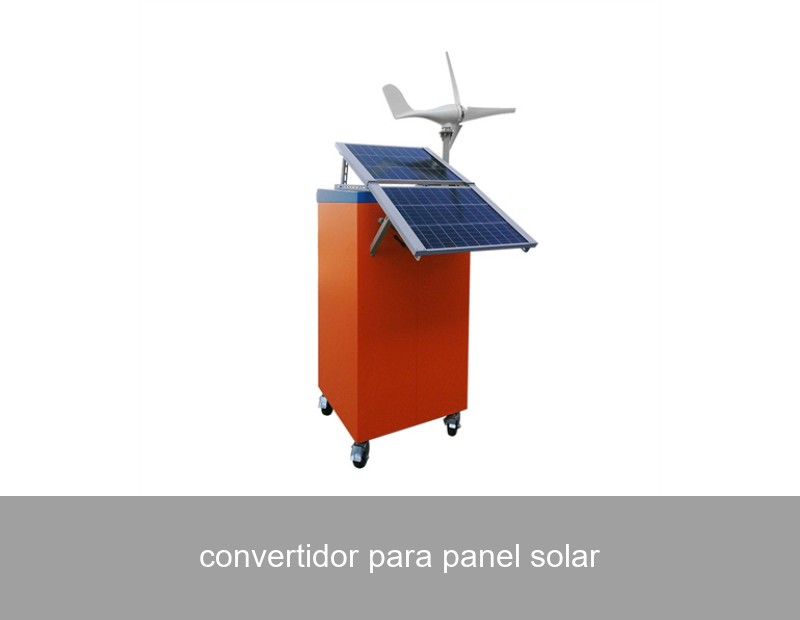
If you've ever looked at a rooftop solar installation and wondered how those sleek panels power your home's appliances, you've touched on the heart of the system: the convertidor para panel solar, or solar converter. Often called the "brains" of a photovoltaic (PV) system, this crucial device is what transforms the raw energy from the sun into usable electricity for your home or business. Without a high-quality converter, even the most efficient solar panels cannot deliver their full potential. In this guide, we'll demystify this essential component, explore its critical functions, and show you how choosing the right technology can make a significant difference in your energy independence and savings.
What is a Solar Panel Converter?
At its core, a solar converter is an electronic device that manages and changes the electrical current generated by your solar panels. Sunlight hitting the panels produces direct current (DC) electricity. However, the vast majority of homes, businesses, and the grid itself operate on alternating current (AC). The primary and most well-known function of a converter is this DC-to-AC transformation, performed by an inverter. But modern devices, especially those from advanced providers like Highjoule, do much more than simple conversion.
Think of it this way: your solar panels are the muscles, generating raw power. The converter is the brain and nervous system, intelligently managing that power, ensuring it's safe, stable, and perfectly synchronized with your electrical needs and the grid. Since its founding in 2005, Highjoule has been at the forefront of developing intelligent power conversion technology that maximizes yield, ensures safety, and seamlessly integrates with storage and grid services.

Image Source: Unsplash - A modern solar converter unit, the central hub of a PV system.
Inverter vs. Converter: Clearing the Confusion
You'll often hear the terms "inverter" and "converter" used interchangeably. While related, there's a subtle technical distinction worth noting for the informed consumer.
- Inverter: Specifically refers to a device that converts DC input into AC output. This is the non-negotiable function for grid-tied systems.
- Converter: Can be a broader term. In solar contexts, it often encompasses the inverter but may also refer to DC-DC converters (like MLPEs - Module Level Power Electronics) that optimize the DC power before it reaches the main inverter.
For instance, Highjoule's integrated systems often include both: DC-DC optimizers that maximize energy harvest from each individual panel (especially useful in shaded conditions), and a central hybrid inverter that handles the DC-to-AC conversion while also managing battery storage. This two-stage conversion process ensures every possible watt of solar energy is captured and utilized efficiently.
Key Functions of a Modern Solar Converter
Today's advanced converters are multi-talented devices. Here’s what a top-tier system, such as those engineered by Highjoule, should be doing for you:
| Function | Description | Benefit to You |
|---|---|---|
| Maximum Power Point Tracking (MPPT) | Continuously finds the optimal voltage/current at which your panels produce the most power. | Increases energy yield by up to 30% in suboptimal conditions. |
| Grid Interaction & Safety | Synchronizes AC output with the grid's frequency and voltage. Includes anti-islanding protection. | Ensures safe operation, allows net metering, and prevents backfeed during grid outages. |
| System Monitoring & Diagnostics | Provides real-time data on production, efficiency, and system health via apps or portals. | Allows you to track savings, identify issues early, and guarantee performance. |
| Battery Integration (Hybrid Function) | Intelligently charges and discharges a battery storage system, managing energy flow. | Enables backup power, self-consumption optimization, and time-of-use cost savings. |
Why Intelligence Matters in Conversion
Gone are the days of "dumb" inverters. The real value lies in the software and algorithms. Highjoule's converters use predictive analytics and weather data to pre-emptively adjust system parameters. For example, if a cloudy period is forecasted, the system might prioritize battery charging beforehand to ensure home power availability. This smart management is what transforms a simple conversion device into the command center for your personal energy ecosystem.
Choosing the Right Converter for Your System
Selecting the optimal convertidor para panel solar is not a one-size-fits-all decision. Your choice depends on your system design, location, and goals.
- For Residential Rooftops with Shading: Systems with module-level power electronics (MLPE) like microinverters or DC optimizers are ideal. Highjoule's H-OPTIM Series of DC optimizers paired with a compatible inverter can mitigate shading losses panel-by-panel, ensuring one shaded panel doesn't drag down the entire array's output.
- For Homes Seeking Energy Independence: A hybid inverter is essential. Highjoule's H-ENERGY Hub is a prime example, designed from the ground up to seamlessly integrate solar, battery storage, and grid power. It allows you to store excess solar energy for use at night or during outages, maximizing self-consumption.
- For Commercial & Industrial Scale: Robust, high-capacity central inverter stations with advanced grid-support functions are key. Highjoule's H-CENTRAL Series offers unparalleled efficiency and reliability for large-scale installations, often exceeding 98% conversion efficiency, which translates directly to a faster return on investment.
Real-World Impact: A Case Study from Spain
Let's look at data from a real installation to understand the tangible difference a high-performance converter makes.
Project: A medium-sized winery in Andalusia, Spain, with a 120 kWp rooftop solar array. The region experiences high solar irradiance but also significant temperature variations, which can reduce panel efficiency.
Challenge: The winery needed to reduce operational energy costs for cooling and lighting, ensure stable power for sensitive equipment, and have a system resilient to partial shading from surrounding structures.
Solution: Highjoule deployed its system using string inverters from the H-CENTRAL series equipped with multiple high-precision MPPT trackers. This design allowed different sections of the roof (with varying orientations) to operate at their individual optimal points without interference.
Results (Data after 12 months):
- Energy Yield: The system produced 182 MWh annually, exceeding initial yield projections by 5.2% due to the superior MPPT efficiency under fluctuating temperatures.
- Financial Savings: The winery achieved a 65% reduction in grid electricity consumption during daylight hours, translating to over €18,000 in annual savings.
- Performance Ratio: The system maintained a performance ratio (PR) of 86%, a key indicator of overall system health and conversion efficiency, which is well above the regional average for similar installations. (You can learn more about Performance Ratio metrics from the National Renewable Energy Laboratory).
This case highlights that the right converter technology doesn't just "convert"; it actively maximizes financial return and system reliability.

Image Source: Unsplash - Example of a commercial solar installation similar to the case study.
Future Trends and Smart Integration
The evolution of the solar converter is moving towards becoming an integrated energy management system. The next generation of devices will not only handle solar and storage but also coordinate with electric vehicle (EV) chargers, heat pumps, and home automation systems. The goal is dynamic load balancing: automatically directing solar power to where it's needed most, whether that's charging your EV, heating your water, or feeding back to the grid when prices are high.
Highjoule is pioneering this approach with its Highjoule Energy OS, a software layer that turns its hardware into a grid-interactive resource. This allows aggregators or utilities to leverage distributed home systems for grid stability—a concept known as Virtual Power Plants (VPPs). Homeowners can potentially earn revenue by allowing their system to support the grid during peak demand, all managed autonomously by their intelligent converter. For a deeper dive into grid-interactive technologies, the U.S. Department of Energy provides extensive resources.
The Highjoule Difference: More Than a Component
Choosing Highjoule means selecting a partner, not just a product. Our expertise as a global leader since 2005 ensures that every converter is part of a holistic solution. We provide comprehensive design support, remote monitoring platforms, and service networks in Europe and the US, ensuring your investment is protected and performs for decades. Our technology is built for the future of energy—modular, software-upgradable, and ready to integrate with the smart grid.
So, as you plan your journey to solar energy, remember that the panels capture the headlines, but the convertidor para panel solar captures the value. The critical question is no longer just "how many panels do I need?" but rather, "what intelligent energy management system will unlock the full potential of my investment, today and tomorrow?"
 Inquiry
 Online Chat