


Understanding Lift Backup Battery Price: A Smart Investment in Safety and Business Continuity
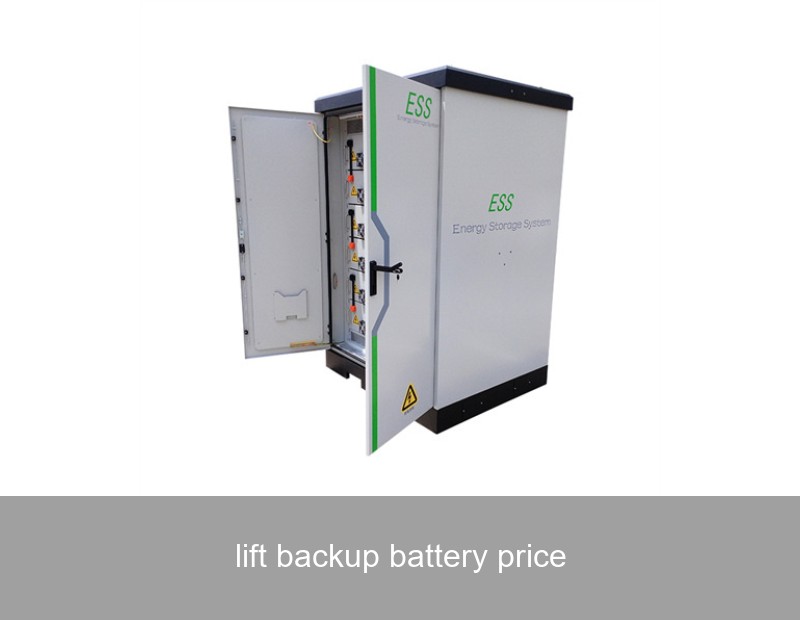
If you're responsible for a commercial or residential building, the term "lift backup battery price" has likely crossed your desk. It's often viewed as a line-item cost, a necessary expense for compliance. But what if we told you that focusing solely on the initial purchase price is like buying the cheapest parachute? The real value of a lift backup power system isn't in its upfront cost; it's in the safety it ensures, the operational downtime it prevents, and the long-term reliability it delivers. In an era of increasing grid instability and extreme weather events, a robust backup solution is no longer a luxury—it's a critical component of modern building management. Let's delve into the factors that shape lift backup battery price and why optimizing for value, not just cost, is the smartest strategy for facility managers and building owners across Europe and the US.
The Real Cost of Downtime: More Than Just an Inconvenience
Imagine a sudden power outage in a 20-story office building during peak hours. The lights flicker off, and elevators halt between floors. The immediate priority is passenger safety and rescue, a process that can take hours and requires specialized technicians. Now, consider the ripple effects: stranded employees and tenants, disrupted business operations, potential liability issues, and significant reputational damage. The National Institute of Standards and Technology (NIST) highlights that building system failures, including power loss, contribute massively to operational risk and financial loss.
The financial impact is stark. Beyond emergency service calls, consider:
- Productivity Loss: Employees unable to reach their workplaces or complete tasks.
- Tenant Dissatisfaction & Retention: In residential complexes, being trapped in an elevator is a surefire way to receive complaints and encourage lease turnover.
- Regulatory & Legal Repercussions: Failure to meet safety codes can result in fines and increased liability.
When viewed through this lens, the lift backup battery price transforms from a cost center into a strategic insurance policy. The question isn't "Can we afford this battery system?" but rather, "Can we afford not to have a reliable one?"

Image Source: Unsplash. Modern elevator systems demand reliable backup power for safety and control.
Beyond the Sticker Price: What Truly Influences Lift Backup Battery Price?
The initial quote for a battery system is a composite of several key technological and service factors. Understanding these helps you evaluate true value.
| Factor | Impact on Price & Value |
|---|---|
| Battery Chemistry | Traditional Valve-Regulated Lead-Acid (VRLA) batteries have a lower upfront cost but shorter lifespan (3-5 years) and require more space. Lithium-ion (LiFePO4) solutions, like those used by Highjoule, command a higher initial lift backup battery price but offer 2-3x longer lifespan (10+ years), faster charging, and compact design, yielding a lower total cost of ownership. |
| Capacity & Runtime | How many elevators need backup? For how long? Systems are sized (kWh) to provide essential operation, often to the nearest floor for egress. Larger capacities increase price but are non-negotiable for safety compliance. |
| Intelligence & Monitoring | Basic systems just provide power. Advanced systems, such as Highjoule's iBMS (Intelligent Battery Management System), offer remote monitoring, predictive diagnostics, and thermal management. This adds to the initial cost but drastically reduces maintenance surprises and prevents failures. |
| Installation & Integration | Complexity of retrofitting into existing elevator pits vs. new construction, and the need for compatible inverters/chargers, affects labor costs. A provider with deep integration expertise ensures a smoother, more reliable installation. |
A Case for Efficiency: How Modern Systems Lower Total Cost
Let's examine a real-world scenario from the European market. A historic hotel in Barcelona, with four passenger lifts, faced recurring issues with its aging VRLA backup system. The batteries, located in a cramped basement room, required frequent maintenance and failed to hold a full charge, risking guest safety during the city's occasional summer grid strains.
The hotel management decided to upgrade. They evaluated two options: a like-for-like VRLA replacement and a modern lithium-ion system. While the lithium solution had a ~40% higher upfront lift backup battery price, the long-term data was compelling:
- Space Savings: The Highjoule LiFePO4 system's compact size freed up 60% of the battery room space, which was repurposed for storage.
- Maintenance Reduction: The maintenance-intensive VRLA system required quarterly checks. The sealed lithium system with remote monitoring needed only an annual visual inspection, cutting scheduled maintenance costs by over 70%.
- Lifespan & Warranty: The projected 10-year lifespan of the lithium system versus 4 years for VRLA meant the hotel would avoid two additional replacement cycles over 12 years, effectively making the lithium system more economical by year 6.
This case underscores a vital principle: the most important metric is Total Cost of Ownership (TCO), not just purchase price.
The Highjoule Solution: Engineering Reliability and Value
At Highjoule, we approach lift backup battery price from an engineering perspective focused on lifecycle value. Our LiftPowerTM Series is specifically designed for elevator backup applications, blending safety, intelligence, and durability.
Our systems utilize stable, long-life LiFePO4 chemistry, managed by our proprietary iBMS. This isn't just a battery; it's an intelligent power node. The iBMS constantly monitors cell voltage, temperature, and state of health, providing building managers with a clear dashboard view of their system's readiness. This predictive capability transforms maintenance from a reactive, costly chore into a proactive, planned activity. You're not just buying a battery; you're purchasing operational certainty.
For new constructions or major retrofits, our integrated energy management platforms can go a step further. Imagine a lift backup system that doesn't just sit idle. During peak grid demand periods, with the right configuration and utility agreements, the battery system could potentially participate in demand response programs, creating a potential revenue stream or cost offset—a concept explored in grid modernization studies by entities like the U.S. Department of Energy. This turns a critical safety asset into a potential grid-supportive one, adding another layer of value beyond the core lift backup battery price.

Image Source: Unsplash. Example of a modern, compact battery storage installation in a building.
Future-Proofing Your Investment
The landscape of building power is evolving. Regulations are tightening, and sustainability goals are pushing for more efficient, grid-interactive buildings. When evaluating lift backup battery price, consider the system's adaptability. A modular system, like those Highjoule offers, allows for easier capacity expansion if building usage changes. Compatibility with renewable energy sources (like future solar PV installations) is another forward-thinking feature.
Choosing a partner with global expertise, like Highjoule, means you're not just getting a product. You're gaining access to a wealth of experience from thousands of installations across Europe and North America. We understand the specific codes—from EN 81-20 in Europe to ASME A17.1 in the U.S.—and engineer our solutions to meet and exceed these safety standards, ensuring your investment is compliant and robust for the long haul.
Ready to Reframe Your Cost-Benefit Analysis?
The conversation about lift backup battery price is ultimately a conversation about risk management and operational integrity. What is the true cost of a single, preventable elevator entrapment incident for your organization? How much value would you place on having complete, real-time visibility into the health of your building's critical safety systems?
We invite you to move beyond the sticker price. What single operational risk keeps you up at night regarding your building's power resilience, and how could a smarter backup solution alleviate that concern?
 Inquiry
 Online Chat