


Understanding the True 5.5 kW Solar System Cost: Investment vs. Long-Term Value
So, you're considering a 5.5 kW solar system. It's a popular choice for many homeowners, offering a sweet spot between power output and affordability. But when you search for "5.5 kW solar system cost," you're often met with a single, oversimplified number. The real story is far more interesting. The upfront price is just the first chapter; the true narrative is about long-term energy independence, resilience, and smart financial planning. Let's unpack the real value behind the cost and explore how modern energy storage is redefining what it means to invest in solar.
Table of Contents
- The Price Breakdown: What Makes Up a 5.5 kW System Cost?
- Beyond the Panels: The Hidden Game-Changer in Your Quote
- A Real-World Case: The Johnson Family in Arizona
- Maximizing Your Investment: The Highjoule Approach
- Future-Proofing Your Energy Bill
The Price Breakdown: What Makes Up a 5.5 kW Solar System Cost?
A typical 5.5 kW residential solar system in markets like the US or Europe can have a gross cost ranging from $15,000 to $25,000 before incentives. But why such a range? The cost is a mosaic of several critical components:
- Solar Panels (Modules): The most visible part. Premium, high-efficiency panels cost more but may produce more energy in limited space.
- Inverters: The brain of your system. You can choose between string inverters or microinverters, with the latter offering better performance for shaded roofs at a higher cost.
- Mounting Hardware & Racking: This secures your system to the roof. Quality here ensures longevity and weather resistance.
- Permitting, Installation, & Labor: This varies significantly by region, installer, and roof complexity.
- The Critical Addition: Increasingly, quotes now include an optional but highly recommended component: a home battery storage system. This is where the equation shifts from simple cost to strategic value.
After applying incentives like the US federal Investment Tax Credit (ITC) or similar schemes in European countries, the net 5.5 kW solar system cost can drop considerably, often by 30% or more.
Beyond the Panels: The Hidden Game-Changer in Your Quote
Here's a fundamental truth many discover too late: solar panels generate power when the sun is shining. But your energy needs peak in the early morning and evening. Without storage, excess daytime energy is often sold back to the grid at a low rate, only for you to buy it back at night at a high price. This cycle limits your savings and independence.
Integrating a battery transforms your system from a generator into a personal energy reserve. The modern metric isn't just system cost, but energy resilience value.

Image Source: Unsplash - A complete home energy setup with storage.
The Data: Storage Adoption is Accelerating
According to the U.S. Energy Information Administration, the pairing of batteries with new residential solar systems has risen dramatically, from under 10% a few years ago to over 30% in 2023. In Europe, driven by high energy prices and a desire for security, this trend is even more pronounced. This isn't a fad; it's a logical evolution in how we consume power.
A Real-World Case: The Johnson Family in Arizona
Let's move from theory to hard numbers. The Johnson family in Phoenix, Arizona, installed a 5.5 kW solar system in 2022.
- Initial Solar-Only Quote: $18,500 (before ITC).
- Estimated Annual Savings: ~$1,200.
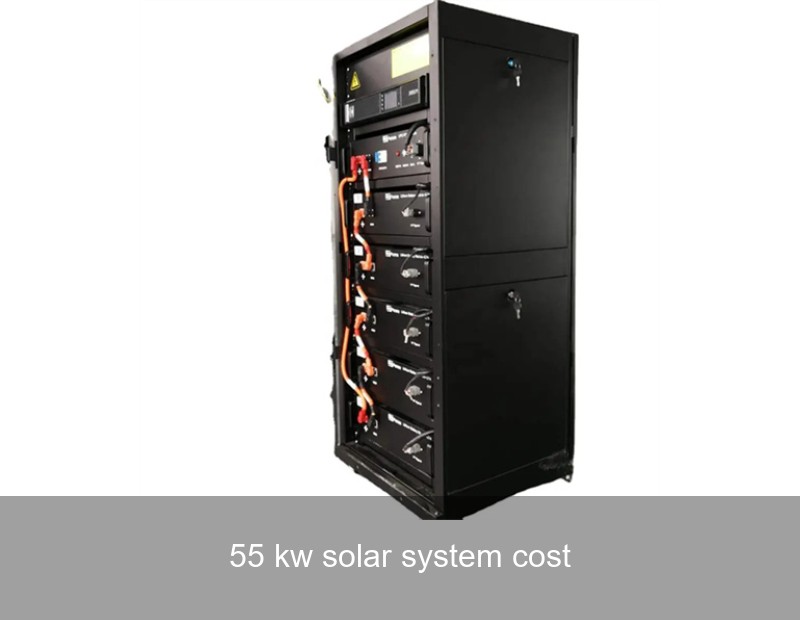
They felt something was missing. Their utility's net metering rates were changing, and summer blackouts were a concern. They opted to include a Highjoule H2 Home Energy Bank, a modular lithium iron phosphate (LFP) battery system known for its safety and long cycle life.
- Updated System Cost (Solar + 13.5 kWh Highjoule Storage): $33,000 (before ITC).
- Net Cost after 30% Federal ITC: $23,100.
The result? Their grid electricity purchases dropped by 94%. During a peak summer rate period where neighbors paid over $0.45/kWh, the Johnsons used their stored solar energy. In a 5-hour grid outage, their home ran seamlessly. Their 5.5 kW solar system cost, now bundled with storage, delivered not just savings, but peace of mind and control—intangibles that redefine the investment.
Maximizing Your Investment: The Highjoule Approach
At Highjoule, we view a solar installation as the foundation of a comprehensive home energy ecosystem. Our expertise as a global provider since 2005 informs our integrated approach. For a system sized around 5.5 kW, we don't just sell components; we design a solution.
Our Residential Energy Platform pairs efficiently with solar arrays of this size and includes:
- Highjoule H-Series Battery Units: Scalable LFP storage from 10 kWh to 30+ kWh, allowing you to start small and expand.
- Intelligent Energy Management System (EMS): This software brain automatically optimizes when to store solar energy, power your home, or export to the grid based on weather forecasts and your utility's rate schedule.
- Grid-Forming Inverter Technology: A key differentiator. In a blackout, our systems can automatically "island" your home, restoring power from solar and battery in milliseconds—something most standard systems cannot do.
This integrated design, backed by our global service network, ensures that every dollar of your 5.5 kW solar system cost is working in concert to deliver maximum reliability and return.

Image Source: Unsplash - Representative of a modern, clean battery installation.
Future-Proofing Your Energy Bill
Utility rates are volatile. A study by Nature Energy highlights that combining solar with storage provides a hedge against rising electricity prices, locking in a long-term, predictable cost of energy. Your effective "price per kWh" for stored solar energy over the system's 20+ year life can be significantly lower than any grid forecast.
The conversation is shifting. The most insightful question is no longer "What is the 5.5 kW solar system cost?" but rather:
"What is the value of controlling your own clean, resilient, and affordable power for the next 25 years?"
Are you ready to calculate the long-term value of your energy independence, rather than just the short-term cost of installation? What would you do with a home that powers itself through the night and through an outage?
 Inquiry
 Online Chat