


Understanding the True Cost of Solar Panels for Commercial Buildings
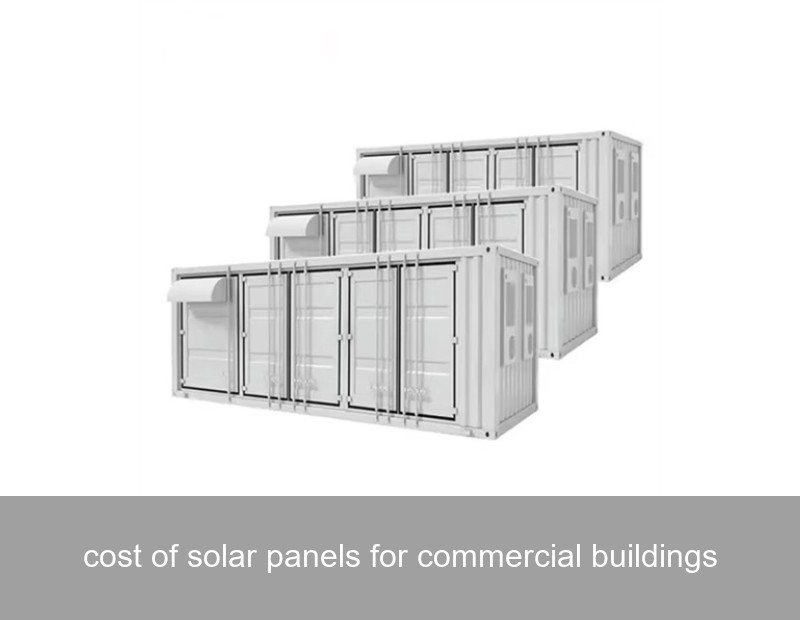
When business leaders consider solar power, the first question is often, "What's the cost of solar panels for my commercial building?" It's a smart starting point, but the answer is more nuanced than a simple price-per-watt. The true investment encompasses not just the hardware on the roof, but the intelligent system behind it that ensures reliability, maximizes savings, and future-proofs your operations. In an era of volatile energy prices and a strong push for sustainability, commercial solar is shifting from an alternative to a strategic asset. Let's unpack the real costs, the long-term value, and how modern energy management turns sunlight into a powerful financial tool.
Table of Contents
Breaking Down the Commercial Solar Panel Cost Structure
The upfront cost of solar panels for commercial buildings is typically measured in dollars per watt ($/W) of installed capacity. As of 2024, the average installed cost for commercial-scale systems in the U.S. and Europe ranges from $1.50 to $2.50 per watt. For a 500 kW system—a common size for a mid-sized warehouse or office building—this translates to a gross investment between $750,000 and $1.25 million. But this headline number is just the beginning. A detailed breakdown reveals where the capital goes:
- Hardware (50-60%): This includes the solar panels themselves, mounting structures, and the all-important power inverters that convert DC solar energy to usable AC power. Panel efficiency and durability directly impact long-term output and maintenance costs.
- Soft Costs (20-30%): Engineering, permitting, interconnection fees, and labor installation fall into this category. Streamlining this process is crucial for cost control.
- Balance of System (15-25%): This covers wiring, switchgear, monitoring systems, and importantly, the integration pathway for potential battery storage.

Image source: Unsplash (Licensed for commercial use)
It's vital to partner with a provider that offers a holistic solution, not just components. This is where Highjoule's integrated approach shines. We design and deliver complete systems where every part—from the panel orientation to the inverter's communication protocol—is optimized for commercial performance, reducing long-term operational friction and hidden costs.
The Real Investment: Looking Beyond the Panels
Focusing solely on the per-watt panel cost is like buying a car based only on the tire price. The true metric for a business is the Levelized Cost of Energy (LCOE)—the net present value of the total cost of generating solar energy over the system's lifetime. A high-quality, intelligently managed system will have a lower LCOE, even if its initial price point is slightly higher, because it produces more reliable power for 25+ years.
Key factors influencing your solar investment's ROI include:
| Factor | Impact on Cost & Value |
|---|---|
| System Design & Engineering | Optimal placement and sizing maximize energy harvest from your specific roof, directly affecting payback period. |
| Energy Consumption Profile | Aligning solar production with your building's daytime load is critical. Highjoule's smart controllers can shift loads to match solar availability. |
| Local Utility Rates & Net Metering | Rising grid electricity prices and favorable net metering policies dramatically improve solar economics. |
| Operations & Maintenance (O&M) | Proactive monitoring and durable components minimize downtime and repair costs over decades. |
This holistic view is embedded in Highjoule's service model. We provide ongoing performance monitoring and analytics, ensuring your system operates at peak efficiency, protecting your investment's long-term yield.
Key Financial Levers: Incentives and Financing
In the U.S. and Europe, significant incentives can reduce the net cost of solar panels for commercial buildings by 30-50%.
- In the United States: The Investment Tax Credit (ITC) allows businesses to deduct 30% of the solar system cost from federal taxes. (Source: U.S. Department of Energy). Combined with accelerated depreciation (MACRS), the effective payback time can be cut in half.
- In the European Union: Programs vary by country but often include grants, feed-in tariffs, or tax benefits. The EU's focus on energy independence is accelerating support for commercial self-generation.
Financing options like Power Purchase Agreements (PPAs) or solar leasing can enable $0-down installations, where the business simply pays for the solar electricity produced at a rate lower than the utility's, transferring performance risk to the provider.
Case Study: A European Logistics Hub's Solar Transformation
Let's examine a real-world example from Highjoule's portfolio: a 120,000 sq ft logistics warehouse in Northern Germany.
The Challenge: The facility faced high and unpredictable energy costs, with a significant daytime operational load. Management wanted to lock in energy costs and reduce their carbon footprint without a crippling upfront capital outlay.
The Highjoule Solution: We installed a 680 kW rooftop solar array, integrated with our HPS-2000 Smart Energy Controller for real-time load management. The system was financed through a third-party PPA.
- Total System Cost (Gross): €1.02 million (~€1.50/W)
- Net Cost after EU/German Grants: €680,000
- Annual Solar Generation: 625,000 kWh
- Annual Energy Cost Savings: €87,500 (covering 65% of daytime load)
- Carbon Reduction: 440 metric tons of CO2 annually
- Payback Period (for asset owner): Under 8 years
The Highjoule monitoring platform provides the client with granular data on energy production and consumption, enabling further efficiency gains. This case illustrates how the effective cost is not an expense, but a strategic investment with a clear, quantifiable return.

Image source: Unsplash (Licensed for commercial use)
Future-Proofing with Intelligent Storage: The Highjoule Advantage
Discussing the cost of solar panels for commercial buildings is incomplete without addressing storage. While solar alone can offset daytime usage, adding a battery energy storage system (BESS) unlocks greater value: shifting excess solar to night use, providing backup power, and participating in grid services.
Highjoule's IntelliBESS platform is designed for seamless integration. It transforms a solar investment into a resilient, 24/7 energy asset. Consider this:
- Demand Charge Management: Commercial bills often include "demand charges" based on peak power draw. A smart battery can discharge during short peaks, slashing this portion of the bill—a saving solar alone cannot achieve. (Source: NREL Report on Storage Value).
- Enhanced ROI: By maximizing self-consumption of solar energy and arbitraging time-of-use rates, storage can improve the overall financial return of the energy asset.
- Resilience: For facilities where downtime is catastrophic, the value of seamless backup power during grid outages is a critical operational safeguard.
Highjoule provides end-to-end solutions, from initial feasibility studies and financial modeling to installation and long-term performance management of both solar and storage systems, ensuring they work in perfect synergy for your business.
Is Your Building Ready for a Smart Energy Audit?
The journey to understanding your true potential savings begins with data. A professional energy audit can map your consumption, analyze your roof's solar potential, and model the financial impact under various incentive and financing scenarios. The question isn't just "What do the panels cost?" but rather, "What is the cost of *not* taking control of your energy future?" With grid uncertainty and sustainability goals becoming boardroom priorities, the most expensive option may be to wait.
What single energy cost metric—be it peak demand charges, annual consumption, or rate inflation—keeps you up at night regarding your commercial property?
 Inquiry
 Online Chat