


How Much Power Can a 500W Solar Panel Really Generate for Your Home or Business?
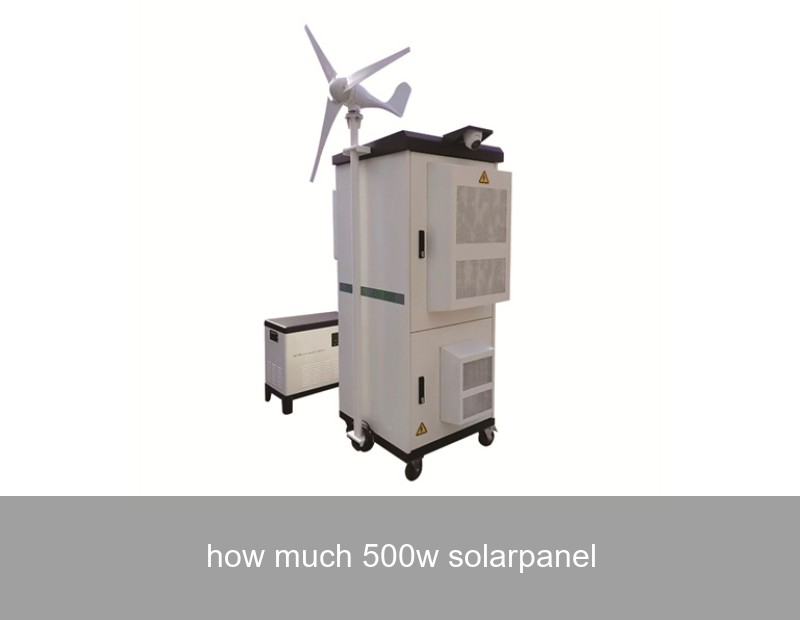
You're considering solar, and you've seen the impressive spec: a 500-watt solar panel. It sounds powerful, but the immediate question is practical: how much 500w solarpanel output can you actually expect on your roof? The answer isn't just a simple number. It's a journey through sunlight, angles, seasons, and the crucial role of a smart energy ecosystem. Let's demystify the true potential of a modern 500W panel and how integrating it with advanced storage, like solutions from Highjoule, unlocks its full, resilient power.
Table of Contents
- Beyond the Label: The Real-World Output of a 500W Panel
- The Critical Factors: From Peak Sun Hours to System Losses
- From Production to Power: Why Your Solar Panel Needs a Brain (and a Battery)
- Case Study: A German Bakery's Recipe for Energy Independence
- Calculating Your Potential: A Practical Framework
- The Highjoule Advantage: Intelligent Storage for Maximized Solar ROI
Beyond the Label: The Real-World Output of a 500W Panel
A 500W rating (500 watts) is determined under ideal laboratory conditions known as Standard Test Conditions (STC): perfect sunlight, a specific panel angle, and a cool 25°C temperature. Think of it as the panel's peak athletic potential. In your backyard, conditions are rarely perfect. So, how much does a 500w solarpanel produce daily? A more realistic measure is daily or annual kilowatt-hour (kWh) generation. On a typical clear day with 4 to 5 peak sun hours, a single 500W panel might produce between 2.0 kWh and 2.5 kWh. Over a month, that translates to roughly 60 to 75 kWh, and annually, approximately 730 to 900 kWh, depending heavily on your geographic location.

For context, the average U.S. household consumes about 886 kWh per month (U.S. Energy Information Administration). This means you would need a sizable array of these high-wattage panels to cover 100% of your usage. However, the goal is often to offset a significant portion of your bill and build energy security, not necessarily to become 100% grid-independent overnight.
The Critical Factors: From Peak Sun Hours to System Losses
Understanding your actual yield requires a quick look at the variables at play. Here’s what affects your panel's performance:
- Geographic Location & Peak Sun Hours: This is the biggest driver. Southern Spain enjoys more peak sun hours than Northern Germany. The U.S. Southwest outshines the Pacific Northwest.
- Roof Orientation and Tilt: South-facing (in the Northern Hemisphere) at an angle matching your latitude is ideal. East/West faces or flat roofs reduce production.
- Shading and Soiling: Even partial shading from a chimney or tree can drastically cut output. Regular dust, pollen, or snow cover also have an impact.
- Temperature: Solar panels become less efficient as they get hotter. A hot, sunny day might see lower efficiency than a cool, bright one.
- System Losses (~10-20%): Inverters, wiring, and other components aren't 100% efficient. Real-world systems have inherent losses.
So, asking "how much 500w solarpanel" is like asking "how fast can this car go?" It depends on the driver, the road, and the weather.
From Production to Power: Why Your Solar Panel Needs a Brain (and a Battery)
Here's the pivotal insight: a solar panel is only one part of an energy ecosystem. It generates DC electricity when the sun shines. But your home uses AC power at all hours. This is where inverters and, most importantly, energy storage systems (ESS) transform solar from a bill-reducer to a game-changer.
Without storage, excess solar energy produced at midday is often exported to the grid for a small feed-in tariff, and you draw expensive power from the grid in the evening. With a battery system, you store that midday surplus for use at night, maximizing self-consumption and independence. This is where companies like Highjoule excel. Since 2005, Highjoule has specialized in designing intelligent, integrated storage solutions that make high-output panels like 500W modules truly work for you, 24/7.
The Storage Multiplier Effect
Pairing a 500W panel array with a Highjoule battery system does two critical things:
- Time-Shifts Energy: It moves your solar generation from day to night, aligning production with consumption.
- Provides Backup Power: During grid outages, a seamless transition to battery power keeps your essential loads running—a feature increasingly valued in both Europe and North America.
Case Study: A German Bakery's Recipe for Energy Independence
Let's ground this with real data. A family-run bakery in Bavaria, Germany, faced high operating costs and sought energy resilience. Their facility had a south-facing roof with minimal shading.
- System Installed (2022): 24 x 500W monocrystalline panels (12 kWp total).
- Core Addition: A Highjoule HES-15 commercial energy storage system with 15 kWh usable capacity and integrated hybrid inverter.
- Goal: Maximize self-consumption of solar power, run refrigeration and ovens during peak evening hours on stored energy, and maintain operations during brief grid interruptions.
| Metric | Before Highjoule ESS | After Highjoule ESS |
|---|---|---|
| Solar Self-Consumption Rate | ~35% (excess fed to grid) | ~85% (stored for later use) |
| Grid Electricity Import (Peak Evening) | Reduced by approx. 70% | |
| Estimated Annual Bill Savings | €2,800 (solar only) | €4,900 (solar + storage) |
The bakery now uses its self-generated solar power to run its dough mixers in the morning, charge the battery, and then power its ovens and lighting into the evening rush. The Highjoule system's intelligent management software dynamically optimizes the flow between solar, battery, and grid based on real-time consumption and cost signals.
Calculating Your Potential: A Practical Framework
To estimate how much 500w solarpanel energy you could generate, follow this simplified framework:
- Find Your Peak Sun Hours: Use tools like the Global Solar Atlas for your city.
- Apply the Formula: Daily Output (kWh) = Panel Wattage (kW) x Peak Sun Hours x System Efficiency (use 0.75-0.85 as a realistic factor).
Example for Munich (4.2 peak sun hours): 0.5 kW x 4.2 x 0.8 = ~1.68 kWh per panel per day. - Scale to Your Needs: Analyze your electricity bill to find your average daily kWh consumption. This will give you a rough idea of how many panels you might need.
Remember, this is a starting point. A professional installer, especially one partnered with an integrated solution provider like Highjoule, will use sophisticated simulation software for a precise forecast.
The Highjoule Advantage: Intelligent Storage for Maximized Solar ROI
Highjoule's expertise lies in bridging the gap between high solar generation and high energy utilization. Our product suite, from residential HES-Series batteries to large-scale HES-Microgrid controllers, is designed to make systems built with 500W panels and beyond truly intelligent.
For homeowners, the Highjoule HES-10 residential system features a modular design, scalable capacity, and an AI-driven energy management system that learns your habits to optimize savings. For commercial and industrial clients, our HES-Industrial solutions provide robust, high-cycling batteries and sophisticated software for demand charge management and backup power assurance.
We don't just sell hardware; we provide a complete Power Resilience Platform. This includes remote monitoring, predictive maintenance, and firmware updates that ensure your system evolves and improves over its 15+ year lifespan. By choosing an integrated Highjoule solution, you're not just buying a battery; you're investing in a long-term partnership for energy sovereignty.
So, what's the final answer?
How much can a 500W solar panel do? Alone, it's a powerful tile that can generate significant energy. But when paired with Highjoule's intelligent storage, it becomes the cornerstone of a resilient, efficient, and cost-effective personal energy system. The real question evolves from "how much power" to "how much control and security do I want over my energy future?"
Is your primary goal to maximize every kilowatt-hour your roof produces, or simply to see a lower utility bill?
 Inquiry
 Online Chat