


How Many Watts Does a Solar Panel Have? A Practical Guide to Understanding Solar Power
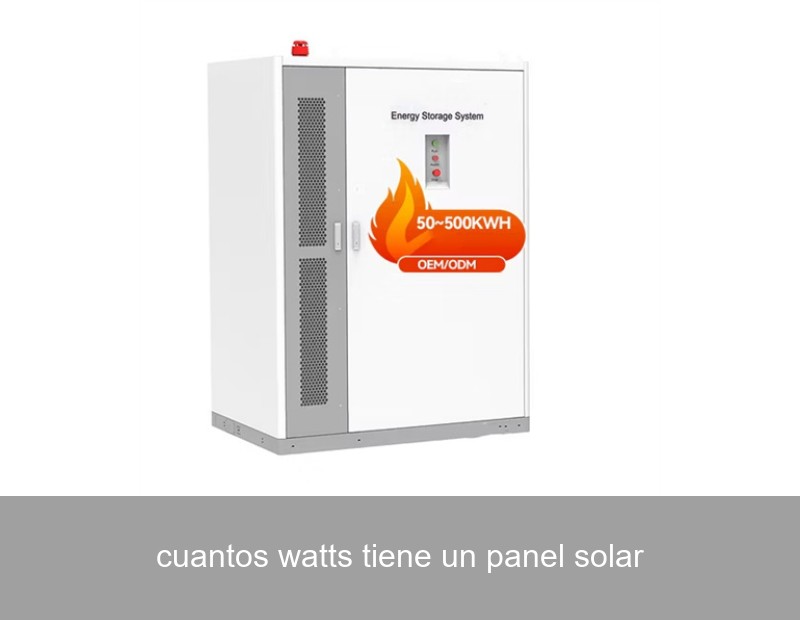
If you're asking, "Cuantos watts tiene un panel solar?" (How many watts does a solar panel have?), you've hit on the most fundamental question in solar energy. It's like asking how much horsepower a car engine has—it tells you about potential. But just as a car's actual speed depends on the road and conditions, a solar panel's real-world output depends on much more than the number on its label. Let's demystify solar panel wattage and explore what it truly means for powering your home or business sustainably.
What Does "Watts" Mean for a Solar Panel?
The wattage printed on a solar panel—its Watt-peak (Wp) or nameplate rating—represents its maximum theoretical power output under ideal laboratory conditions, known as Standard Test Conditions (STC). These conditions include perfect sunlight hitting the panel directly at a specific angle and a cool temperature of 25°C (77°F). In essence, it's the panel's peak performance score. However, on your rooftop, conditions are rarely "standard." The actual, usable electricity you get is measured in watt-hours (Wh) or kilowatt-hours (kWh), which is the power (watts) generated over time. This distinction between peak power and energy harvested is crucial for understanding your system's true value.
Typical Wattage of Modern Solar Panels
The solar market has evolved rapidly. Just a decade ago, residential panels commonly ranged from 250W to 300W. Today, thanks to advances in photovoltaic cell technology like PERC (Passivated Emitter and Rear Cell) and half-cut cells, the standard has shifted significantly.
- Residential Panels: Most modern home solar panels now have wattages between 370W and 450W.
- Commercial/High-Efficiency Panels: For projects where space is at a premium or maximum output is key, you'll find panels ranging from 450W to over 550W.
For example, a typical 400W panel exposed to 5 hours of strong sunlight might produce roughly 2,000 watt-hours or 2 kWh of energy in a day. But will that energy be available when you need it at night? That's where the conversation evolves from solar generation to intelligent energy management.

Image Source: Unsplash - Professional installation is key to realizing a solar panel's rated wattage.
Key Factors That Affect a Solar Panel's Real-World Power Output
Your panel's nameplate wattage is just the starting point. Several factors determine how much electricity it actually delivers to your appliances:
- Sunlight Intensity & Angle (Irradiance): A cloudy day in Hamburg will produce less than a clear day in Arizona.
- Temperature: Ironically, solar panels become less efficient as they get hotter. A panel's real output on a hot, sunny day can be 10-15% below its rated power.
- Shading and Dirt: Even partial shading from a chimney or tree can dramatically reduce output. Regular cleaning matters.
- System Components: The efficiency of your inverter, the thickness of your cables, and overall system design create "losses." A high-quality, well-designed system minimizes these.
This is why partnering with an expert system designer is critical. At Highjoule, we don't just sell panels; we engineer integrated energy solutions. Our analysis goes beyond simple wattage calculations to model your specific roof, local climate, and energy usage patterns, ensuring your system is optimized for real-world yield, not just theoretical peak power.
From Panel Watts to System Performance: The Role of Energy Storage
Here's the pivotal insight: The true power of a solar installation is unlocked not just by generation, but by control and storage. A 10 kW solar array might produce 40 kWh on a brilliant afternoon, but if your home only uses 10 kWh at that time, where does the excess 30 kWh go? Without storage, it's often fed back to the grid for minimal compensation.
This is the core of Highjoule's mission. As a global leader in advanced energy storage since 2005, we provide the missing piece: intelligent battery storage systems that capture every watt your panels produce. Our HES Series (Home Energy System) and C&I PowerStack for commercial applications are designed to seamlessly integrate with solar arrays of any size. They store surplus daytime energy for use during peak evening hours, power outages, or when electricity rates are high. This transforms your solar panel wattage from a daytime curiosity into a 24/7 reliable power asset, dramatically increasing your energy independence and return on investment.
Real-World Case Study: Maximizing Solar Investment in California
Let's look at a concrete example from California, USA, where time-of-use (TOU) rates and grid reliability are major concerns.
The Challenge: A medium-sized winery in Napa Valley installed a 100 kW solar panel system. Their panels (each rated at 480W) produced ample power during the day, but their highest energy costs and operational needs occurred in the early evening during production and cooling. They were selling excess solar power to the grid at a low rate only to buy it back later at a premium.
The Solution: Highjoule integrated a 300 kWh C&I PowerStack battery system with their existing solar array. The system was programmed to store excess solar generation from midday and discharge it during the 4 PM to 9 PM peak rate window.
The Data-Driven Outcome (12 months post-installation):
- Energy Bill Savings: Reduced grid energy consumption during peak periods by 92%, slashing their overall electricity bill by 68%.
- Increased Self-Consumption: The share of solar energy used directly on-site (self-consumption) jumped from 35% to over 85%.
- ROI & Backup: The system provided a calculated payback period of under 5 years and ensured critical refrigeration loads remained powered during two brief public safety power shutoffs.
This case, documented in a NREL report on solar-plus-storage value, illustrates that the value of a solar panel's watts is multiplied when coupled with smart storage. The winery wasn't just generating watts; it was controlling and deploying them strategically.

Image Source: Unsplash - Commercial battery storage systems like Highjoule's PowerStack maximize solar ROI.
Choosing the Right Panel and System for Your Needs
So, how many watts should your solar panel have? The answer depends on your energy goals:
| Your Primary Goal | Panel Wattage Consideration | System Integration Recommendation |
|---|---|---|
| Maximize limited roof space | Choose the highest efficiency panels available (higher W per square meter). | Pair with a Highjoule storage system to ensure every high-value watt is utilized, not wasted. |
| Simple payback on investment | Balance panel cost and wattage. Sometimes, slightly lower-wattage, more affordable panels are optimal. | Focus on a perfectly sized Highjoule inverter and storage to shift usage and avoid peak tariffs, accelerating payback. |
| Full energy independence & backup | Oversize your solar array to generate enough excess to fully charge your batteries even in winter. | A robust Highjoule battery system, sized for your critical loads and backup duration needs, is non-negotiable. |
For authoritative information on solar panel technologies and ratings, you can refer to resources like the U.S. Department of Energy's guide or the International Energy Agency's PV reports.
Ultimately, "Cuantos watts tiene un panel solar?" is an excellent first question. But the more profound question for any homeowner or business leader is: "How can I capture, control, and use every one of those watts to its fullest potential?" That's the challenge Highjoule's intelligent storage solutions are designed to solve. We invite you to think beyond the panel. What would 24/7 clean, reliable, and cost-effective power mean for your home or business operations?
 Inquiry
 Online Chat