


Top 10 Solar Inverter Suppliers: Choosing the Brain of Your Power System
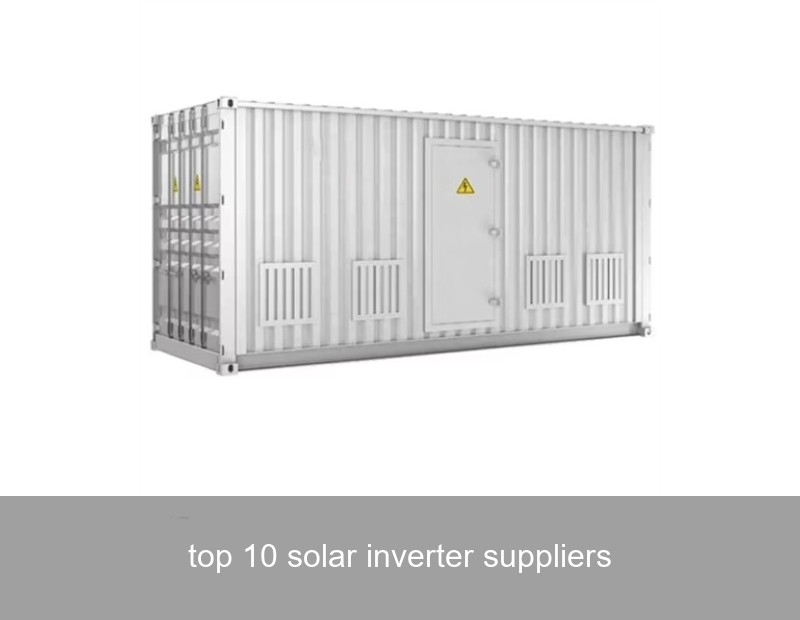
When people think of solar energy, the gleaming panels on the roof usually steal the spotlight. But ask any seasoned installer or energy manager, and they'll tell you the true brain of the operation is often hidden away in a compact unit on the wall: the solar inverter. Selecting from the top 10 solar inverter suppliers isn't just about picking a brand; it's about choosing the intelligence, reliability, and future-proofing for your energy investment. This critical component is responsible for converting the direct current (DC) produced by your panels into the usable alternating current (AC) that powers your home, business, or feeds back into the grid. Its performance directly dictates your system's efficiency, safety, and return on investment.
The Hidden Heart of Your Solar System
Imagine your solar panels as a team of highly skilled workers producing raw materials (DC electricity). Without a capable foreman to organize, translate, and direct that output, their efforts would be wasted. The inverter is that foreman. A poor-quality inverter can bottleneck an otherwise excellent array of panels, leading to significant energy losses. Conversely, a high-efficiency, smart inverter from a leading supplier can maximize every kilowatt-hour of sunshine, provide crucial system diagnostics, and even enable advanced functions like grid support and seamless integration with battery storage. The difference between a basic inverter and a premium one from the top 10 solar inverter suppliers can be the difference between a good solar system and a great one.
Navigating the Global Inverter Landscape: Key Trends and Players
The global solar inverter market is dynamic and competitive, driven by innovation and the push for grid modernization. According to industry analyses, the market continues to see strong growth, with a particular emphasis on three key segments: string inverters for residential and commercial use, central inverters for utility-scale projects, and the rapidly expanding market for hybrid inverters that manage both solar and battery storage. Europe and North America are key markets demanding not just efficiency, but also advanced grid services, cybersecurity, and smart energy management capabilities. The leaders in the field are those who have consistently invested in R&D, built robust global supply chains, and demonstrated proven reliability in the field.
A Closer Look at the Top 10 Solar Inverter Suppliers
The following table provides an overview of prominent global suppliers, recognized for their market presence, technological innovation, and product range. It's important to note that the "top 10" can vary based on region, market segment, and year, but these companies are consistently at the forefront.
| Supplier | Key Strengths | Notable For |
|---|---|---|
| Huawei | String inverters, AI-driven optimization, smart PV management | Leading global shipment volumes, digitalization focus |
| Sungrow | Wide product portfolio (string, central, hybrid), strong R&D | High reliability, significant global market share |
| Growatt | Residential & commercial hybrid systems, user-friendly monitoring | Strong growth in the distributed generation segment |
| Fronius | High-efficiency inverters, "24h Sun" self-consumption concept | Premium brand, strong in Europe, excellent after-sales service |
| SMA Solar Technology | Full-range portfolio, strong German engineering, grid management | Industry pioneer, high brand trust, robust utility-scale solutions |
| Power Electronics | Central inverters for large-scale solar farms | Major player in the utility-scale segment, especially in the Americas |
| SolarEdge | DC-optimized inverter systems, module-level power electronics | Innovative optimizer technology, enhanced safety and yield |
| Enphase Energy | Microinverters (module-level AC conversion) | Maximum design flexibility, superior shade handling, strong US presence |
| Delta Electronics | Industrial power electronics, energy-efficient solutions | Reliable products for commercial and industrial applications |
| GoodWe | Hybrid and storage-ready inverters, competitive pricing | Rapidly expanding globally, strong value proposition |
Sources for market data and trends can be referenced from authoritative industry bodies like the International Energy Agency (IEA) and Solar Energy Industries Association (SEIA).

Image Source: Unsplash (Representative image of a modern inverter installation)
From List to Reality: A German Industrial Case Study
Let's move beyond the spec sheets. Consider a mid-sized automotive parts manufacturer in Bavaria, Germany. Their goal: reduce grid dependency and stabilize energy costs. They installed a 500 kWp rooftop solar system. Initially, they chose a standard central inverter. While functional, it offered limited visibility into individual string performance. When a partial shading issue emerged from a new building nearby, pinpointing the loss was difficult, leading to an estimated 8% annual energy production dip.
The solution was a retrofit with advanced string inverters from one of the top 10 solar inverter suppliers known for detailed monitoring. The new system provided module-level data analytics, instantly identifying the underperforming sections. Furthermore, the inverters' wide voltage range allowed for a more optimized string design. The result? System yield increased by over 12% compared to the pre-retrofit shaded performance, and the payback period for the inverter upgrade was calculated at under 5 years thanks to the recovered energy. This case highlights that the right inverter choice is not just about initial price, but about long-term adaptability and intelligence.
The Future of Inverters: Intelligence and Integration
The role of the inverter is evolving from a simple converter to the central energy management hub of a property. The next generation of products from the top 10 solar inverter suppliers will be defined by:
- Grid Interaction: Providing frequency regulation, voltage support, and other grid services to help stabilize the network as renewable penetration grows.
- Seamless Storage Integration: Built-in compatibility with multiple battery technologies, enabling true energy independence and load shifting.
- AI-Powered Optimization: Using weather forecasts, electricity price signals, and consumption patterns to autonomously decide whether to consume, store, or sell energy.
This means your inverter choice today will determine your ability to participate in future energy markets and leverage new revenue streams tomorrow.

Image Source: Unsplash (Representative image of solar farm monitoring)
Highjoule: Your Partner in Intelligent Energy Conversion and Storage
At Highjoule, we understand that the inverter is the critical nexus in a modern energy system. While we are globally recognized as a leading provider of advanced battery energy storage systems (BESS), our expertise extends to the entire power conversion chain. For commercial, industrial, and microgrid applications, we don't just provide components; we deliver integrated solutions.
Our approach involves working closely with leading inverter technology from the top 10 solar inverter suppliers to create seamless, high-performance systems. For instance, our IntelliBESS platform is designed with open communication protocols, ensuring flawless integration with major hybrid and string inverter brands. This allows our customers to choose the optimal solar conversion technology for their site, paired with Highjoule's intelligent storage and energy management software that acts as the overarching brain, optimizing the entire system for cost, resilience, and sustainability.
Whether you are an EPC contractor building a solar farm, a factory manager aiming for carbon neutrality, or a community developing a microgrid, Highjoule's team of experts can help you navigate the inverter selection process and architect a system where every component, from PV panels to batteries, works in perfect, intelligent harmony.
Given the rapid evolution of inverter technology and energy markets, what specific challenge in your current or planned solar project—whether it's peak shaving, backup power, or navigating complex utility tariffs—is most influencing your decision-making process for the core system components?
 Inquiry
 Online Chat