


Beyond the Noise: Why a Modern Off Grid Generator Power System is Your Key to True Energy Independence
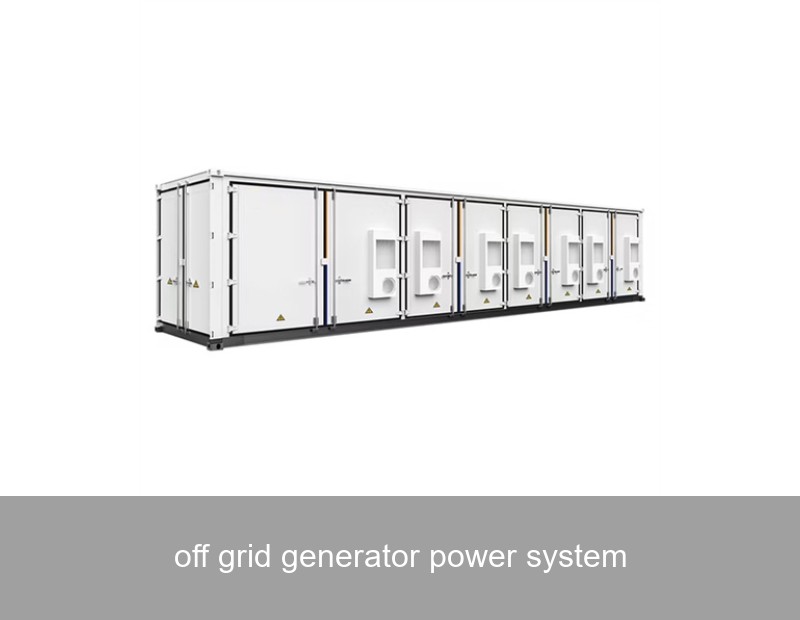
For decades, the phrase "off-grid power" conjured one image: a loud, fume-belching diesel or gasoline generator. It was a necessary evil for remote cabins, construction sites, and emergency backup. But the game has changed. Today, a truly resilient and sustainable off grid generator power system is no longer just a generator; it's an intelligent, integrated ecosystem. It combines solar generation, advanced battery storage, and smart management to provide clean, quiet, and reliable power 24/7. This evolution isn't just about comfort—it's a fundamental shift in how we achieve energy independence, from the mountains of Colorado to the fjords of Norway. Let's explore how modern technology is redefining life off the grid.
Table of Contents
- The Old Challenge: Limitations of Traditional Generators
- The Modern Solution: The Integrated Off-Grid Power Ecosystem
- Key Components of a Smart Off-Grid System
- Real-World Impact: A Case Study from the Swedish Archipelago
- Highjoule's Role: Engineering Intelligent Off-Grid Independence
- Making the Switch: What to Consider for Your Off-Grid Project
The Old Challenge: Limitations of Traditional Generators
We've all heard it—the relentless chugging of a diesel generator. While it provides power, the traditional approach comes with significant drawbacks:
- High & Volatile Fuel Costs: You're forever tied to the fuel supply chain and its fluctuating prices. In remote areas, fuel delivery can be exorbitantly expensive and logistically challenging.
- Noise and Air Pollution: Generators disrupt the peace and quiet many seek off-grid and emit harmful pollutants like CO2, NOx, and particulate matter.
- Maintenance Intensive: Regular oil changes, filter replacements, and engine overhauls are required to ensure reliability.
- Inefficient for Variable Loads: Generators run most efficiently at near-full load. Powering a small lightbulb forces them to run inefficiently, wasting fuel and causing "wet stacking" in diesels.
This model is reactive and costly. The modern approach is proactive, leveraging free energy from the sun and storing it intelligently.
The Modern Solution: The Integrated Off-Grid Power Ecosystem
The contemporary off grid generator power system turns the old model on its head. Instead of the generator being the primary source, it becomes a last-resort backup. The star players are now solar panels and battery storage, managed by a brain called a hybrid inverter or energy management system. Here's the data that makes this shift inevitable: The International Renewable Energy Agency (IRENA) reports that the global weighted average cost of electricity from solar photovoltaics fell by 89% between 2010 and 2022. Pair this with a 90% drop in lithium-ion battery costs over the last decade, and the economic argument for solar-plus-storage becomes overwhelming.
This system operates on a simple, elegant logic:
- Solar Generation: Photovoltaic (PV) panels capture sunlight, converting it into DC electricity.
- Smart Conversion & Storage: A hybrid inverter converts DC to usable AC power for your home. Excess energy not used immediately charges the battery storage system.
- Battery-Powered Nights & Cloudy Days: When the sun sets, your loads seamlessly draw power from the batteries, maintaining silence and zero emissions.
- Generator as Automated Backup: Only during prolonged periods of bad weather or unusually high demand does the system automatically start a quiet, efficient backup generator (often now propane or natural gas) to recharge the batteries. It runs at optimal load and shuts off as soon as possible.

Image Source: Unsplash - A modern off-grid home utilizing solar power.
Key Components of a Smart Off-Grid System
| Component | Role | Modern Advancements |
|---|---|---|
| Solar PV Array | Primary energy source. | Higher efficiency panels (>22%) produce more power in limited space. Bifacial panels capture light from both sides. |
| Hybrid Inverter/Charger | System brain. Manages energy flow between PV, batteries, loads, and generator. | All-in-one units with maximum power point tracking (MPPT), grid-forming capability, and sophisticated software. |
| Battery Energy Storage System (BESS) | Energy reservoir for use when the sun isn't shining. | Lithium Iron Phosphate (LiFePO4) chemistry offers safety, longevity (6000+ cycles), and wide operating temperatures. |
| Backup Generator | Supplementary power source for extended autonomy. | Inverter generators or models with auto-start/stop for fuel efficiency and seamless integration. |
| Energy Management System (EMS) | Intelligent software for monitoring, control, and optimization. | AI-driven load forecasting, remote monitoring via apps, and programmable operation modes (e.g., prioritize solar, save battery). |
Real-World Impact: A Case Study from the Swedish Archipelago
Let's move from theory to practice. Consider a family-owned, year-round guest lodge on a remote island in the Stockholm archipelago, Sweden. Their old 20kVA diesel generator ran 12-18 hours daily, consuming over 25,000 liters of diesel annually—costing nearly $40,000 USD per year at European prices, not including frequent maintenance and noise complaints from guests.
In 2022, they installed a modern off grid generator power system:
- 80 kWp of solar panels on lodge and outbuilding roofs.
- A central 120 kWh Highjoule LiFePO4 battery storage system.
- Three parallel 30kVA hybrid inverters with advanced generator synchronization.
- Their existing diesel generator was retained but integrated as an automated backup.
- Diesel Consumption Reduced by 94%: The generator now runs only about 500 hours per year, primarily in the darkest winter months.
- Annual Fuel Savings: ~$37,600 USD.
- Payback Period: Estimated at under 5 years, considering Swedish green energy subsidies.
- Guest Satisfaction: Noise pollution eliminated 90% of the time, and the lodge's marketing now highlights its "green luxury" status.
- Carbon Footprint: Reduced by an estimated 65 metric tons of CO2 annually.
This case, documented in part by the U.S. Department of Energy's Solar Energy Technologies Office reports on remote microgrids, illustrates the transformative power of integration.
Highjoule's Role: Engineering Intelligent Off-Grid Independence
At Highjoule, we've been at the forefront of this transition since 2005. We understand that a reliable off-grid system isn't just about hardware—it's about seamless integration, robust engineering, and long-term performance. Our solutions for remote homes, agricultural operations, and commercial facilities are built on three pillars:
- High-Efficiency, Modular Battery Storage: Our H-Joule Cube series features scalable LiFePO4 battery cabinets. Start with 20 kWh and expand to over 1 MWh as your needs grow. They are built with automotive-grade battery cells and feature integrated battery management systems (BMS) with liquid cooling for optimal lifespan and safety in extreme climates, from the Arizona desert to the Norwegian coast.
- Intelligent Hybrid Power Conversion: Our H-Power Hub hybrid inverters are the true commanders of the off-grid system. They seamlessly orchestrate power flow from solar, batteries, and generator, ensuring not a single watt-hour is wasted. Their grid-forming capability creates a stable, clean "mini-grid" for your property, capable of starting heavy loads like water pumps or workshop machinery.
- Comprehensive Monitoring & Support: The Highjoule Energy OS platform gives you complete visibility and control over your power system via a smartphone app. More importantly, our global technical support team can perform remote diagnostics, helping to troubleshoot issues before they impact your power supply.

Image Source: Unsplash - A technician servicing advanced battery storage modules.
Making the Switch: What to Consider for Your Off-Grid Project
Thinking about upgrading your existing setup or building a new off-grid property? Here are key questions to guide your planning:
- Energy Audit: What is your daily and seasonal energy consumption (in kWh)? Don't guess—log generator runtime or use load calculators. An undersized system leads to frustration; an oversized one is unnecessarily expensive.
- Autonomy Goals: How many days of "no sun" do you need to weather without starting the generator? This dictates your battery bank size.
- Site Conditions: What is your solar resource? Tools like PVGIS from the European Commission provide precise solar yield estimates for any location in Europe or the Americas.
- Future-Proofing: Are you planning to add an electric vehicle charger, a workshop, or expand the building? Design your system with scalability in mind.
The Highjoule Design Promise
Our process begins with a detailed consultation and simulation. We model your site's solar potential, analyze your load profile, and design a system that maximizes your use of free solar energy, minimizes generator runtime, and delivers peace of mind for decades. We provide not just equipment, but a turnkey power solution tailored to your unique environment and needs.
So, the question is no longer simply, "What size generator do I need?" The empowering question to ask today is: "How can I design an intelligent energy ecosystem that maximizes my independence, minimizes my costs and environmental impact, and powers my off-grid life exactly the way I want it?" What's the first step you'll take to answer it?
 Inquiry
 Online Chat