


Davis and Shirtliff Solar Inverters: Your Gateway to Reliable, Efficient Solar Power
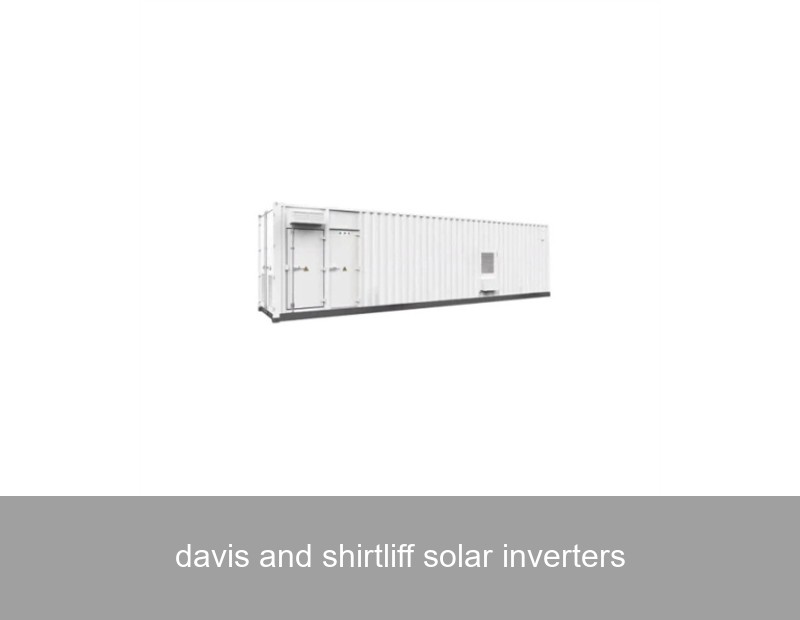
If you're exploring solar energy solutions in Africa, you've likely come across the name Davis & Shirtliff. Renowned for their robust water pumps and solar equipment, they are a major player on the continent. But when it comes to building a complete, high-performance, and intelligent solar power system—whether for your home, business, or an industrial facility—the inverter you choose is the true brain of the operation. While Davis and Shirtliff solar inverters offer a solid entry point, the global market offers advanced technologies that can significantly boost your energy independence, efficiency, and return on investment. This is where understanding the full spectrum of inverter capabilities, from basic conversion to smart energy management, becomes crucial.
Table of Contents
- What Are Solar Inverters and Why Do They Matter?
- The Role of Davis & Shirtliff in the Solar Landscape
- Looking Beyond Basics: The Evolution of Inverter Technology
- Real-World Impact: A Case Study from a European Agri-Business
- Highjoule's Advanced Energy Storage and Management Solutions
- Making the Right Choice for Your Energy Needs
What Are Solar Inverters and Why Do They Matter?
Simply put, a solar inverter's primary job is to convert the direct current (DC) electricity generated by your solar panels into the alternating current (AC) that powers your appliances and feeds into the grid. But modern inverters do so much more. They are the command center, optimizing energy harvest, ensuring system safety, and, in advanced systems, intelligently deciding when to store energy or send it to the grid. The efficiency, reliability, and intelligence of your inverter directly determine how much of your solar potential you actually get to use.
The Role of Davis & Shirtliff in the Solar Landscape
Davis & Shirtliff, established in Kenya, has been instrumental in providing essential water and energy solutions across Africa. Their supply of solar inverters, often including reputable OEM brands, has supported the continent's growing electrification. For straightforward, off-grid or basic hybrid applications, these inverters serve a vital purpose. They represent an accessible step into solar power. However, as global energy needs evolve towards grid interaction, advanced battery integration, and smart home/business energy management, the technology embedded within the inverter becomes paramount.
Consider this: An inverter with 95% efficiency versus one with 98% might seem like a small gap. But over a 25-year system lifespan and on a large-scale commercial installation, that 3% difference represents a massive amount of "lost" solar energy and unrealized savings. Furthermore, inverters that cannot seamlessly communicate with a diverse ecosystem of batteries and cannot adapt to dynamic grid services are limiting your future energy flexibility.
Looking Beyond Basics: The Evolution of Inverter Technology
The conversation is shifting from simple conversion to total energy management. Here’s what you should be looking for in a state-of-the-art system:
- High-Efficiency Conversion: Maximizing every watt-hour of solar production.
- Advanced Battery Hybrid Functionality: Not just compatible with batteries, but intelligently optimizing charge/discharge cycles based on weather forecasts, electricity tariffs, and consumption patterns.
- Grid Services and Stability: Features like frequency-watt response, voltage regulation, and the ability to participate in virtual power plants (VPPs).
- Robust Monitoring and Software: Cloud-based platforms that provide real-time insights, fault detection, and remote system management.
- Scalability and Modularity: Systems that can grow with your energy needs, from a residential setup to a commercial or microgrid application.
Real-World Impact: A Case Study from a European Agri-Business
Let's look at a concrete example. A large vineyard in Southern France was facing two challenges: high energy costs for refrigeration and irrigation, and an unreliable local grid during peak harvest season. Their initial solar setup, with standard inverters, covered only 40% of their daytime load and did nothing for nighttime cooling.
They upgraded to a smart, integrated solar-plus-storage system. The new inverters were not only more efficient (boosting solar harvest by 8%) but were specifically designed to orchestrate a 500 kWh battery storage system. The results over 18 months were compelling:
| Metric | Before Upgrade | After Upgrade |
|---|---|---|
| Solar Self-Consumption | 65% | 94% |
| Grid Energy Draw at Peak Times | 100% | 15% (for backup only) |
| Energy Cost Savings | ~€18,000/yr | ~€52,000/yr |
| Grid Independence During Critical Operations | Low | High (up to 48 hours) |
The key was the inverter's intelligence. It used weather data to pre-charge the batteries before cloudy periods and automatically switched to battery power during expensive grid peak periods, all while ensuring critical cooling systems never lost power. (IEA, Solar PV Global Supply Chains) highlights the importance of such efficient, integrated systems in decarbonizing industries.

Modern solar and storage installations, like those powered by advanced inverters, are revolutionizing energy use in sectors like agriculture.
Highjoule's Advanced Energy Storage and Management Solutions
This is where Highjoule, as a global leader in advanced energy storage systems since 2005, complements and elevates solar infrastructure. While we respect the foundational work of distributors like Davis & Shirtliff, Highjoule focuses on the intelligent core that turns solar generation into dependable, optimized power.
Our Hyperion Series Commercial & Industrial (C&I) Energy Storage Systems are built around a highly sophisticated power conversion system (PCS) – the industrial-grade equivalent of a super-inverter. It doesn't just convert power; it manages it with precision. For residential and small commercial applications, our Helios Home Energy Manager acts as the brain, seamlessly integrating with high-quality solar inverters and batteries to deliver the same level of smart control.
Think of it this way: if solar panels are the muscles and batteries are the energy reservoir, Highjoule's technology is the central nervous system. We ensure that whether you have an existing setup with Davis and Shirtliff solar inverters or are planning a new installation, you can achieve:
- Uninterrupted Power Supply (UPS): Seamless backup power in milliseconds.
- Peak Shaving: Automatically using stored energy to avoid costly demand charges from the grid.
- Energy Arbitrage: Buying grid electricity when cheap, storing it, and using it when prices are high.
- Grid Support: Providing services that help stabilize the local network, a feature increasingly valued in both Europe and the US. (NREL, The Value of Grid-Supportive Storage).
Making the Right Choice for Your Energy Needs
So, how do you navigate this landscape? Start by asking the right questions:
- Is my goal just basic solar backup, or true energy independence and cost optimization?
- Do I need my system to communicate intelligently with batteries and adapt to future grid regulations?
- What is the total cost of ownership over 15+ years, considering efficiency losses and potential technology obsolescence?
For projects in Europe and the US, where grid dynamics, tariffs, and renewable incentives are complex, partnering with a provider like Highjoule that understands integrated system design is key. We don't just supply a component; we provide a tailored power resilience strategy. Our systems are designed to work with a range of solar generation assets, ensuring you get the most intelligent and future-proof energy management possible. (U.S. Department of Energy, Solar Integration).

Advanced energy management systems provide real-time control and insights, maximizing the value of every solar kilowatt-hour.
Your journey to robust solar power might start with a reliable inverter, but where will it take you? Are you ready to explore how an intelligent energy storage system can transform your solar array from a simple cost-saver into a dynamic, revenue-capable, and resilient power asset for your home or business?
 Inquiry
 Online Chat