


Lithium Ion Battery for Solar: The Key to Unlocking Energy Independence
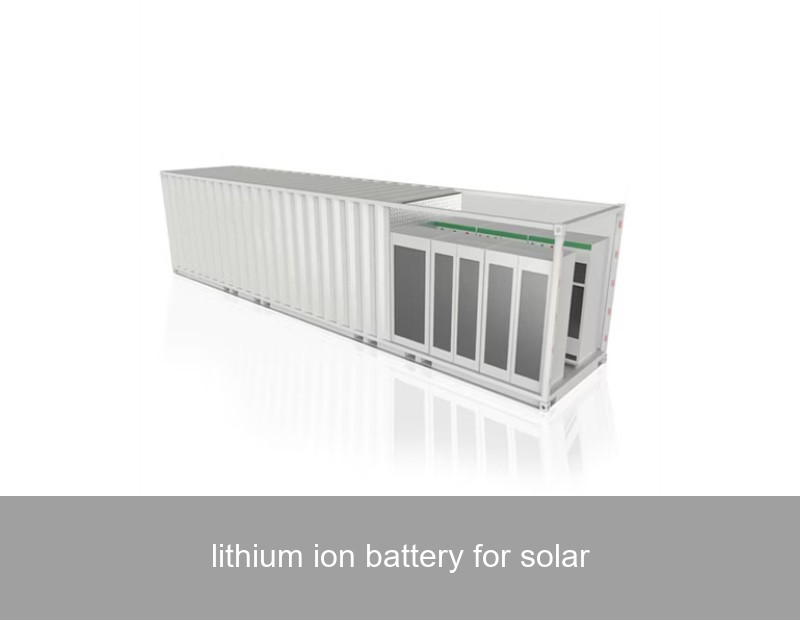
Have you ever watched your solar panels work tirelessly under the sun, only to wonder where all that clean energy goes when the clouds roll in or night falls? This is the central challenge of solar power: it's intermittent. The solution, increasingly embraced by homeowners and businesses across Europe and North America, is pairing photovoltaic (PV) systems with a lithium ion battery for solar storage. This powerful combination isn't just about backup power; it's about fundamentally reshaping your relationship with energy—taking control, maximizing self-consumption, and building a more resilient and cost-effective power setup. As a leader in advanced energy storage since 2005, Highjoule has been at the forefront of this revolution, designing smart battery systems that make solar energy work for you, around the clock.
Table of Contents
- The Solar Dilemma: Generation vs. Consumption
- Why Lithium-Ion? The Technical Edge for Solar Storage
- Beyond Backup: Key Benefits of a Solar Battery System
- A Real-World Case Study: Resilience in California
- Choosing the Right System: What to Look For
- The Highjoule Solution: Engineered for Intelligence and Durability
- The Future Outlook: Smarter Grids and Greater Independence

Image: A modern home solar-plus-storage installation. The lithium-ion battery unit, like Highjoule's solutions, is often installed neatly alongside the home.
The Solar Dilemma: Generation vs. Consumption
Here's a common phenomenon: residential solar production typically peaks in the middle of the day. However, household energy consumption often spikes in the early morning and evening. This creates a mismatch. Without storage, excess solar energy is fed back to the grid (often for a modest feed-in tariff), and you draw power from the grid when your panels aren't producing, paying the retail rate. The data is telling. According to the U.S. Department of Energy, solar can cover 100% of a home's needs during sunny afternoons, but that figure can drop to near zero at night, creating a reliance on the traditional grid.
The logical progression is clear: to maximize the value of your solar investment, you need to store the surplus. This is where adding a dedicated lithium ion battery for solar changes the equation entirely, shifting the goal from simply generating green energy to consuming it on your own terms.
Why Lithium-Ion? The Technical Edge for Solar Storage
Not all batteries are created equal. While lead-acid batteries have been used for decades, lithium-ion technology has become the undisputed champion for modern solar storage. Why? Let's break down the advantages:
- Higher Energy Density: Lithium-ion batteries pack more energy into a smaller, lighter package. This means a more compact home storage unit, like Highjoule's ResiCore series, which can be easily mounted on a wall in a garage or utility room.
- Greater Depth of Discharge (DoD): You can safely use a much larger percentage of a lithium-ion battery's stored energy without damaging it—often 90% or more compared to about 50% for lead-acid. This means you get more usable capacity from the same size unit.
- Longer Lifespan: Measured in cycles, a quality lithium-ion solar battery can last thousands of charge/discharge cycles, often coming with warranties of 10 years or more, ensuring your investment is protected.
- Higher Efficiency: They experience lower energy loss during charge and discharge. More of the solar power you capture actually ends up powering your appliances.
These technical specs translate directly into user benefits: less space, more usable power, longer system life, and better overall value. It's the reason why Highjoule's engineering teams have focused exclusively on advanced lithium-ion chemistry, coupled with sophisticated battery management systems (BMS) for safety and longevity.
Beyond Backup: Key Benefits of a Solar Battery System
The first thought is often, "I'll have power during an outage." And that's a huge benefit, providing peace of mind during storms or grid failures. But the advantages run much deeper:
- Maximized Self-Consumption: Store your daytime solar excess and use it in the evening. This dramatically reduces your reliance on grid electricity, shielding you from rising utility rates.
- Time-of-Use (TOU) Optimization: In regions with TOU rates where electricity is expensive during peak evening hours, your battery can be programmed to discharge precisely during those periods, maximizing bill savings.
- Grid Support & Stability: For businesses and microgrids, large-scale battery energy storage systems (BESS) can provide services to the grid, such as frequency regulation. Highjoule's GridMax commercial systems are designed for this very purpose, helping to stabilize community grids.
- Increased Energy Independence: You become the manager of your own personal energy ecosystem, reducing your carbon footprint and vulnerability to external grid issues.
A Real-World Case Study: Resilience in California
Let's look at a concrete example from a Highjoule installation in Northern California, USA. A medium-sized winery faced two major challenges: frequent Public Safety Power Shutoffs (PSPS) to prevent wildfires, and extremely high demand charges on their commercial electricity bill.
The Solution: They installed a 250 kW solar array paired with a 500 kWh Highjoule GridMax lithium-ion battery storage system.
| Metric | Result |
|---|---|
| Annual Grid Energy Consumption | Reduced by 78% |
| Peak Demand Charges | Reduced by over 60% |
| Backup Power During Outages | Critical operations (fermentation tanks, cooling) supported for 10+ hours |
| ROI Period | Estimated at 4.5 years |
This case perfectly illustrates the multi-faceted value proposition. The system isn't just a backup; it's a strategic financial asset that ensures business continuity and slashes operational costs. The lithium ion battery for solar is the linchpin that makes this possible, storing massive amounts of solar energy for both daily financial optimization and emergency resilience.

Image: A commercial-scale solar farm with integrated battery storage containers, similar to Highjoule's GridMax solutions for industrial applications.
Choosing the Right System: What to Look For
So, you're convinced a lithium ion battery for solar is the right move. What should you consider?
- Capacity & Power: Capacity (kWh) is how much energy it stores. Power (kW) is how much it can output at once. Ensure your system has enough power to run your essential loads simultaneously.
- Scalability: Can you add more battery modules later? Highjoule's systems are modular by design, allowing you to start with what you need and expand as your needs grow.
- Integrated Energy Management: The brain of the system is crucial. Look for smart software that can learn your usage patterns, integrate with weather forecasts, and automatically optimize for savings or resilience based on your preferences.
- Safety & Warranty: Ensure the system has a robust Battery Management System (BMS) and meets all local safety certifications. A strong, long-term warranty is a sign of the manufacturer's confidence in their product.
The Highjoule Solution: Engineered for Intelligence and Durability
At Highjoule, we don't just sell battery units; we provide integrated, intelligent energy solutions. Our product lines are tailored to different needs:
- For Homes (ResiCore Series): Our wall-mounted lithium-ion systems are sleek, quiet, and incredibly smart. They seamlessly integrate with new or existing solar arrays. The Highjoule Energy Hub app gives homeowners complete control, allowing them to set modes like "Max Savings," "Backup Reserve," or "Grid Support."
- For Businesses & Industry (GridMax Series): These scalable containerized or modular systems are built for durability and performance. They handle peak shaving, demand charge reduction, and can even participate in grid service programs, creating a potential revenue stream. Our design philosophy aligns with global trends towards grid-scale storage for stability.
- For Microgrids: Highjoule provides the core storage technology for remote communities, islands, or campuses looking to operate independently or in conjunction with a weak grid, often integrating solar, wind, and generators.
Our expertise, honed since 2005, ensures every system is built with the highest-grade lithium-ion cells, an industry-leading BMS, and software that makes complex energy management simple.
The Future Outlook: Smarter Grids and Greater Independence
The synergy between solar PV and lithium-ion storage is driving a fundamental shift. We're moving towards decentralized, democratized energy networks. Imagine neighborhoods forming virtual power plants, where hundreds of Highjoule-equipped homes collectively stabilize the grid. Consider the falling cost of batteries, as highlighted by sources like BloombergNEF, making this technology more accessible every year.
The question is no longer if you should add storage to your solar, but how and when. The technology is proven, the economics are increasingly favorable, and the benefits for resilience and sustainability are undeniable.

Image: Modern energy management through an intuitive app interface, similar to the control provided by Highjoule's monitoring systems.
Is your current solar system operating at its full potential, or is a significant portion of your generated clean energy flowing back to the grid without maximizing your independence and savings? What would energy security during the next major storm or grid event be worth to your home or business?
 Inquiry
 Online Chat