


Diferentes Formas de Almacenar Energía: A Guide to Powering a Sustainable Future
Have you ever wondered what happens to the excess solar power your panels generate on a brilliantly sunny afternoon? Or how a grid can remain stable when the wind suddenly stops blowing? The answer lies in the critical, yet often unseen, world of energy storage. As we transition to a grid powered by renewables, understanding the diferentes formas de almacenar energía (different forms of energy storage) is no longer just an engineering concern—it's a cornerstone of our energy security and climate goals. From massive water reservoirs to compact home batteries, each storage technology plays a unique role in balancing supply and demand, ensuring the lights stay on, and maximizing the use of every clean kilowatt-hour generated.
Mechanical Energy Storage: Giants of Inertia
Some of the oldest and most robust energy storage methods use fundamental physical forces—gravity and motion. These technologies are often characterized by their large scale and long operational lifetimes.
Pumped Hydroelectric Storage: The Established Powerhouse
Imagine two reservoirs at different elevations. During periods of low electricity demand or high renewable generation, cheap power is used to pump water to the upper reservoir. When demand peaks, water is released downhill through turbines to generate electricity. It's remarkably efficient, with round-trip efficiencies reaching 70-80%. According to the International Renewable Energy Agency (IRENA), pumped hydro accounts for over 90% of the world's current global energy storage capacity. However, its major limitation is geography; it requires specific terrain and faces significant environmental permitting hurdles.

Image Source: Wikimedia Commons (CC BY-SA 2.0) - Example of a pumped hydro facility.
Flywheel Energy Storage: The High-Speed Sprinter
Flywheels store energy in the form of rotational kinetic energy. A rotor spins at incredibly high speeds in a vacuum chamber using magnetic bearings to minimize friction. To store energy, electricity accelerates the rotor. To discharge, the spinning rotor drives a generator. The key advantage is their incredible power density and rapid response—they can discharge their full power in milliseconds, making them perfect for frequency regulation and grid stability. Their downside is relatively high energy loss over short periods, making them unsuitable for long-duration storage.
Compressed Air Energy Storage (CAES): The Underground Vault
CAES uses excess electricity to compress air and store it in underground geological formations like salt caverns or depleted gas fields. When electricity is needed, the pressurized air is heated, expanded, and directed through a turbine. While traditional CAES plants burn natural gas to heat the air, advanced adiabatic systems aim to store the heat generated during compression for re-use, significantly improving efficiency and reducing emissions.
Electrochemical Energy Storage: The Battery Revolution
This is the most dynamic and rapidly evolving category, driven by electric vehicles and portable electronics. Batteries convert electrical energy into chemical potential and back again, offering unparalleled flexibility in scale and location.
Lithium-Ion Batteries: The Versatile Leader
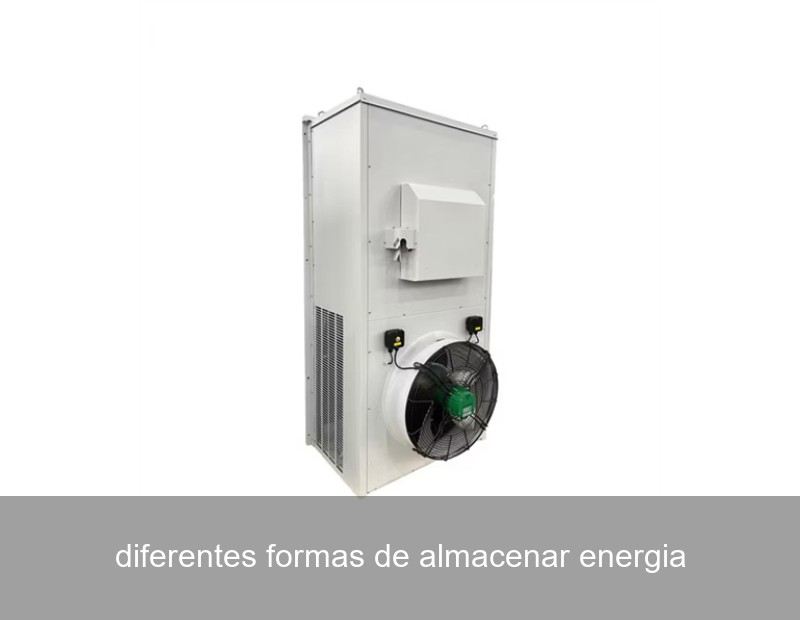
Dominating the market, lithium-ion batteries offer high energy density, good efficiency (~90-95%), and decreasing costs. They are the go-to solution for EVs, consumer electronics, and increasingly, for residential and commercial storage. Their applications range from short-duration peak shaving to providing backup power. At Highjoule, our H-Series Commercial & Industrial (C&I) battery systems leverage advanced lithium-ion chemistry with integrated smart energy management. They are designed to help businesses reduce demand charges, participate in demand response programs, and ensure operational resilience during outages, all while maximizing on-site solar consumption.
Flow Batteries: The Endurance Specialists
Unlike conventional batteries, flow batteries store energy in liquid electrolyte solutions held in external tanks. Power and energy ratings are decoupled—to increase storage capacity, you simply add more electrolyte. This makes them exceptionally well-suited for long-duration storage (4+ hours). Vanadium redox flow batteries are the most common, known for their long cycle life and minimal degradation. They are ideal for smoothing out daily or even weekly renewable generation patterns for microgrids or large industrial sites.
Advanced Lead-Acid: The Reliable Veteran
Improved with carbon additives and advanced designs, modern lead-acid batteries offer a cost-effective and highly recyclable solution for certain stationary applications. While they have lower energy density and shorter cycle life compared to lithium-ion, they remain a robust choice for backup power applications where daily cycling is not required.
Thermal Energy Storage: Capturing Heat and Cold
Why convert electricity to heat and back? For sectors where heating and cooling are primary energy loads, thermal storage can be incredibly efficient and cost-effective. Molten salt storage is famous in concentrated solar power (CSP) plants, where sunlight heats salt to over 500°C, storing energy for hours to generate steam and electricity after sunset. On a simpler level, ice storage systems freeze water at night using off-peak electricity, then use the ice to cool buildings during the day, drastically reducing daytime air conditioning loads and grid strain.
Chemical & Hydrogen Storage: The Long-Duration Promise
This frontier looks at storing energy in chemical bonds. The most prominent example is "green hydrogen." Surplus renewable electricity powers electrolyzers that split water into hydrogen and oxygen. The hydrogen can be stored long-term in tanks or caverns and later used in fuel cells to generate electricity, or as a clean fuel for industry and transport. While the overall "power-to-hydrogen-to-power" cycle efficiency is currently lower than batteries, its potential for seasonal storage and decarbonizing hard-to-electrify sectors is immense.
Case Study: A German Industrial Bakery's Recipe for Resilience
Let's look at a real-world application combining several diferentes formas de almacenar energía. A mid-sized industrial bakery in Bavaria, Germany, faced three challenges: volatile energy costs, a desire to utilize their large rooftop solar PV array more effectively, and the critical need for uninterrupted power to prevent production spoilage.
Their solution, implemented with Highjoule, was an integrated microgrid:
- Solar PV: A 500 kWp rooftop system.
- Electrochemical Storage: A 250 kW / 550 kWh Highjoule H-Series lithium-ion battery system.
- Thermal Storage: A new electric boiler with a large hot water storage tank, programmable to use excess solar or off-peak power.
The results over the first 18 months were compelling:
| Metric | Result |
|---|---|
| Solar Self-Consumption | Increased from 35% to over 80% |
| Peak Grid Demand | Reduced by 40% |
| Energy Cost Savings | Approx. €68,000 annually |
| CO2 Emissions | Reduced by 185 tonnes annually |
| Backup Power | Critical loads secured for 4+ hours during a grid outage |
The bakery now uses its intelligent Highjoule energy management system to automatically decide the most economical path for every kilowatt-hour—powering processes directly, charging the battery, heating water, or exporting to the grid when prices are high. This case perfectly illustrates how mixing technologies creates a sum greater than its parts.
Choosing the Right Technology for Your Needs
So, with all these diferentes formas de almacenar energía, how do you choose? The answer depends on your specific application profile. Consider these factors:
- Required Discharge Duration: Seconds (frequency regulation), hours (peak shaving, solar shifting), or days/weeks (seasonal)?
- Power vs. Energy: Do you need a big burst of power quickly (high power), or a slow, steady release over time (high energy capacity)?
- Cycling Frequency: Will the system cycle daily, weekly, or only for emergencies?
- Location & Space: Do you have an underground cavern, a small utility room, or a factory floor?
- Total Cost of Ownership: Consider upfront capital cost, efficiency losses, maintenance, and lifespan.
For most commercial and industrial applications seeking daily solar optimization, demand charge reduction, and backup power, advanced lithium-ion systems like Highjoule's H-Series for C&I or our scalable M-Series for Microgrids often present the optimal balance of performance, density, and intelligence. Our systems come with cloud-based analytics that continuously optimize performance based on your load patterns, weather, and tariff structures.
The Future of Energy Storage: A Hybrid and Intelligent Grid
The future grid won't rely on one champion storage technology. Instead, it will be a symphony of diferentes formas de almacenar energía, each playing its part. We'll see gigawatt-scale pumped hydro and CAES providing bulk storage, vast fleets of lithium-ion batteries and flywheels managing grid frequency, flow batteries enabling 100% renewable microgrids at factories and universities, and green hydrogen decarbonizing heavy industry and long-haul transport. The key to orchestrating this symphony is intelligent software—the kind that Highjoule develops to seamlessly integrate and optimize diverse storage assets for maximum economic and environmental value.
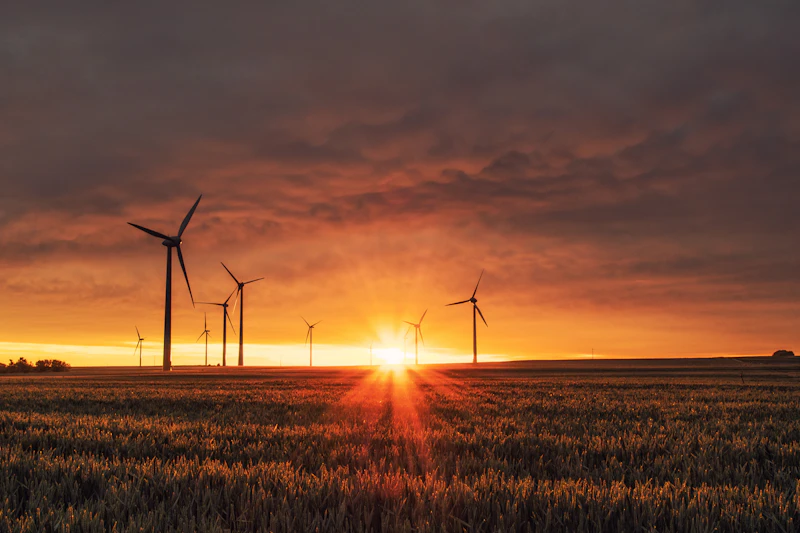
Image Source: Unsplash - Representative image of a modern energy management control system.
As you consider your own role in the energy transition, whether you're a facility manager, a sustainability officer, or a homeowner, what energy challenge could you solve if you had the right tool to store and manage power precisely when and where it's needed?
 Inquiry
 Online Chat