


Dongfang Electric Corporation China: A Global Powerhouse in the Energy Transition
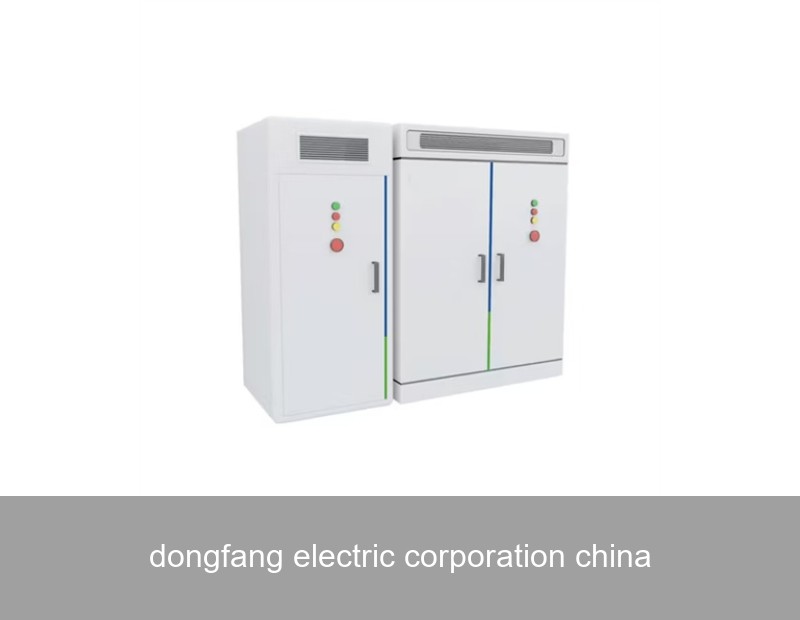
When we talk about the global shift toward renewable energy, certain names consistently appear at the forefront of innovation and scale. One such name is Dongfang Electric Corporation (DEC) China. As a state-owned giant, DEC is not just a manufacturer; it's a comprehensive solution provider powering nations, from massive hydropower dams to cutting-edge wind turbines. But what does the rise of such an industrial titan mean for the global energy market, particularly in Europe and the US? More importantly, as we integrate more variable renewables like wind and solar, a critical question emerges: how do we ensure this power is stable, reliable, and available on demand? This is where the story of generation meets the essential chapter of storage.
Table of Contents

Image: The growth of utility-scale renewables, like those supplied by major firms, demands advanced grid solutions. Credit: Unsplash.
Dongfang Electric: A Pillar of China's Energy Strategy
Founded in 1958, Dongfang Electric Corporation has evolved into one of the world's largest power equipment manufacturers. Its portfolio is staggering in its breadth and depth:
- Thermal Power: Ultra-supercritical coal-fired units that set benchmarks for efficiency.
- Hydroelectric Power: A leader in equipment for mega-projects like the Three Gorges Dam.
- Nuclear Power: Manufacturing key components for nuclear island systems.
- Renewable Energy: A top producer of wind turbines, both onshore and offshore, and a player in photovoltaic technology.
DEC's scale allows it to drive down costs and accelerate technology deployment, significantly contributing to China's domestic energy security and its export ambitions. According to the International Energy Agency (IEA), China accounts for nearly half of the world's renewable capacity additions, and companies like DEC are the engine behind this statistic.
The Global Impact and Local Grid Challenges
For markets in Europe and the US, DEC's presence is felt through competitive supply chains and project development. Their wind turbines spin in fields across continents, contributing clean electrons to the grid. This influx of globally sourced, cost-effective renewable hardware is crucial for meeting climate targets.
However, this phenomenon introduces a complex technical challenge: intermittency. The wind doesn't always blow, and the sun doesn't always shine. A grid dominated by these sources can experience:
- Frequency Instability: Rapid drops or surges in supply can cause blackouts.
- Congestion: Transmission lines can become overloaded during peak generation.
- Curtailement: Grid operators are sometimes forced to waste perfectly good renewable energy because supply exceeds demand at that moment.
So, while giants like Dongfang Electric Corporation China solve the problem of generation, the parallel problem of integration must be solved locally. This is the domain of advanced energy storage systems (ESS).
The Indispensable Counterpart: Advanced Energy Storage
Think of the grid as a symphony. Generation assets like DEC's turbines are the powerful brass and string sections. An advanced Battery Energy Storage System (BESS) is the conductor and the percussion—it sets the rhythm, maintains balance, and ensures every section comes in at the right time.
This is where companies like Highjoule enter the narrative. As a global leader in advanced储能 systems since 2005, Highjoule doesn't manufacture turbines; we make their output more valuable and grid-friendly. Our intelligent storage solutions act as a shock absorber and a buffer for the grid.
For commercial, industrial, and utility clients, Highjoule's systems provide:
| Service | Benefit | Highjoule Product Example |
|---|---|---|
| Frequency Regulation | Responds in milliseconds to grid signals, maintaining stable frequency. | GridMax™ Utility BESS |
| Peak Shaving | Stores cheap energy (e.g., midday solar) to use during expensive peak hours. | CommStore™ C&I Solution |
| Renewable Firming | "Smooths" the output of a wind or solar farm, making it predictable. | SiteBuilder™ Microgrid Controller | Backup Power | Provides seamless power during outages for critical operations. | HomeGuard™ Residential System |
By deploying Highjoule's smart, efficient storage alongside generation assets, project developers and grid operators can turn variable renewable energy into a dispatchable, reliable resource.

Image: A containerized BESS, like Highjoule's GridMax, is key to modern grid stability. Credit: Unsplash.
Case Study: Smoothing Renewable Integration in California
Let's look at a real-world scenario in the US. California has aggressively deployed solar power, often leading to the famous "duck curve"—a steep afternoon drop in solar production as demand peaks. This creates a urgent need for rapid-ramping resources.
In 2022, a utility-scale solar farm in Southern California, using turbines and inverters from global suppliers, partnered with Highjoule to integrate a 100 MW / 400 MWh BESS. The Highjoule GridMax™ system was deployed with two primary mandates:
- Solar Firming: Capture excess solar generation during midday and release it between 4-9 PM.
- Provide Grid Services: Participate in the CAISO (California Independent System Operator) frequency regulation market.
- Renewable Curtailment Reduced by 18%: The solar farm wasted significantly less energy.
- Grid Revenue Generation: The BESS earned over $1.2M annually from frequency regulation services alone.
- Enhanced Reliability: The combined "solar + storage" facility could now guarantee power delivery during critical evening hours, making it a more valuable grid asset.
This case illustrates the perfect synergy. The generation technology (some sourced from leaders like Dongfang Electric) provides the clean energy, while Highjoule's storage provides the intelligence and flexibility required by modern grids. A report by the National Renewable Energy Laboratory (NREL) confirms that storage is the keystone technology for high-renewable penetration.
The Future: Generation and Storage in Synergy
The path forward is not about choosing between global generation champions and local storage experts. It's about integration. The future energy system will be defined by hybrid projects—wind + storage, solar + storage, even hybrid hydro + storage—where each component is optimized by specialists.
Companies like Dongfang Electric Corporation China will continue to push the boundaries of efficiency and scale in turbine and panel manufacturing. Simultaneously, technology providers like Highjoule will advance the software and hardware that stores and manages that power intelligently. Our SiteBuilder™ microgrid platform, for instance, can orchestrate a mix of diesel gensets, solar PV, and battery storage into a resilient, cost-effective system for remote communities or industrial parks, regardless of the original equipment manufacturer.

Image: The intelligent grid of the future relies on seamless integration. Credit: Unsplash.
A Question for Your Energy Strategy
As you evaluate your organization's or community's path to energy resilience and sustainability, consider this: Do you view your renewable generation assets as standalone projects, or as one core component of an integrated, intelligent energy system? The difference between these two perspectives will define your cost, reliability, and ROI for decades to come.
 Inquiry
 Online Chat