


Navigating the Heavy Solar Supplier Landscape: A Guide to Sustainable Power Resilience
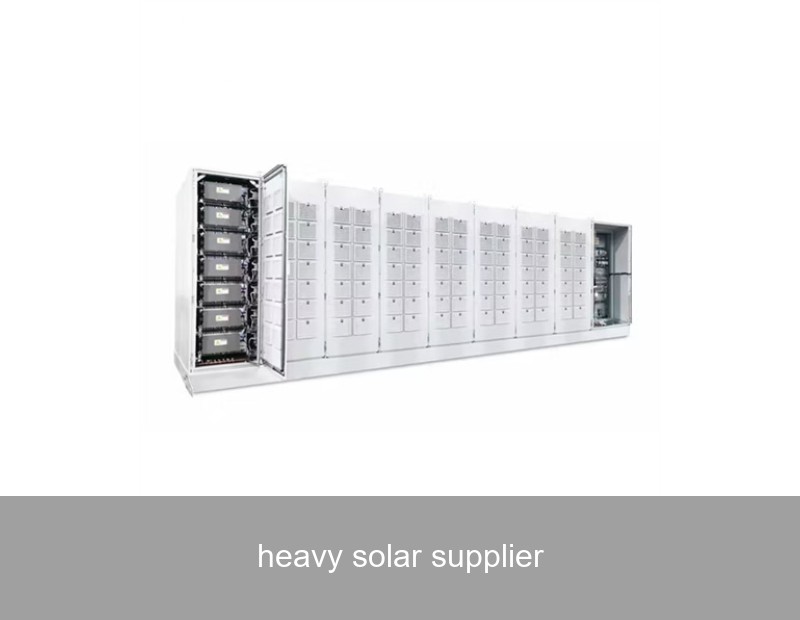
In today's energy-intensive world, businesses and industries are increasingly turning to solar power. But what happens when your energy needs are massive, your operations run 24/7, and grid reliability is a concern? This is where the concept of a heavy solar supplier becomes critical. More than just installing panels, it's about providing a comprehensive, high-capacity power solution that guarantees performance, manages complex energy flows, and ensures your investment translates into true energy independence and cost savings. This article will guide you through the key considerations and innovative solutions that define the next generation of industrial-scale solar partnerships.
Table of Contents
The Challenge: Beyond Rooftop Panels
For a large commercial facility, data center, or manufacturing plant, simply having solar panels is not enough. The real challenge lies in integrating a heavy solar supply into a reliable, always-on power system. You're dealing with peak shaving (reducing demand charges), backup power requirements, and potentially participating in grid services like demand response. A true heavy solar supplier must address the entire ecosystem: generation, storage, management, and optimization, turning sunlight into a predictable and controllable asset.
The Data Reality: Intermittency & Demand
Let's talk numbers. Solar generation famously follows the sun's arc, peaking at midday. However, energy demand for industrial users often has a different profile, with high loads in the morning, evening, or even constant baseload operations. The U.S. Department of Energy highlights that high penetration of variable renewables requires careful management to maintain grid stability. This mismatch creates a significant "duck curve" effect, where net demand plummets during solar peaks and ramps up rapidly as the sun sets. Without storage, a massive solar array can become underutilized, and you remain vulnerable to evening price spikes and outages.

Image Source: National Renewable Energy Laboratory (NREL), illustrating the "Duck Curve" challenge.
Case Study: A German Automotive Parts Manufacturer
Consider a real-world example from our work at Highjoule. A mid-sized automotive component manufacturer in Bavaria, Germany, faced volatile energy costs and stringent corporate sustainability targets. Their 2.5 MW rooftop solar installation covered about 40% of their daytime load but left them fully exposed to the grid after sunset and during cloudy periods.
The Solution & Results: Highjoule was engaged not just as a heavy solar supplier but as a system architect. We integrated a 1.8 MWh containerized battery energy storage system (BESS) with their existing solar PV. Our AI-driven Energy Management System (EMS) was configured to:
- Store excess solar generation for use during evening production shifts.
- Perform peak shaving, capping grid draw during high-tariff windows.
- Provide 2 hours of critical backup power for sensitive manufacturing lines.
The outcome? Within the first year:
| Metric | Result |
|---|---|
| Grid Energy Consumption | Reduced by 68% |
| Demand Charge Costs | Reduced by 52% |
| On-Site Renewable Consumption | Increased from 40% to over 85% |
| ROI Period | Estimated at 4.2 years |
This case underscores that value is unlocked not by panels alone, but by intelligent integration and storage.
Core Components of a Modern Heavy Solar Solution
When evaluating a heavy solar supplier, ensure their offering encompasses these pillars:
- High-Efficiency, Durable PV Modules: Designed for industrial rooftops or ground mounts, with robust performance warranties.
- Advanced Battery Energy Storage (BESS): The heart of modern energy resilience. Look for systems with high cycle life, safety certifications (like UL 9540), and thermal management.
- Intelligent Energy Management System (EMS): The "brain" that optimizes flow between solar, battery, grid, and loads based on weather forecasts, tariffs, and consumption patterns.
- Grid-Interactive Capabilities: Systems that can safely island from the grid (form a microgrid) or participate in utility programs for additional revenue.
- Long-Term Service & Performance Guarantees: A partner who stands behind the system's output and availability for decades.
The Highjoule Approach: Intelligent Energy Architecture
At Highjoule, founded in 2005, we've evolved from a component provider to a designer of integrated energy resilience. For our commercial and industrial clients, we act as a true heavy solar supplier by delivering a unified Highjoule Power Platform.
Our platform combines our proprietary HPS (Highjoule Power Stack) battery systems, known for their modular design and liquid cooling for superior lifespan, with our Sentinel EMS™. Sentinel uses machine learning to continuously optimize your energy economics. Whether it's for a large warehouse in Texas or a municipal microgrid in Spain, we provide a single point of accountability—from design and financing support to installation, monitoring, and maintenance.

Image Source: Unsplash (Representative image of a modern containerized BESS).
Future Trends: AI, VPPs, and Second-Life Batteries
The role of a heavy solar supplier is rapidly evolving. Three trends are shaping the future:
- AI-Powered Predictive Optimization: Going beyond rule-based logic, AI will forecast local weather and facility production schedules with extreme accuracy to pre-charge batteries optimally.
- Virtual Power Plants (VPPs): Aggregated fleets of distributed solar+storage systems, like those managed by Highjoule, can act as a single resource for grid operators, creating new revenue streams for participants. The International Energy Agency (IEA) discusses the potential of VPPs in modern electricity systems.
- Sustainability in the Supply Chain: Forward-thinking suppliers are exploring second-life applications for EV batteries in stationary storage, further enhancing the circular economy of solar projects.
What's Your Energy Resilience Goal?
The journey with a capable heavy solar supplier starts with a clear conversation about your objectives. Is it purely financial (reducing your Levelized Cost of Energy), operational (achieving 99.99% uptime for a critical process), or environmental (meeting a net-zero commitment)? How do you see your facility interacting with the grid of the future? We invite you to share your biggest energy challenge—is it unpredictable demand charges, the need for clean backup power, or navigating complex incentive programs? Let's discuss what your ideal energy architecture looks like.
 Inquiry
 Online Chat