


Easun 1MW Off Grid Energy Storage Cabinet: Powering Remote Operations with Confidence
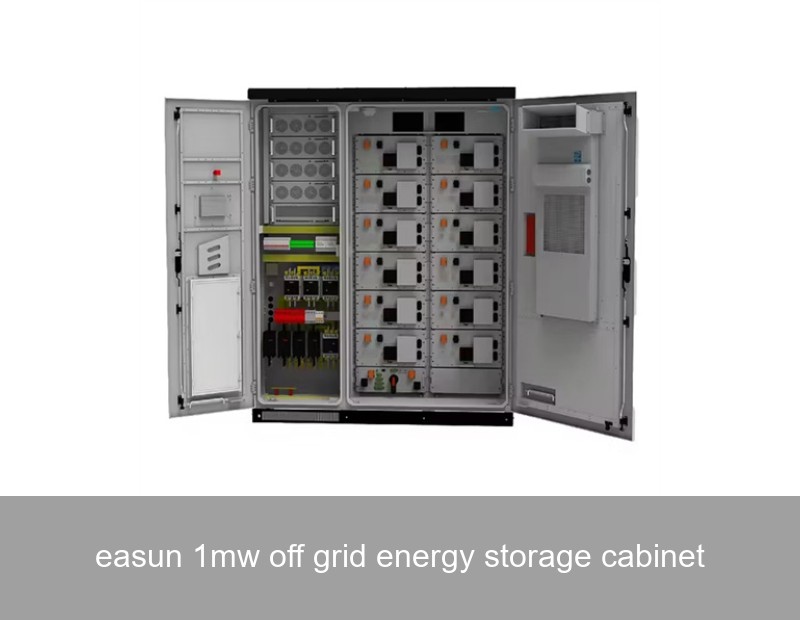
Imagine a remote mining site in the Australian outback, a secluded research station in the Alps, or a critical telecommunications tower miles from the nearest power line. For decades, these off-grid operations have relied on the constant, noisy, and expensive hum of diesel generators. But a quiet revolution is underway. Advanced, containerized energy storage systems, like the Easun 1MW Off Grid Energy Storage Cabinet, are redefining reliability and sustainability for standalone power. This isn't just a battery in a box; it's the heart of a modern, intelligent microgrid, capable of seamlessly integrating solar, wind, and backup generation to create a resilient and cost-effective energy oasis. Companies like Highjoule are at the forefront, designing integrated systems that turn these technological cabinets into complete power solutions.
Table of Contents
- The Diesel Dilemma: The High Cost of Off-Grid Power
- The Solution Unpacked: What is a 1MW Off-Grid Energy Storage Cabinet?
- Beyond the Battery: The Intelligence Inside the Cabinet
- Case Study: From Fuel Dependence to Renewable Resilience
- The Highjoule Approach: Engineering Complete Off-Grid Confidence
- The Future of Off-Grid: What's Next for Standalone Power?
The Diesel Dilemma: The High Cost of Off-Grid Power
For off-grid sites, diesel generators have been the default, but they come with a formidable list of challenges. The most obvious is fuel cost and logistics. Transporting diesel to remote locations is incredibly expensive and subject to volatile price swings. A study by the International Energy Agency (IEA) highlights the energy security and cost risks associated with fossil fuel dependence in isolated areas. Beyond cost, there's noise pollution, significant carbon emissions, and relentless maintenance needs. A generator running 24/7 requires frequent oil changes, filter replacements, and major overhauls, leading to high operational expenditure (OPEX) and downtime.
This creates a constant vulnerability. What happens during extreme weather when fuel trucks can't reach the site? The operation grinds to a halt. This phenomenon—relying on a single, fragile energy source—is what modern off-grid storage solutions aim to eliminate.
The Solution Unpacked: What is a 1MW Off-Grid Energy Storage Cabinet?
Enter the containerized energy storage system. A product like the Easun 1MW Off Grid Energy Storage Cabinet is a pre-engineered, all-in-one unit typically housed in a standard shipping container. The "1MW" refers to its power rating—it can deliver up to one megawatt of instantaneous power, enough to support heavy industrial machinery or a small community. Its capacity, measured in megawatt-hours (MWh), determines how long it can deliver that power. Think of power (MW) as the size of a river's flow, and capacity (MWh) as the total volume of water in the reservoir behind it.
These cabinets integrate several key components:
- Battery Racks: The core energy storage, using advanced lithium-ion (like LiFePO4) chemistry for long cycle life, safety, and high efficiency.
- Power Conversion System (PCS): The brain of the power flow, this bidirectional inverter converts DC battery power to AC for use by equipment, and AC from generators or renewables back to DC for charging.
- Thermal Management: A critical climate control system to keep batteries at their optimal temperature, ensuring performance and longevity in harsh environments.
- Safety & Monitoring: Integrated fire suppression, gas detection, and a comprehensive Battery Management System (BMS) that monitors every cell's voltage, temperature, and state of charge.

Image: A containerized energy storage system, similar in concept to a 1MW cabinet, integrated with renewable generation. Source: Unsplash (Representative image)
Beyond the Battery: The Intelligence Inside the Cabinet
The true magic isn't just in storing energy, but in managing it intelligently. Modern systems act as the grid-forming "boss" for a local microgrid. Using sophisticated energy management software (EMS), the cabinet can:
- Prioritize charging from solar PV arrays during the day, minimizing generator runtime.
- Seamlessly "black start" the site if everything goes down, and then synchronize and soft-load a generator when needed.
- Perform peak shaving: if a large motor starts, the storage provides the surge power instead of forcing a second generator online.
- Enable predictive maintenance by logging thousands of data points, alerting operators to issues before they cause failure.
Case Study: From Fuel Dependence to Renewable Resilience
Let's look at a real-world application in a European context. A sustainable forestry management company in northern Sweden operated a remote sawmill powered solely by three large diesel generators. Their annual fuel bill exceeded €280,000, with over 8,000 hours of combined generator runtime, resulting in 950 tonnes of CO2 emissions.
In 2022, they deployed a hybrid off-grid system centered around a 1MW/1.2MWh energy storage cabinet, coupled with a 600kW rooftop solar array on the mill buildings. The storage cabinet's EMS was programmed with a core rule: maximize solar self-consumption and use batteries as the primary source, with generators only as automated backup.
| Metric | Before (Diesel Only) | After (Solar + Storage) | Change |
|---|---|---|---|
| Annual Fuel Cost | €280,000 | €41,000 | -85% |
| Generator Runtime | 8,000 hours | 1,200 hours | -85% |
| CO2 Emissions | 950 tonnes | 140 tonnes | -85% |
| Energy from Renewables | 0% | 78% | +78% |
The results were transformative. The system now runs predominantly on silent, clean solar power stored in the cabinet. Generators only auto-start during prolonged periods of low solar insolation in deep winter. The project's payback period was calculated at under 6 years, not even factoring in potential carbon credit incentives. This mirrors the operational philosophy that Highjoule engineers into every project: using storage as the intelligent core to maximize renewable penetration and minimize fossil fuel use.
The Highjoule Approach: Engineering Complete Off-Grid Confidence
At Highjoule, we view a product specification like the Easun 1MW Off Grid Energy Storage Cabinet as a powerful component within a broader ecosystem. Our role as a global advanced energy storage system provider is to deliver not just hardware, but a guaranteed outcome: resilient, low-cost, off-grid power. Since 2005, we've specialized in tailoring solutions for the most demanding commercial, industrial, and microgrid applications.
For an off-grid mine or a utility-scale microgrid, our process involves:
- Deep Load Analysis & Modeling: We don't guess. We analyze your precise load profiles, seasonal variations, and critical backup requirements using tools like HOMER Pro to model thousands of scenarios.
- Technology-Agnostic System Design: We select the optimal storage technology (whether high-power or high-energy Li-ion chemistries), inverter topology, and renewable integration points to meet your financial and technical goals.
- Integration & Commissioning: Our experts handle the complex integration of generation, storage, and legacy generators, ensuring seamless handshake protocols and safe grid-forming operation.
- Lifelong Performance Monitoring: Through our proprietary monitoring platform, clients have real-time and historical visibility into their energy flows, savings, and system health, with proactive alerts from our support team.

Image: Technical commissioning and monitoring are key to off-grid system success. Source: Unsplash (Representative image)
For instance, a Highjoule-designed system for a remote U.S. military base utilized multiple 1MW-class cabinets in parallel to create a 4MW/10MHR microgrid. It incorporated existing solar, new wind turbines, and legacy diesel generators. Our EMS orchestrates this mix, achieving a 93% reduction in generator hours and ensuring mission-critical loads are always protected through islanding capabilities.
The Future of Off-Grid: What's Next for Standalone Power?
The trajectory is clear. As battery costs continue to decline—BloombergNEF reports a 89% real-term reduction since 2010—and energy management software becomes more sophisticated, the economic case for solar-plus-storage off-grid systems becomes undeniable. We're moving towards fully renewable-powered microgrids where hydrogen or biofuels might fill the final gap instead of diesel, creating a truly carbon-neutral operation.
The question is no longer if storage is viable, but how to design the system for optimal lifetime value. It's about choosing a partner that understands the interplay between every component, from the solar irradiance on your site to the control logic that decides when to start a generator.
Is your remote operation ready to analyze the true total cost of energy, factoring in not just fuel, but maintenance, carbon liabilities, and operational risk? What would an 80% reduction in your generator runtime do for your bottom line and sustainability goals this decade?
 Inquiry
 Online Chat