


Unlocking Grid Resilience: The Comprehensive Guide to Container Battery Storage Systems
a bustling industrial park, a remote microgrid, or a large-scale solar farm. They all share a common, modern need—reliable, on-demand power that traditional grids struggle to guarantee. Enter the container battery storage system, a transformative solution that is reshaping how we think about energy access and stability. These aren't just batteries; they are pre-engineered power hubs, delivered in standardized shipping containers, ready to plug into diverse energy ecosystems. For businesses, utilities, and communities, they represent a leap from passive consumption to active, intelligent energy management.
The Modern Grid Challenge: Flexibility vs. Intermittency
Our energy landscape is undergoing a seismic shift. The rapid adoption of renewable sources like solar and wind is commendable, but it introduces a fundamental challenge: intermittency. The sun doesn't always shine, and the wind doesn't always blow. This variability can strain electrical grids, leading to frequency fluctuations, potential blackouts, and curtailment (wasting clean energy because it can't be used when produced).
According to the International Energy Agency (IEA), global grid-scale battery storage capacity needs to expand significantly to meet net-zero goals, with annual additions growing exponentially. This is where large-scale, deployable energy storage becomes not just beneficial, but critical. The containerized battery storage system emerges as the hero in this narrative, offering a swift, scalable, and sophisticated answer to grid instability.

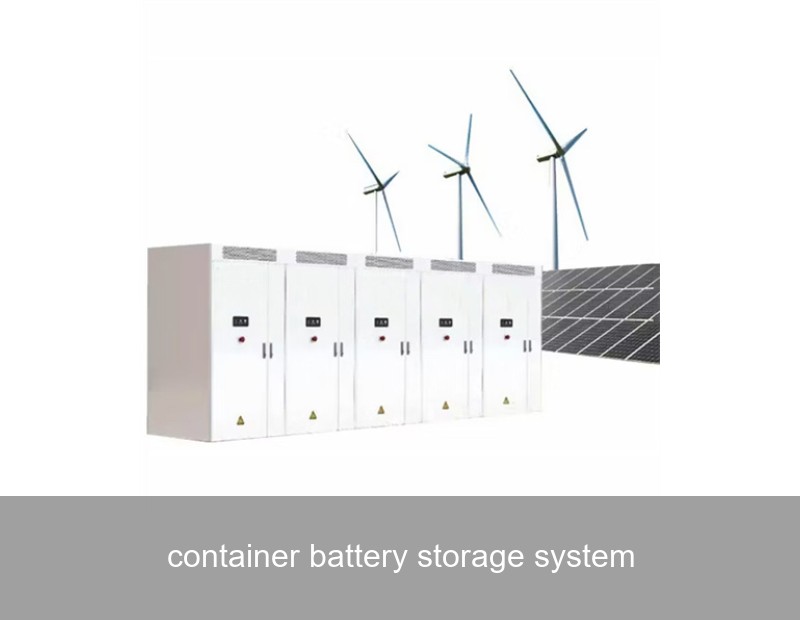
Image Source: Unsplash - A container battery system integrated with renewable generation.
How Containerized Energy Storage Systems Work: A Plug-and-Play Power Plant
At its core, a container battery storage system is a complete energy storage solution packaged within a rugged, weatherproof ISO shipping container. But inside, it's a marvel of engineering integration. Let's break down the key components:
- Battery Racks: Hundreds to thousands of individual lithium-ion (typically LFP or NMC) cells arranged into modular racks for high energy density and safety.
- Battery Management System (BMS): The "brain" of the operation, constantly monitoring cell voltage, temperature, and state of charge to ensure safety, longevity, and performance.
- Power Conversion System (PCS): The critical inverter component that converts DC electricity from the batteries to AC electricity for the grid (and vice versa for charging).
- Thermal Management: An integrated climate control system (heating, ventilation, and air conditioning) to keep batteries within their optimal temperature range in all weather conditions.
- Fire Suppression & Safety Systems: Advanced, multi-layer protection including gas-based fire suppression, smoke detection, and isolation mechanisms.
- Energy Management System (EMS): The top-level intelligence that controls when to charge and discharge based on grid signals, energy prices, or renewable output, maximizing financial and operational value.
This integrated, factory-tested approach means the system arrives on-site largely pre-commissioned. It significantly reduces installation complexity, time, and cost compared to building a system from scratch in a bespoke structure.
Primary Applications of Container Battery Systems
| Application | Core Function | Typical Users |
|---|---|---|
| Renewable Energy Integration | Stores excess solar/wind power for use during low generation periods; reduces curtailment. | Solar/Wind Farm Operators, IPPs |
| Grid Services & Frequency Regulation | Provides fast-responding power to stabilize grid frequency and voltage. | Utilities, Grid Operators (TSOs/DSOs) |
| Commercial & Industrial (C&I) Peak Shaving | Reduces demand charges by discharging during periods of peak electricity use. | Factories, Data Centers, Shopping Malls |
| Microgrid & Backup Power | Forms the backbone of islandable energy systems, ensuring continuity for critical facilities. | Remote Communities, Universities, Hospitals |
Key Benefits of Deploying a Container Battery Storage System
Why choose a containerized approach? The advantages are compelling across financial, operational, and strategic dimensions.
- Rapid Deployment & Scalability: The "plug-and-play" nature cuts project timelines from years to months. Need more capacity? Simply add more containers in a modular fashion.
- Cost-Effectiveness: Factory integration optimizes the supply chain, reduces on-site labor, and leverages standardized components, leading to a lower total cost of ownership.
- Enhanced Safety & Reliability: Built in a controlled environment with integrated safety systems, these containers are designed to meet stringent international standards for operation in harsh conditions.
- Operational Flexibility: They can be relocated if energy needs change—a significant advantage for temporary mining sites, disaster recovery, or evolving grid infrastructure.
- Grid Independence & Resilience: For microgrids or C&I users, they provide a buffer against grid outages and volatile energy prices, ensuring business continuity.
Real-World Case Study: Grid Stability in Germany's "Wind North"
Let's move from theory to practice. Northern Germany, a region with immense wind power generation, often faces grid congestion. Excess wind energy couldn't always be transported south, leading to curtailment and grid instability. A regional utility partnered with Highjoule to address this exact challenge.
The Project: Deployment of a 20 MW / 40 MWh container battery storage system at a key grid node. The system comprises four of Highjoule's flagship HJ-MegaStore containers, each a self-contained unit with LFP batteries, PCS, and cooling.
The Solution & Results: The system was configured for primary frequency regulation (FFR) and automatic grid restoration (black start capabilities). Within the first year of operation:
- Grid Stability: Provided over 99% availability for frequency containment reserve (FCR), responding to grid signals in milliseconds.
- Renewable Integration: Reduced local wind curtailment by an estimated 15%, storing otherwise lost energy for later use.
- Economic Return: Generated significant revenue through participation in the German primary control reserve market, demonstrating a clear business case. Data on market performance can be explored via the German Grid Control Reserve Portal.

Image Source: Unsplash - Wind energy and storage, a perfect partnership for grid stability.
This case underscores how a well-engineered container battery storage system is not an expense but a strategic asset, delivering both technical grid services and financial returns.
Choosing the Right Solution: What to Look For in a Provider
Not all containerized solutions are created equal. When evaluating a container battery storage system, depth of expertise and holistic design matter immensely. Key considerations include:
- Proven Technology & Safety Certifications: Look for UL 9540/9540A, IEC, and UN 38.3 certifications as a baseline.
- System Intelligence (EMS): The software that controls the hardware is what unlocks value. Can it optimize for multiple, stacked revenue streams or operational goals?
- Thermal Management Design: Passive cooling vs. active liquid cooling? The choice impacts efficiency, lifespan, and performance in extreme climates.
- Total Lifecycle Support: Does the provider offer long-term performance guarantees, remote monitoring, and local service support?
The Highjoule Approach: Engineered for Performance and Peace of Mind
With nearly two decades of experience since 2005, Highjoule has engineered its containerized solutions to meet the highest standards of performance, safety, and longevity. Our HJ-MegaStore and HJ-MicroGrid product lines are the culmination of this expertise.
What sets a Highjoule container battery storage system apart? It starts with our integrated i-EMS (Intelligent Energy Management System). This proprietary platform doesn't just manage charge/discharge cycles; it uses predictive algorithms and market-aware logic to autonomously optimize system operation for maximum economic return or operational reliability, whichever is your priority.
Furthermore, our systems are built with a cell-to-container safety philosophy. We utilize premium LiFePO4 (LFP) chemistry for its inherent thermal stability and long cycle life. This is coupled with a redundant, liquid-cooled thermal management system that ensures uniform temperature distribution, extending battery life by up to 20% compared to standard air-cooled designs.
For our clients in Europe and the US, this translates into a partner that delivers more than hardware. Highjoule provides a full suite of services—from initial feasibility studies and financial modeling to grid interconnection support, commissioning, and 24/7 monitoring via our global NOC (Network Operations Center). We ensure your energy storage asset performs as promised, year after year.
Your Role in the Future Energy Landscape
The transition to a resilient, decarbonized grid is underway. The container battery storage system is a proven, scalable building block in this new infrastructure. It empowers you to take control, whether you're a utility balancing the grid, a business managing energy costs, or a community seeking energy independence.
The question is no longer if energy storage is needed, but how to implement it most effectively. What is the single biggest energy challenge—be it cost, reliability, or sustainability—that a scalable, containerized solution could solve for your operation in the next 18 months?
 Inquiry
 Online Chat