


Unlocking Solar Potential: Your Guide to the Solar Power Energy Storage Cabinet
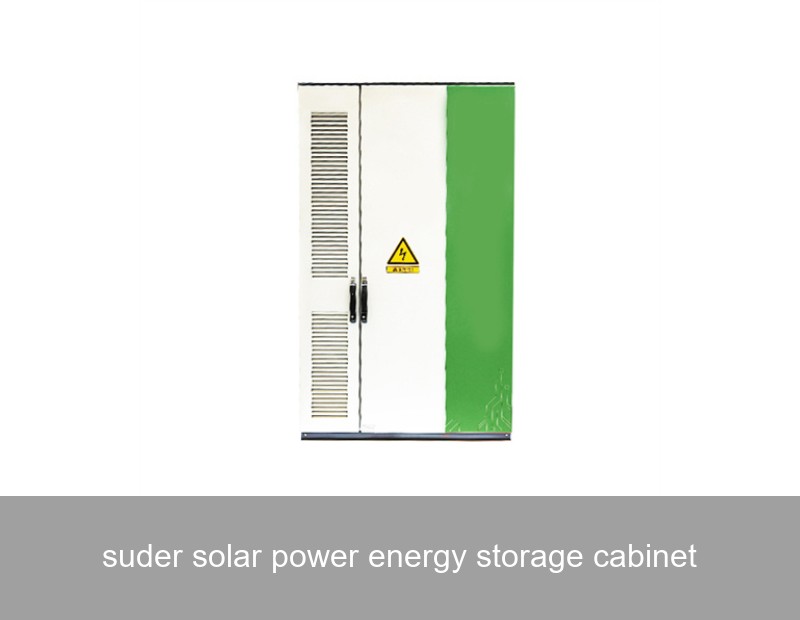
You've made the smart decision to install solar panels. You're generating clean energy, reducing your carbon footprint, and watching your meter spin backwards on sunny days. But what happens when the sun sets, or during those stretches of cloudy weather? This common frustration points to a fundamental challenge in renewable energy: intermittency. The solution that is revolutionizing how homes and businesses use solar power is the solar power energy storage cabinet. Think of it not just as a big battery, but as the intelligent heart of your personal energy ecosystem—capturing surplus solar energy for use precisely when you need it most.
Why Your Solar System Needs an Energy Storage Cabinet
The phenomenon is clear: solar generation peaks in the middle of the day, often when household or business demand is lower. Conversely, energy demand soars in the early morning and evening, when solar production is minimal. This creates a mismatch. Without storage, excess solar energy is often sold back to the grid at lower rates, only for you to buy back expensive power later. An energy storage cabinet solves this by shifting your solar energy in time.
Let's look at the data. According to the U.S. Department of Energy, high penetration of solar without storage can strain grid management. For the individual, the financial logic is compelling. With utility rates increasingly adopting time-of-use (TOU) pricing—where electricity is more expensive during peak hours—the ability to use stored solar power during those peak windows translates directly to lower bills. A storage system can increase your self-consumption of solar power from a typical 30-50% to 70% or more, dramatically enhancing your energy independence and return on investment.

Image: A modern home solar installation paired with a sleek battery storage unit. Source: Unsplash
Inside the Box: Key Components of a Modern Solar Storage Cabinet
A high-quality solar power energy storage cabinet is a sophisticated piece of technology. It's far more than just a container for batteries. Here’s what you’ll typically find inside a well-designed system:
- Battery Modules: The core energy reservoir. Modern systems predominantly use Lithium Iron Phosphate (LFP) chemistry, prized for its long lifespan, safety, and stability.
- Battery Management System (BMS): The brain of the battery. It monitors cell voltage, temperature, and state of charge to ensure optimal performance and safety.
- Hybrid or AC-Coupled Inverter: This critical component manages the flow of electricity, converting DC from the panels and batteries to AC for your home, and vice-versa for charging.
- Thermal Management System: A cooling (and sometimes heating) system to keep the batteries within their ideal temperature range, ensuring efficiency and longevity.
- Safety Disconnects & Monitoring: Integrated safety features and user-friendly interfaces, often accessible via a smartphone app, for real-time monitoring and control.
This is where the expertise of a seasoned provider like Highjoule becomes crucial. Since 2005, Highjoule has been at the forefront of this technology. Our IntelliStoreTM series of solar energy storage cabinets are engineered for this exact purpose. They integrate seamlessly with new or existing solar arrays, feature industry-leading LFP battery cells with a lifespan exceeding 6000 cycles, and are managed by our proprietary Adaptive Power Management (APM) software. This software doesn't just store and release energy; it learns your usage patterns and can be programmed to prioritize self-consumption, peak shaving, or backup power, maximizing your economic and practical benefits.
| System Type | Self-Consumption Rate | Grid Dependence | Backup Power Capability |
|---|---|---|---|
| Solar Only (No Storage) | 30-50% | High | No |
| Solar + Basic Storage | 50-70% | Medium | Limited |
| Solar + Advanced Storage (e.g., Highjoule IntelliStore) | 70-90%+ | Low | Yes, Whole-House/Selective |
From Theory to Practice: A German Bakery's Success Story
Let's move from concepts to concrete results. Consider the case of a family-run bakery in Bavaria, Germany. Facing rising energy costs and a desire to green their operations, they installed a 50 kWp solar array in 2020. While it reduced daytime costs, their highest energy needs for ovens and refrigeration occurred early morning and continued after sunset. In 2022, they integrated a Highjoule IntelliStore Commercial 50 solar power energy storage cabinet.
The results after one year were striking:
- Self-Consumption of Solar Power: Increased from 41% to 89%.
- Grid Energy Purchased During Peak Hours: Reduced by 92%.
- Annual Energy Cost Savings: An additional €8,500 on top of the savings from the original solar panels.
- Backup Power: The system now provides critical backup for refrigeration units, preventing spoilage during the region's occasional grid outages.
This case, documented in a report by the Fraunhofer Institute for Solar Energy Systems, highlights the transformative impact of adding intelligent storage. The bakery not only improved its economics but also significantly boosted its operational resilience and sustainability marketing.
Finding Your Perfect Fit: Residential vs. Commercial Storage Cabinets
Your needs will dictate the scale and features of your system. For residential users, the focus is often on maximizing self-consumption, providing backup power for essential loads during outages, and future-proofing for electric vehicle charging. A cabinet like the Highjoule IntelliStore Home 10, with its scalable capacity from 10 to 30 kWh, is designed for seamless integration and quiet, safe operation in a garage or utility room.
For commercial and industrial (C&I) applications, the drivers shift towards demand charge management, large-scale peak shaving, and ensuring process continuity. Systems are larger, often modular, and require robust energy management software. Highjoule's IntelliStore Commercial series, for example, offers cabinet solutions from 50 kWh to multi-megawatt-hour installations, all controllable via our platform to participate in demand response programs where available.

Image: A large-scale battery energy storage installation in an industrial setting. Source: Unsplash
Beyond the Bill: The Broader Impact and Future of Solar Storage
The benefits of widespread solar storage cabinet adoption extend beyond individual savings. When aggregated, these systems form virtual power plants (VPPs), providing stability to the broader grid by supplying power during periods of high demand. This reduces the need to fire up fossil-fuel-powered "peaker plants," a key step in deep decarbonization as noted by the International Energy Agency.
The future is intelligent integration. We are moving towards systems where your solar storage cabinet, EV charger, heat pump, and smart appliances communicate to optimize your entire home's energy flow automatically, all while supporting the grid.
So, as you consider the next step for your solar investment, ask yourself: Is your current system simply generating power, or is it intelligently managing your energy independence? What would it mean for your home or business to have reliable, clean power on your terms, day and night?
 Inquiry
 Online Chat