


Energy Software: How Much Does It Really Cost, and What's the ROI?
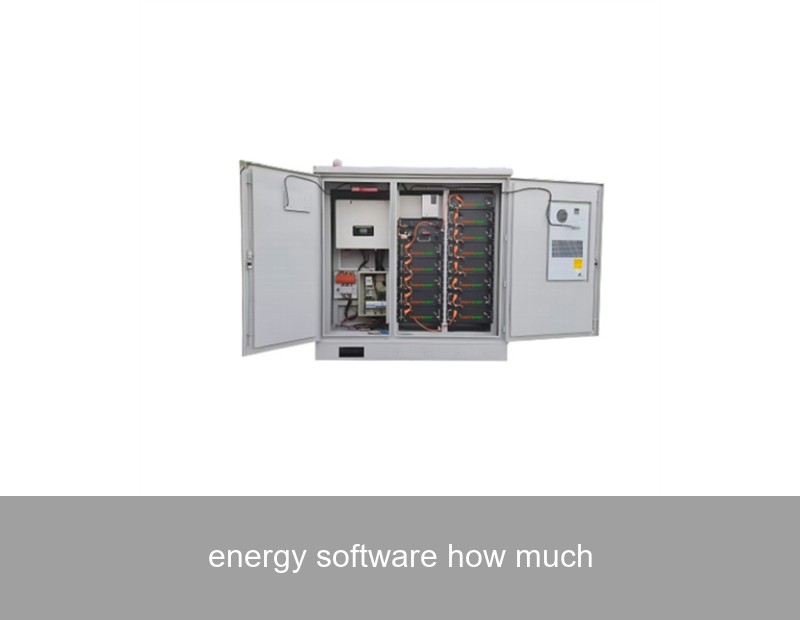
You've decided to invest in a battery energy storage system (BESS). You've compared battery chemistries, calculated power ratings, and sized your system. But there's one crucial line item that often causes confusion: the energy management software. Suddenly, you're asking, "Energy software: how much should I budget, and is it worth it?" This is the smart question. In today's grid, the hardware stores the energy, but the software is what generates the value, the savings, and the return on your investment.
The Big Software Question: It’s Not Just Hardware Anymore
Think of your battery system like a high-performance car. The battery cells and inverters are the engine and chassis—essential, but raw. The energy management software is the driver's brain, navigation system, and pit crew combined. It decides when to charge (often when electricity is cheap or green), when to discharge (during peak price hours or grid stress), and how to optimize every kilowatt-hour for your specific goals: saving money, ensuring backup power, or supporting the grid.
Without sophisticated software, a battery is a passive, underutilized asset. The real transformation—from a cost center to a revenue-generating or savings-generating asset—happens in the digital layer. This is why the question of "energy software: how much?" is fundamentally a question about value, not just price.
Breaking Down the Costs: What Are You Really Paying For?
The cost of energy software isn't a single number. It's typically structured in a combination of ways, and understanding this breakdown is key.
1. Upfront Licensing or Integration Fee
Some providers charge an initial fee to license their software platform and integrate it with your specific hardware and site. This can range from a few thousand dollars for a residential system to tens of thousands for complex commercial and industrial (C&I) setups.
2. Subscription-Based Model (SaaS)
Increasingly common, the Software-as-a-Service model involves a monthly or annual subscription. This often includes continuous updates, cloud hosting, cybersecurity, and access to new features. Subscriptions can range from $50-$300/month for homes to $1,000-$5,000+/month for large C&I sites, heavily dependent on system size and complexity.
3. Performance-Based Pricing
This aligns the software provider's incentive directly with your success. The fee might be a percentage of the savings or revenue the software generates for you. If the software doesn't perform, you pay less. This model is gaining traction as it de-risks the investment for the customer.
| Cost Component | Residential Scale | Commercial & Industrial Scale | What It Covers |
|---|---|---|---|
| Upfront License | $1,000 - $5,000 | $10,000 - $50,000+ | Initial platform access, configuration, integration |
| Annual SaaS Fee | $600 - $3,600 | $12,000 - $60,000+ | Software updates, cloud services, support, monitoring |
| Performance Fee | 10-20% of savings | 10-20% of savings/revenue | Directly tied to system financial performance |
According to a 2022 report by the National Renewable Energy Laboratory (NREL), advanced software controls can increase the value of a commercial battery system by 30-50% compared to basic, pre-programmed operation. This value uplift is critical to your payback period.
Case Study: Real Numbers from a California Warehouse
Let's make this concrete. A large logistics warehouse in Fresno, California, installed a 500 kW / 1,000 kWh battery storage system. Their primary goal was to avoid demand charges—fees based on their highest 15-minute power draw each month, which can constitute up to 50% of a C&I electricity bill.
- Hardware Cost (Battery & Inverter): ~$350,000
- Advanced Software Solution (Annual SaaS): ~$18,000
- Software Function: The software continuously forecasts the building's load, predicts peak grid demand windows, and dispatches the battery precisely to "shave" peak usage.
- Result: In the first year, the software-driven strategy reduced their peak demand by 22%, leading to annual savings of $68,000 on their electricity bill.

The $18,000 software investment directly enabled $68,000 in savings. The software paid for itself in just over 3 months and was the decisive factor in achieving a less than 5-year total system payback. Without this intelligence, the battery would have cycled inefficiently, missing the most valuable opportunities.
Highjoule’s Approach: Intelligence That Pays for Itself
At Highjoule, we believe powerful energy software shouldn't be a mysterious, costly add-on. That's why our HarmoniOS™ energy management platform is designed as the core intelligence of every system we provide.
For our commercial and industrial clients, HarmoniOS™ uses real-time data and AI-driven forecasting to execute multiple value streams simultaneously:
- Peak Shaving: Automatically reduces demand charges.
- Energy Arbitrage: Buys (charges) low, sells (discharges) high.
- Grid Services: Can participate in demand response programs for additional revenue (in eligible markets).
- Renewables Optimization: Maximizes self-consumption of solar PV, storing excess daytime production for use at night.
We typically offer a comprehensive all-in-one solution that integrates the hardware and our proprietary software, often under a single warranty and support agreement. For larger microgrid or utility-scale projects, we provide flexible licensing models. Our focus is on delivering a clear, positive Total Cost of Ownership (TCO) and a superior return on investment, where the software is the engine of that return.

Making the Investment: Key Questions to Ask
So, when evaluating "energy software: how much?" shift the conversation to value. Here are the questions to ask any provider:
1. What is the pricing model, and how does it align with my success?
Is it a flat fee, or is it tied to performance? A model that shares risk with you is often a sign of confidence.
2. Can it adapt to changing utility rates and policies?
Software that can't update its algorithms for new tariff structures will become obsolete. Ensure it has a proven update track record. The U.S. Department of Energy's Solar Energy Technologies Office highlights adaptability as a key software feature.
3. Does it offer open protocols or is it a "walled garden"?
Can it integrate with existing building management systems or future hardware? Interoperability protects your long-term investment.
4. What is the projected ROI impact of the software specifically?
Request a detailed, data-backed projection showing how the software's specific functions (peak shaving, arbitrage, etc.) will contribute to savings and payback time.
Ultimately, the most expensive software might be the one you didn't buy—the one that leaves your battery system operating at a fraction of its potential. Or, the one that locks you into a closed ecosystem with high ongoing fees and little flexibility.

Is your organization currently evaluating an energy storage project, and how are you quantifying the potential return from the intelligence layer versus the hardware alone?
 Inquiry
 Online Chat