


Demystifying Energy Storage Cabinet Battery Price: A Guide to Value and Performance
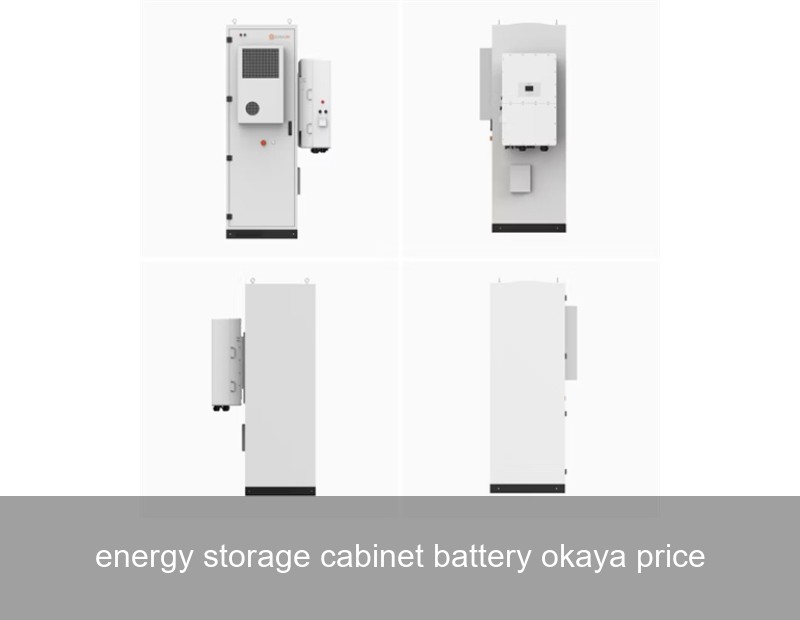
If you're exploring energy independence or grid resilience for your business or home, you've likely encountered the term "energy storage cabinet battery." And one of the first questions that comes to mind is inevitably about cost. The energy storage cabinet battery price isn't just a single number; it's a reflection of technology, capacity, intelligence, and long-term value. As energy costs fluctuate and sustainability goals become urgent, understanding what drives this price is crucial for making a smart investment. Let's peel back the layers and look at what you're really paying for, and how to ensure you get the best return.
Key Factors Influencing Energy Storage Cabinet Battery Price
Think of an energy storage system not as a simple battery box, but as a sophisticated power plant for your premises. Its price is built on several core components:
- Battery Chemistry & Quality: The heart of the system. Lithium Iron Phosphate (LFP) is now the dominant standard for commercial and residential storage due to its superior safety, longevity (often 6,000+ cycles), and stability. Higher-grade, automotive-tier cells command a premium but offer better performance over time.
- Energy Capacity (kWh) & Power Rating (kW): This is the "size" of your system. How much energy can it store, and how fast can it deliver it? A larger energy storage cabinet battery for peak shaving at a factory will have a higher price than a smaller unit for a home's self-consumption.
- Power Conversion System (PCS): The brain and brawn. This includes the inverter/charger that converts DC battery power to AC for your building. Advanced, high-efficiency inverters with grid-forming capabilities add cost but are essential for reliability and future-proofing.
- Thermal Management & Safety Systems: A cabinet that passively cools is cheaper upfront. However, an actively managed liquid or precision air-cooling system ensures optimal temperature, extends battery life by years, and enhances safety—a critical investment.
- System Intelligence & Software: This is where modern systems shine. Basic units just store and discharge. Intelligent cabinets, like those from Highjoule, come with integrated energy management systems (EMS) that learn your consumption patterns, automate savings based on time-of-use rates, and can participate in grid services.

Image Source: Unsplash - A modern energy storage installation requires careful integration of hardware and software.
Okaya and the Market Context: A Benchmark for Value
When researching, you might come across brands like Okaya, which offer competitive entry points in the energy storage cabinet battery market. It's helpful to view such brands as a benchmark. They often highlight the importance of a transparent price for the core hardware. However, for demanding applications in Europe and the U.S., the conversation must quickly move beyond the initial invoice. The focus shifts to certification (like UL 9540 in the U.S. or IEC 62619 in the EU), local service and support networks, software update capabilities, and the system's ability to integrate with complex tariffs and renewable sources seamlessly.
Beyond Price: The Total Cost of Ownership (TCO) Perspective
This is the most critical concept for any commercial or industrial buyer. The upfront energy storage cabinet battery price is just one line item. The Total Cost of Ownership includes:
| Cost Factor | Low-Quality System Impact | High-Quality System (Like Highjoule) Benefit |
|---|---|---|
| Degradation & Replacement | Faster capacity fade may require earlier replacement. | Longer warranty (10+ years), higher cycle life preserves investment. |
| Operational Efficiency | Lower round-trip efficiency wastes more energy, increasing "hidden" cost. | Efficiency ratings >90% mean more of your stored solar or cheap grid power is usable. |
| Software & Upgrades | Proprietary, closed systems may become obsolete. | Over-the-air updates add features, improve algorithms, and protect against cyber threats. |
| Grid Service Revenue | May lack certifications or agility to participate. | Can generate income via demand response or frequency regulation programs. |
As you can see, a slightly higher initial investment can lead to dramatically lower TCO and higher revenue potential over 15+ years.
Case Study: An Industrial Application in Germany
Let's ground this with real data. A mid-sized automotive parts manufacturer in Bavaria, Germany, faced high peak-demand charges and volatile energy prices. Their goal was to reduce grid dependence and stabilize costs.
- Challenge: Monthly peak demand of 850 kW, leading to significant capacity charges. Limited roof space for PV.
- Solution: They installed a 500 kWh / 250 kW energy storage cabinet battery system, integrated with their existing solar array.
- Outcome & Data: The system performs peak shaving, cutting grid draw during high-cost periods. In its first year:
- Avoided €28,000 in peak demand charges.
- Increased self-consumption of solar power by 35%.
- Achieved a simple payback period of under 5 years, thanks in part to intelligent software that maximizes value streams.
This case, documented in a Fraunhofer ISE report on sector trends, shows how the right system delivers a compelling ROI, making the initial price a strategic investment, not just an expense.
Highjoule's Intelligent Solution: Where Performance Meets Value
At Highjoule, we've been engineering advanced storage solutions since 2005. We understand that the true measure of an energy storage cabinet battery isn't its sticker price, but the value it unlocks over its entire lifecycle. Our product philosophy is built on this TCO principle.
Our H-Series Commercial Storage Cabinet is designed for the rigorous demands of the European and American markets. It features:
- Ultra-Safe LFP Battery Modules: With a proven cycle life and built-in multi-layer protection.
- Active Liquid Cooling: For uniform temperature control, ensuring performance in all climates and maximizing lifespan.
- Grid-Forming Inverter Technology: This allows the system to create a stable microgrid, essential for backup power and grid resilience.
- Highjoule Neuron™ EMS Platform: The true differentiator. Our AI-driven software doesn't just manage the battery; it optimizes your entire site's energy flow, predicts consumption, and can automatically enroll in utility programs to generate revenue.
For larger-scale needs, our Microgrid Containerized Solutions provide utility-scale storage in a modular, turnkey format. We don't just sell hardware; we provide a complete service package including feasibility studies, system design, installation support, and remote monitoring.

Image Source: Unsplash - Professional monitoring and management are key to realizing full system value.
Making the Right Choice for Your Needs
So, how do you navigate the energy storage cabinet battery price landscape? Start by asking the right questions: What are my specific goals—peak shaving, backup power, solar self-consumption? What is my load profile? Does my utility offer incentives or time-of-use rates? What certifications are mandatory in my region?
We encourage you to look at specifications, but also to demand detailed financial modeling from your provider. A credible partner will analyze your energy bills and model the payback period and IRR for you, transparently.
What energy challenge is keeping you up at night, and how could a precisely sized, intelligent storage system turn that challenge into an economic and environmental advantage for your operation?
 Inquiry
 Online Chat