


Unlocking Energy Independence: The Complete Guide to Solar Hybrid Battery Systems
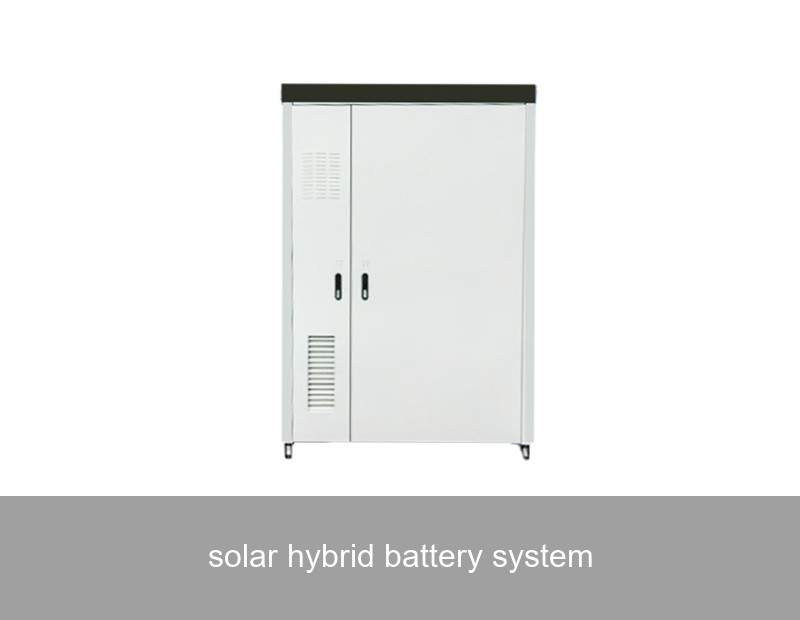
Have you ever watched your solar panels generate abundant power on a sunny afternoon, only to rely on the grid after sunset? This common phenomenon is the very challenge a solar hybrid battery system is designed to solve. As a leading energy storage provider since 2005, Highjoule has witnessed the global shift from simple solar generation to intelligent, self-sufficient energy management. A solar hybrid system is more than just panels and a battery; it's an integrated ecosystem that intelligently manages solar power, stores excess energy, and provides backup, maximizing your energy independence and return on investment.
Table of Contents
- The Problem: Wasted Sunlight and Grid Dependency
- The Solution: How a Solar Hybrid Battery System Works
- The Data: Why the Economics Now Favor Hybrid Systems
- Case Study: A California Winery's Journey to Resilience
- Key Components of a Robust Hybrid System
- The Highjoule Approach: Intelligent Storage for Demanding Applications
- What Does the Future Hold for Solar Energy Management?
The Problem: Wasted Sunlight and Grid Dependency
For years, the standard solar setup (grid-tied without storage) had a fundamental flaw: it operated on a "use it or lose it" basis. During peak production, households and businesses often generate more electricity than they can consume. This surplus is typically exported to the grid, frequently at a rate lower than the retail price of power. Later, when the sun goes down and energy demand peaks, they must purchase expensive electricity from the utility. This cycle leaves you vulnerable to rising tariffs, time-of-use rates, and grid outages. Essentially, you're producing your own valuable commodity but lack the warehouse to store it for when you truly need it.
The Solution: How a Solar Hybrid Battery System Works
A solar hybrid battery system acts as that essential warehouse for your solar energy. It integrates three core functions: generation, storage, and smart management. Here's the typical energy flow:
- Solar Generation: Photovoltaic (PV) panels convert sunlight into DC electricity.
- Smart Conversion & Prioritization: A hybrid inverter converts DC to AC for immediate use. Its intelligence is key—it first directs power to meet your building's real-time demand.
- Strategic Storage: Any excess solar energy is used to charge the battery system instead of being sent to the grid.
- Discharge on Demand: When solar production drops (at night or on cloudy days), the system automatically draws power from the batteries, minimizing grid imports.
- Grid Interaction: The grid remains as a backup source for charging batteries during prolonged bad weather or for supplying power if batteries are depleted, ensuring an uninterrupted supply.

Image Source: Unsplash (Representative diagram of a solar hybrid system)
The Data: Why the Economics Now Favor Hybrid Systems
The financial argument for adding storage to solar has become compelling. According to the U.S. Department of Energy's Solar Futures Study, declining costs are a major driver. Let's break down the key economic levers:
| Economic Factor | Impact with Standard Solar | Impact with Solar Hybrid + Battery |
|---|---|---|
| Self-Consumption | Typically 30-50% | Can exceed 70-90% |
| Grid Export Compensation | Low feed-in tariffs (e.g., $0.03-$0.08/kWh) | Minimized exports; stored energy worth retail rate ($0.12-$0.30/kWh) |
| Time-of-Use (TOU) Rate Arbitrage | Pay high peak rates | Use stored battery power during peak, avoiding high costs |
| Backup Power Value | None during outages | Critical load protection, avoiding business disruption/data loss |
Furthermore, incentives like the Federal Investment Tax Credit (ITC) in the U.S., which now applies to standalone and solar-paired storage, significantly improve upfront costs. In Europe, mechanisms vary but often favor self-consumption. The International Renewable Energy Agency (IRENA) notes that battery storage costs have fallen dramatically, making hybrid systems a central pillar for future energy resilience.
Case Study: A California Winery's Journey to Resilience
Let's look at a real-world example. A medium-sized winery in Sonoma County, California, faced three issues: high energy costs for refrigeration, unreliable grid power during wildfire-prevention shutoffs, and a desire to improve sustainability. Their existing 250 kW solar array was exporting over 40% of its generation at low rates.
They installed a solar hybrid battery system featuring a 500 kWh battery energy storage system (BESS) and advanced energy management software. The results over one year were striking:
- Grid Independence: Self-consumption of solar rose from 58% to 92%.
- Cost Savings: Reduced demand charges and TOU arbitrage led to a 67% decrease in monthly electricity bills.
- Resilience: During a planned 36-hour Public Safety Power Shutoff (PSPS), the system kept critical refrigeration and facility operations running seamlessly, preventing an estimated $150,000 in product loss.
- ROI: Combined with state and federal incentives, the projected payback period was under 7 years.

Image Source: Unsplash (Solar installation at a winery)
Key Components of a Robust Hybrid System
Not all hybrid systems are created equal. A high-performance system requires carefully matched components:
- Hybrid Inverter (or Multi-mode Inverter): The brain of the operation. It must handle bidirectional power flow—from PV, from/to the battery, and from/to the grid—simultaneously and efficiently.
- Battery Bank: The heart. Lithium-ion phosphate (LFP) chemistry is now the preferred choice for its long cycle life, safety, and stability. Capacity is measured in kWh.
- Battery Management System (BMS): The nervous system. It protects the battery by monitoring cell voltage, temperature, and state of charge, ensuring safety and longevity.
- Energy Management System (EMS): The strategy. This software uses algorithms and sometimes weather forecasts to decide when to charge, discharge, or export, optimizing for cost or resilience based on your preferences.
The Highjoule Approach: Intelligent Storage for Demanding Applications
At Highjoule, we've spent nearly two decades refining solar hybrid battery systems for the most demanding commercial, industrial, and microgrid applications. Our philosophy is that storage should be an active, intelligent asset, not just a passive container.
Our flagship product line, the Highjoule H-Series, embodies this. These modular, containerized or rack-mounted BESS solutions are built with industry-leading LFP cells and feature our proprietary Adaptive Grid Intelligence (AGI) software. What does this mean for you?
- Seamless Integration: The H-Series is designed to work with both new and existing solar installations, simplifying the upgrade path.
- Multi-Mode Flexibility: It can operate in grid-tied, off-grid, and backup modes automatically, providing uninterrupted power during outages without you lifting a finger.
- Financial Optimization: Our EMS can be configured to maximize savings under complex utility rate structures, including demand charge management and wholesale market participation (where available).
- Scalability & Service: From a 100 kWh commercial setup to a multi-MWh microgrid, our systems scale modularly. Backed by 24/7 remote monitoring and a global service network, we ensure your investment is protected for its 15+ year lifespan.
For a family home in Germany or a manufacturing plant in Texas, the principle is the same: Highjoule systems turn solar energy into a reliable, controllable, and economical power source.
What Does the Future Hold for Solar Energy Management?
The trajectory is clear. As grid dynamics evolve and the push for decarbonization intensifies, the ability to produce, store, and manage your own energy will transition from a luxury to a standard practice. We are moving towards a future of decentralized, resilient energy communities. With this in mind, what role do you see your home or business playing in this new energy landscape? Are you ready to move beyond just generating solar power to truly commanding it?
 Inquiry
 Online Chat