


Energy Storage Cabinet Hybrid Systems: The Smart Heart of Modern Power Resilience
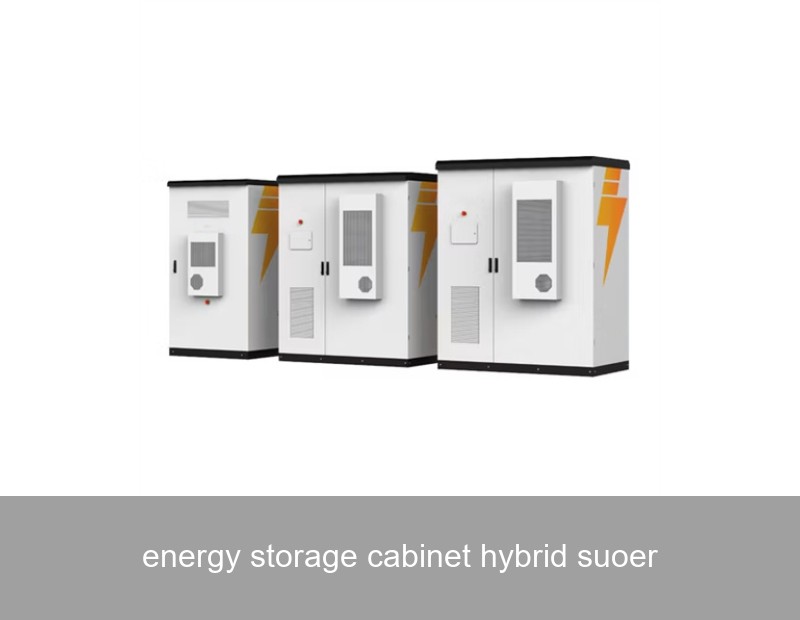
Imagine a power solution so versatile it can store sunshine, shave peak energy costs, keep the lights on during an outage, and even help stabilize the local grid—all from a single, streamlined unit. This isn't futuristic speculation; it's the reality delivered by today's advanced energy storage cabinet hybrid systems. For businesses, communities, and homeowners facing rising electricity prices and increasing grid instability, these integrated cabinets are becoming the cornerstone of a resilient and cost-effective energy strategy. Let's delve into how this technology works and why it's a game-changer.
Table of Contents
- The Problem: Rising Costs and Unreliable Grids
- The Solution: What is an Energy Storage Cabinet Hybrid System?
- Key Benefits of a Hybrid Storage Cabinet
- A Real-World Case: Powering a California Winery
- Choosing the Right System: What to Look For
- Highjoule's Role in Advanced Hybrid Storage
- The Future Outlook for Hybrid Energy Storage
The Problem: Rising Costs and Unreliable Grids
Across Europe and the United States, two parallel trends are putting pressure on energy consumers: volatile electricity prices and concerns over grid reliability. Commercial and industrial facilities see a significant portion of their operating costs tied to demand charges—fees based on their highest power draw in a billing period. Meanwhile, extreme weather events, from heatwaves in Southern Europe to winter storms in Texas, have exposed grid vulnerabilities, leading to costly outages.
The data is telling. According to the U.S. Energy Information Administration (EIA), U.S. electricity customers experienced an average of just over five hours of power interruptions in 2021. For a business, even an hour of downtime can mean tens of thousands in lost revenue. Simply adding more solar panels helps, but it doesn't solve the problem when the sun isn't shining or during a grid failure, as most standard solar systems are required to shut off for safety reasons.
The Solution: What is an Energy Storage Cabinet Hybrid System?
This is where the intelligence of a hybrid system shines. An energy storage cabinet hybrid system is an all-in-one, containerized solution that seamlessly integrates multiple components:
- Battery Storage: Typically high-cycle lithium-ion (like LiFePO4) batteries that store energy from the grid or on-site generation.
- Power Conversion System (PCS): The intelligent inverter that manages AC/DC conversion, charging, and discharging.
- Energy Management System (EMS): The "brain" that optimizes energy flow based on algorithms, weather forecasts, and usage patterns.
- Thermal Management & Safety Systems: Ensures optimal operating temperature and includes comprehensive safety protocols.
Unlike a simple battery backup, a hybrid system is bi-directional and grid-interactive. It can charge from the grid during low-cost, off-peak hours, store solar energy produced during the day, and then dispatch that energy during expensive peak periods or during an outage, providing true energy independence. 
Key Benefits of a Hybrid Storage Cabinet
Why are these systems gaining rapid adoption? The benefits are multi-faceted:
| Benefit | Description | Impact |
|---|---|---|
| Peak Shaving & Cost Savings | The system discharges stored energy during periods of high grid demand, reducing peak power draw. | Can slash demand charges by 20-40%, leading to a faster ROI. |
| Backup Power & Resilience | Provides seamless, instantaneous power during grid outages. | Ensures business continuity, protects critical processes, and enhances safety. |
| Solar Self-Consumption Optimization | Stores excess solar energy produced midday for use in the evening. | Increases solar utilization from ~30% to 70% or more, maximizing renewable investment. |
| Grid Services & Revenue | Advanced systems can participate in demand response or frequency regulation programs. | Creates an additional revenue stream by providing services to the utility grid. |
A Real-World Case: Powering a California Winery
Let's look at a concrete example. A mid-sized winery in Sonoma County, California, faced two major challenges: frequent public safety power shutoffs (PSPS) during fire season, which threatened temperature-sensitive fermentation tanks, and exorbitant demand charges from their irrigation and cooling loads.
Their solution was the installation of a 500 kWh / 250 kW energy storage cabinet hybrid system, coupled with an existing solar array. The system was configured for both peak shaving and backup power.
- Data & Results: In the first year, the system reduced the winery's peak demand by 35%, saving over $45,000 in demand charges alone. During three separate grid outages totaling 42 hours, the storage cabinet seamlessly powered critical loads, preventing an estimated $150,000 in product loss. The project achieved a full return on investment in under 5 years, not accounting for available state incentives.
This case, mirrored by similar successes in European manufacturing plants and retail centers, illustrates the tangible value proposition of hybrid storage.
Choosing the Right System: What to Look For
Not all storage cabinets are created equal. When evaluating an energy storage cabinet hybrid system, key technical and commercial considerations include:
- Scalability & Modularity: Can you easily add more battery capacity or power as your needs grow? A modular cabinet design is crucial for future-proofing.
- Battery Chemistry & Warranty: LiFePO4 (LFP) batteries are increasingly favored for their safety, long cycle life (often 6,000+ cycles), and stability. Look for a robust performance warranty (e.g., 70% capacity retention after 10 years).
- Software Intelligence: The EMS software is what unlocks the value. It should offer customizable operating modes, remote monitoring, and the ability to adapt to changing tariff structures.
- Grid Interaction Capabilities: Ensure the system is certified for grid interconnection in your region (e.g., UL 9540 in the US, CE marking in Europe) and can provide advanced grid services if desired.
Highjoule's Role in Advanced Hybrid Storage
At Highjoule, with nearly two decades of experience since 2005, we've engineered our HPS Series Hybrid Power Cabinet to meet these exacting standards. Our solution is designed for the needs of commercial, industrial, and microgrid applications.
The Highjoule HPS cabinet is a fully integrated, plug-and-play system that combines our proprietary, AI-driven energy management platform with ultra-safe LFP battery modules and a high-efficiency hybrid inverter. What sets it apart is its unparalleled flexibility: operators can dynamically choose between Cost Savings, Backup Priority, or Grid Services modes via a simple cloud-based dashboard. For a large-scale agricultural cold storage facility in the Netherlands, for instance, we configured multiple HPS cabinets to perform aggressive peak shaving during the day while guaranteeing 48 hours of backup power for refrigeration units—a critical requirement for preserving perishable goods.

Our global service network provides 24/7 monitoring and support, ensuring our clients' energy assets perform optimally for their entire lifecycle. We don't just sell hardware; we deliver a guaranteed energy resilience outcome.
The Future Outlook for Hybrid Energy Storage
The trajectory is clear. As noted by the International Renewable Energy Agency (IRENA), the acceleration of renewable deployment makes storage not just beneficial but essential for grid stability. We're moving towards ecosystems where fleets of distributed energy storage cabinet hybrid systems act as virtual power plants, collectively supporting the grid during stress events.
This evolution raises an exciting, open-ended question for every energy-intensive operation: Is your facility merely a consumer of grid power, or could it become an active, intelligent node in a more resilient and sustainable energy network? The technology to make the shift is here, proven, and economically compelling. What's the first step you'll take to explore how a hybrid storage system could transform your energy profile?
 Inquiry
 Online Chat