


Grid PV Energy Storage Cabinet: The Cornerstone of a Resilient and Efficient Energy Future
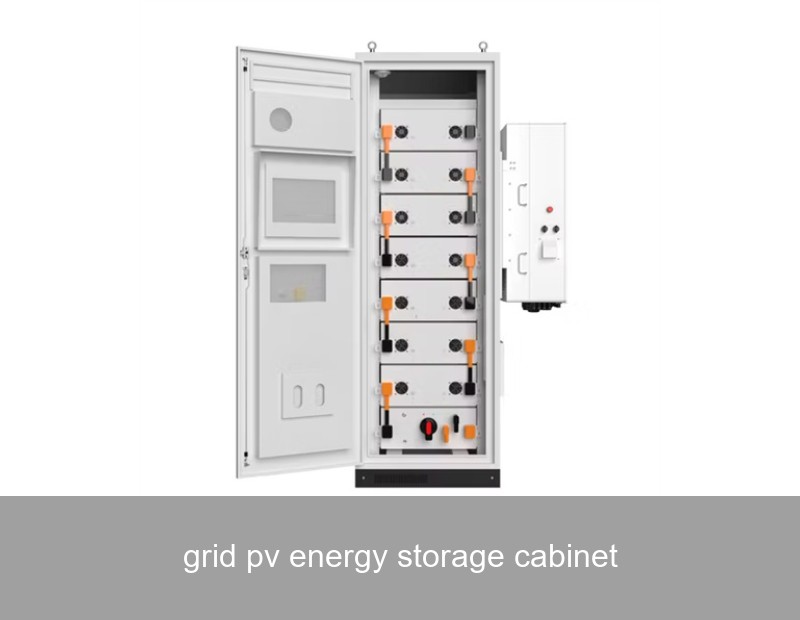
As the world accelerates its transition to renewable energy, a critical challenge emerges: how do we harness the sun's power not just when it shines, but precisely when we need it? This is where the grid PV energy storage cabinet steps in, transforming from a supporting component to the central nervous system of modern energy management. These intelligent cabinets are more than just battery enclosures; they are sophisticated hubs that integrate solar generation, storage, and grid interaction into one seamless, safe, and controllable unit. For businesses, communities, and utilities across Europe and the U.S., mastering this technology is key to unlocking energy independence, cost savings, and true grid stability.
Table of Contents
- The Grid Stability Paradox: Too Much Sun, Not Enough Control
- What Exactly is a Grid PV Energy Storage Cabinet?
- Data & Impact: Why Your Energy Strategy Needs This Cabinet
- A Real-World Case: Stabilizing a German Industrial Park
- Choosing the Right Solution: Key Features for Maximum ROI
- Highjoule's Integrated Approach: Beyond the Cabinet
- The Future is Modular and Intelligent
The Grid Stability Paradox: Too Much Sun, Not Enough Control
Picture a bright, sunny afternoon in California or Southern Spain. Solar panels are generating at peak capacity, often flooding the local grid with more power than can be immediately consumed. Conversely, on a calm, cloudy evening, demand spikes while renewable generation plummets. This volatility—the "duck curve" phenomenon—forces grid operators to rely on fossil-fuel peaker plants, undermining decarbonization goals and increasing costs for everyone.
The core problem is intermittency. Without a buffer, the clean energy from your PV system is either used instantly, exported at low value, or, in extreme cases, curtailed (wasted). A grid-connected PV energy storage cabinet solves this by providing that essential buffer. It stores excess solar generation locally, turning your solar array into a dispatchable power source. This isn't just about backup; it's about active energy asset management.

Image: A solar farm integrated with battery storage units, highlighting the scale of modern grid-tied solutions. Source: Unsplash
What Exactly is a Grid PV Energy Storage Cabinet?
Let's demystify the technology. A grid PV energy storage cabinet is a fully integrated, containerized solution that houses all critical components for safe and efficient energy storage. Think of it as a high-tech, plug-and-play power bank for your facility or community microgrid. Its primary components include:
- Battery Modules: Typically lithium-ion (like LFP for enhanced safety and longevity), these are the core energy storage units.
- Battery Management System (BMS): The guardian of the battery, ensuring optimal performance, safety, and lifespan by monitoring cell voltage, temperature, and state of charge.
- Power Conversion System (PCS): The intelligent inverter that manages the bidirectional flow of electricity, converting DC from the batteries to AC for the grid/building and vice versa.
- Energy Management System (EMS): The brain of the operation. This software platform makes real-time decisions on when to charge, discharge, or hold, based on energy prices, grid signals, and consumption patterns.
- Thermal Management & Safety Systems: Advanced cooling and fire suppression systems are non-negotiable for reliability and risk mitigation.
This integrated design within a single cabinet or container ensures safety, simplifies installation, and enables centralized monitoring and control.
Data & Impact: Why Your Energy Strategy Needs This Cabinet
The business and operational case is compelling. Let's look at the numbers. According to the U.S. Department of Energy's Solar Futures Study, achieving high levels of solar deployment will necessitate a massive expansion of energy storage to maintain grid reliability. The financial drivers are equally powerful:
- Maximized Self-Consumption: Store excess solar to use at night, increasing solar self-consumption from ~30-40% to over 70-80%, dramatically reducing grid imports.
- Demand Charge Reduction: For commercial and industrial users, peak demand charges can constitute up to 50% of the electricity bill. A storage cabinet can discharge during short peak periods, shaving these peaks and delivering immediate savings.
- Grid Services Revenue: In many markets (like the UK or parts of the U.S.), aggregated storage systems can provide frequency regulation or capacity services, creating a new revenue stream.
- ROI & Payback: With rising energy prices and falling storage costs, payback periods for commercial grid PV energy storage cabinet systems are now typically in the 5-8 year range, with a system lifespan exceeding 15 years.
A Real-World Case: Stabilizing a German Industrial Park
Consider the challenge faced by a mid-sized industrial park in North Rhine-Westphalia, Germany. The park had a 2 MW rooftop PV system but faced two issues: grid connection constraints limited further solar expansion, and afternoon production peaks were often curtailed. They needed to increase renewable utilization and ensure power quality for sensitive manufacturing equipment.
The solution was the deployment of a 1.2 MWh grid PV energy storage cabinet system, specifically Highjoule's H-Cube Commercial solution. Here are the results after the first 18 months of operation:
| Metric | Before Installation | After Installation |
|---|---|---|
| Solar Self-Consumption | 41% | 89% |
| Grid Peak Demand | 1.8 MW | 1.2 MW (33% reduction) |
| Curtailed Solar Energy | ~15% of monthly generation | <1% |
| Annual Energy Cost Savings | Baseline | €142,000 |
The Highjoule H-Cube's integrated EMS was programmed to perform peak shaving, time-of-use shifting, and provide local voltage support. This not only saved money but also allowed the park to plan an additional 500 kW of PV capacity, previously blocked by the grid operator. The cabinet's compact, all-in-one design allowed for installation in a tight utility area without major site modifications.
Choosing the Right Solution: Key Features for Maximum ROI
Not all storage cabinets are created equal. When evaluating a grid PV energy storage cabinet, focus on these critical aspects:
- Scalability & Modularity: Can you start with a smaller capacity and expand easily as your needs grow? Modular designs are future-proof.
- Grid Intelligence & Compliance: The system must comply with local grid codes (like UL 9540 in the U.S., VDE-AR-E 2510-50 in Germany) and have advanced grid-support functions.
- Chemistry & Safety: Lithium Iron Phosphate (LFP) chemistry is increasingly the standard for stationary storage due to its superior thermal stability and cycle life.
- Software & Analytics: The EMS should offer intuitive monitoring, customizable operating modes, and ideally, AI-driven forecasting for optimal performance.
- Warranty & Support: Look for a comprehensive warranty (e.g., 10 years, 70% residual capacity) and a provider with a strong service network.

Image: Technician performing maintenance on a large-scale battery storage system. Source: Unsplash
Highjoule's Integrated Approach: Beyond the Cabinet
At Highjoule, with nearly two decades of experience, we view the grid PV energy storage cabinet as the physical heart of a broader energy ecosystem. Our H-Cube series for commercial and industrial applications is engineered from the ground up for reliability, safety, and seamless integration.
Our cabinets feature:
- Patented thermal management for consistent performance from -30°C to 50°C.
- A multi-layer safety architecture with cell-level fusing, passive fire protection, and gas detection.
- Native compatibility with leading PV inverters and building management systems.
But we go further by pairing our hardware with the Highjoule Apex Platform, a cloud-based EMS that turns your storage asset into an automated profit center. It can dynamically switch between self-consumption, demand charge management, and participation in grid service markets based on real-time data and forecasts. For microgrid projects, our solutions provide black-start capability and seamless islanding, ensuring continuity for critical operations.
The Future is Modular and Intelligent
The evolution of the grid PV energy storage cabinet is moving towards even greater intelligence and decentralization. We're seeing the rise of modular, building-block systems that can be stacked in warehouses or distributed across a campus, all controlled by a single, AI-optimized platform. The integration of vehicle-to-grid (V2G) technology will further blur the lines between mobile and stationary storage, creating a dynamic, responsive energy network.
The question for facility managers, energy developers, and sustainability leaders is no longer if storage is needed, but how to implement it most effectively. The right cabinet system is not a cost center; it's a strategic asset that delivers energy security, financial returns, and tangible progress toward sustainability goals.
What specific energy challenge—be it unpredictable demand charges, grid connection limitations, or a corporate net-zero target—could a smart, integrated storage cabinet solve for your organization in the next 18 months?
 Inquiry
 Online Chat